Why your own calls are showing up as "Private Number"
Placing calls and having them show up as "Private Number" or "Blocked" on the other end usually isn't intentional — it means caller ID blocking is switched on somewhere in the call path, and most people never touched that setting themselves. It can live on the phone itself, with the carrier, or inside a VoIP or business phone system.
This guide covers exactly where that setting hides and how to turn it off, depending on where the block is actually coming from.
Confirm it's actually your line doing it
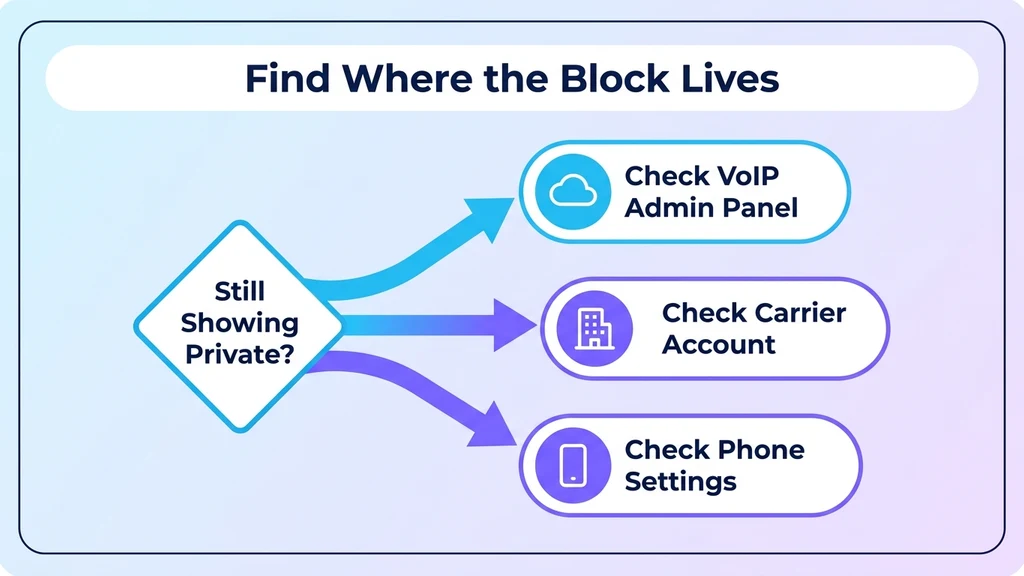
Before changing anything, confirm the block isn't happening somewhere out of reach. Call a second phone that isn't the one you're testing from and see what caller ID actually displays. If it shows as private there too, the block is on the sending line — the phone, the carrier account, or a VoIP platform — and one of the fixes below will apply.
If a friend's phone shows your real number but a specific contact says they see "Private," the setting causing that is very likely on their end, not yours.
Fix it per-call with a dial code
The fastest fix for a single call: dial *82 before the number on most US carriers, then dial as normal. This overrides any blocking setting for that one call only, showing the real caller ID to the recipient.
This works even if the permanent block is set at the carrier level, which makes it the quickest test to confirm the block is real before digging into settings.
Ready when you are
Protect your business line.
MCM's local numbers ship with verified caller ID and smart call filtering — customers always know it's really you, and spam never reaches your team.
Fix it permanently on the phone itself
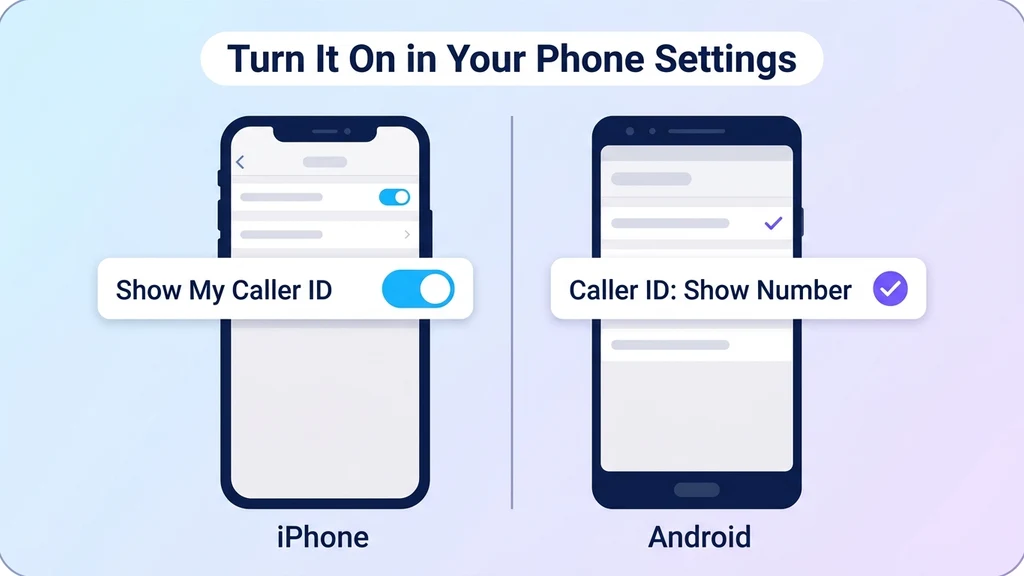
On iPhone: open Settings, then Phone, then "Show My Caller ID," and make sure the toggle is turned on. If this setting is greyed out or missing entirely, the block is coming from the carrier, not the phone — skip to the carrier section below.
On Android: open the Phone app, tap the three-dot menu, go to Settings, then Calls, then Additional Settings, then Caller ID, and set it to "Show number." Menu wording varies slightly by manufacturer, but the setting lives in roughly this location on every Android phone.
Fix it at the carrier level
If the phone's own setting is already correct but calls still show as private, the block is set on the account with the carrier rather than the device. This usually happens when caller ID blocking was requested at some point — sometimes during initial account setup — and never removed.
Calling the carrier directly and asking to remove permanent caller ID blocking resolves this in most cases; it's typically a same-day change with no cost involved, unlike some other account changes carriers charge for. The FCC's Truth in Caller ID rules cover the regulatory side of caller ID display and blocking, for anyone who wants the underlying rules carriers operate under.
Fix it on a VoIP or business phone line
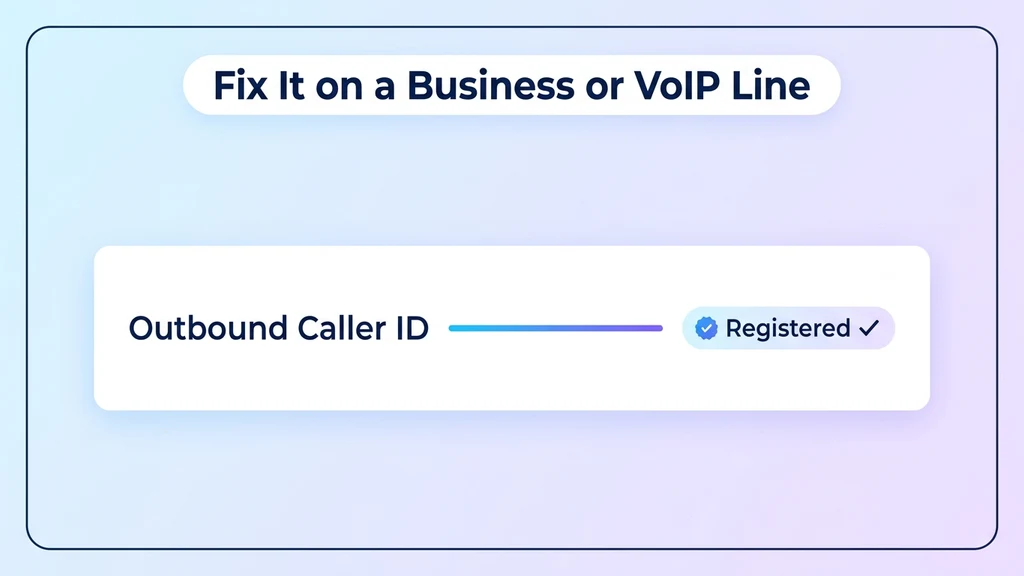
VoIP and business phone systems handle caller ID differently from a standard mobile carrier, and the fix usually lives in the admin settings rather than a phone's own menu.
Check the outbound caller ID configuration. Most UCaaS (Unified Communications as a Service) platforms — a single cloud system for calling, messaging, and video — let an admin set which number displays on outbound calls per user or per line. If this was never configured, some systems default to withholding the number rather than showing it.
Confirm the number is registered, not just assigned. A number can be technically active on a VoIP system without being properly registered as a caller ID source, which some carriers on the receiving end interpret as no caller ID at all rather than an explicit block — worth ruling out alongside the broader causes covered in our guide on Unknown Caller vs. No Caller ID. My Country Mobile handles this registration as part of setting up a business number, so outbound calls display correctly from day one. Contact us if a business line keeps showing as private despite the admin settings looking correct.
If nothing fixes it
Occasionally a number stays flagged as private due to how it's provisioned upstream between carriers, especially after porting a number between providers. If the phone, account, and any VoIP settings all check out and the problem persists, that's the point to escalate directly with whichever carrier issued the number, since the fix at that stage requires action on their end rather than anything changeable from a settings menu.
Conclusion
A number showing as "Private" on outgoing calls almost always traces back to one specific setting — the phone, the carrier account, or a VoIP platform's outbound caller ID configuration — rather than something broken beyond fixing. Testing with *82 first tells you immediately whether the block is real, and checking the phone's own caller ID setting before calling the carrier saves a call in most cases.
Key takeaways
- Test with
*82before a number to instantly confirm whether caller ID blocking is actually active on the line. - Check the phone's own "Show My Caller ID" setting first — it's the fastest fix when it's actually the cause.
- If the phone setting looks correct but calls still show private, the block is set at the carrier account level and needs a direct call to remove.
- VoIP and business lines handle this differently — the fix usually lives in admin caller ID settings, not the phone.
- A number that's active but not properly registered with carriers can also display as blocked rather than simply unlabeled.
Ready when you are
Ready to sound local everywhere you sell?
MCM activates business numbers in minutes, with call routing, analytics, and CRM-ready integrations. Start your trial — no card to browse inventory.
FAQs
Why do my calls show as "Private Number" when I never blocked it?
Caller ID blocking can be set at the phone level, the carrier account level, or within a VoIP system's configuration — and it's sometimes enabled by default or left over from a previous account setting nobody actively chose.
*What does dialing 82 actually do?
It overrides any caller ID block for that single call only, showing your real number to the recipient regardless of a permanent block elsewhere. It's the fastest way to confirm a block exists before changing any settings.
I turned on "Show My Caller ID" but calls still show as private. What's wrong?
The block is likely set at the carrier account level rather than the phone. Calling the carrier directly to remove permanent caller ID blocking resolves this in most cases.
Does this work the same way on a business VoIP phone system?
Not exactly. VoIP systems usually control outbound caller ID through admin settings tied to the number's configuration, rather than a per-device toggle — check there first if it's a business line rather than a personal phone.
Can a phone number show as private even without an explicit block?
Yes. A number that's active but not properly registered as a caller ID source with carriers can sometimes display as blocked or unlabeled rather than showing correctly, which is a provisioning issue rather than a deliberate setting.
Will this affect texts as well as calls?
No. Caller ID blocking settings apply specifically to voice calls. Text messages display the sending number independently of any caller ID blocking configuration.