Brazil is the largest telecommunications market in Latin America — 213 million people, 230+ million active mobile lines, and one of the fastest-growing cloud communications markets in the world. For businesses that need local Brazilian phone numbers, low-cost call termination to Brazilian networks, or reliable voice infrastructure for contact centers serving Brazilian customers, SIP trunking is the most cost-effective path.
This guide covers everything you need to operate SIP trunks in Brazil: how the technology works, what ANATEL regulates, which DID number types are available, what rates to expect, and how to evaluate providers.
What Is SIP Trunking?
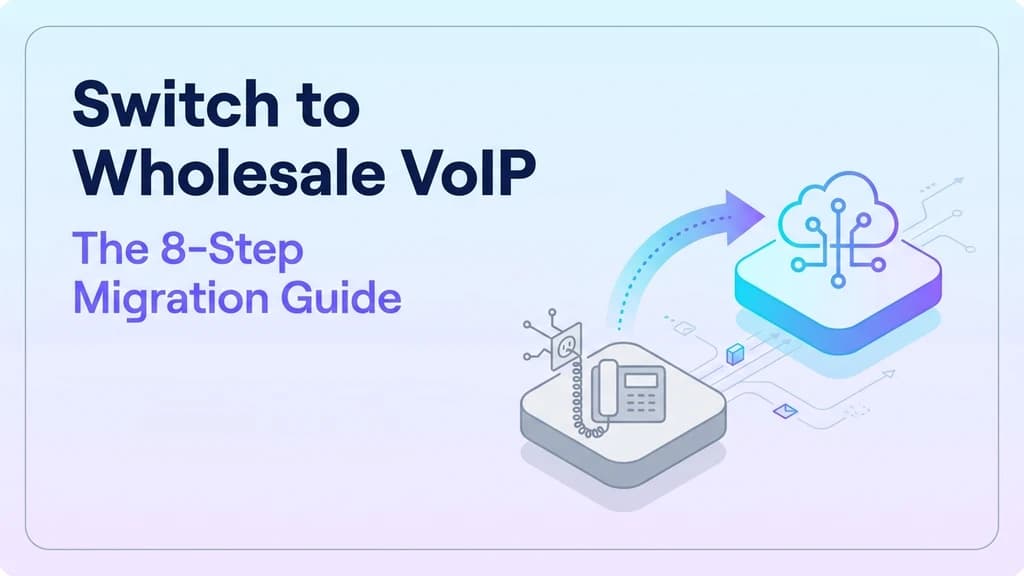
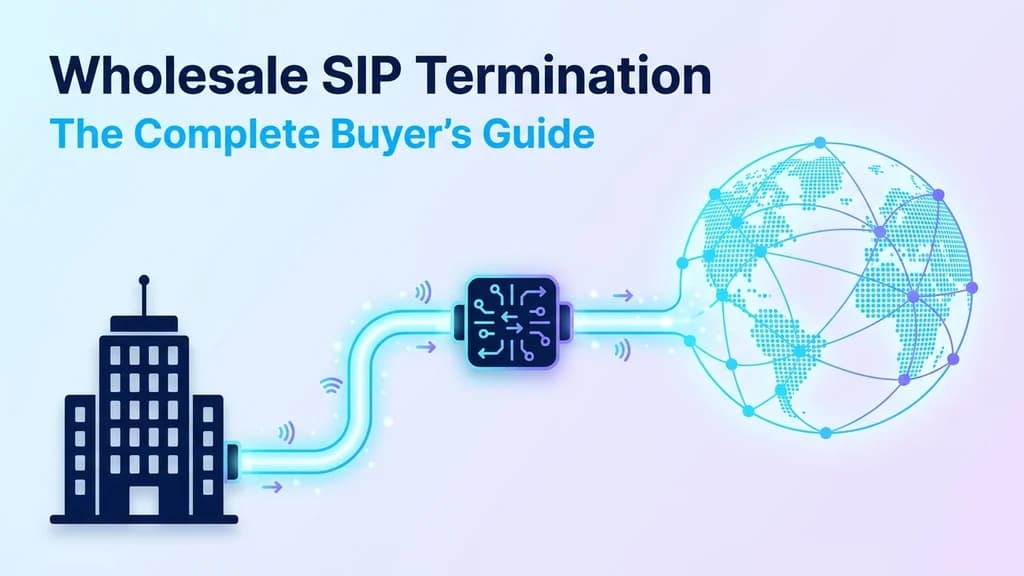
SIP trunking replaces traditional phone lines (ISDN PRI, analog POTS) with an internet-based voice connection using the SIP (Session Initiation Protocol). Instead of physical copper running to your office, your PBX or cloud phone system connects to a SIP trunk provider over IP — and that provider handles the interconnection to the public telephone network.
For a deeper introduction to the underlying technology, see our guide on what is wholesale VoIP — SIP trunking is the delivery mechanism for wholesale voice traffic at scale.
Why Brazil Is a High-Priority SIP Trunking Market
Several structural factors make Brazil both high-value and technically demanding for SIP trunking:
- Largest LATAM market: Brazil accounts for roughly 35% of Latin America's total GDP and telecom spend. Any carrier or contact center serving LATAM at scale needs reliable Brazilian coverage.
- High mobile penetration: Over 108% mobile subscriber penetration — more SIM cards than people. Brazilian mobile termination rates (MTRs) are regulated by ANATEL and vary significantly from fixed-line rates, which directly affects per-minute termination pricing.
- ANATEL complexity: Brazil's telecommunications regulator, ANATEL, requires that any company providing voice services — including SIP trunking — hold the appropriate authorization. Providers operating without ANATEL authorization create compliance risk for their customers.
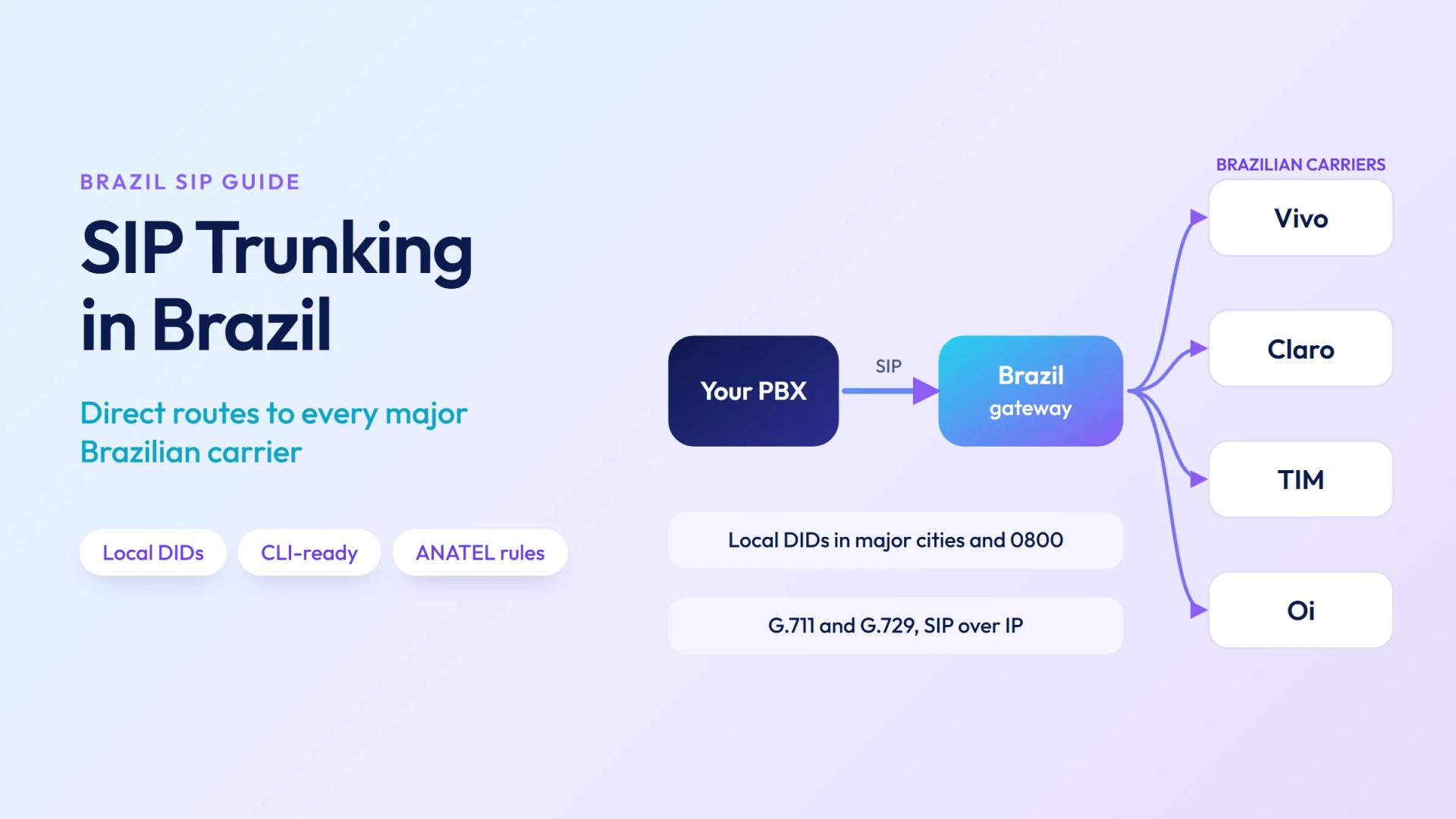
- Fragmented carrier landscape: Brazil has four major mobile operators (Vivo/Telefônica, Claro/América Móvil, TIM Brasil, and Oi) and dozens of regional fixed-line operators. Quality of termination varies sharply by carrier and by region.
How SIP Trunking Works in Brazil
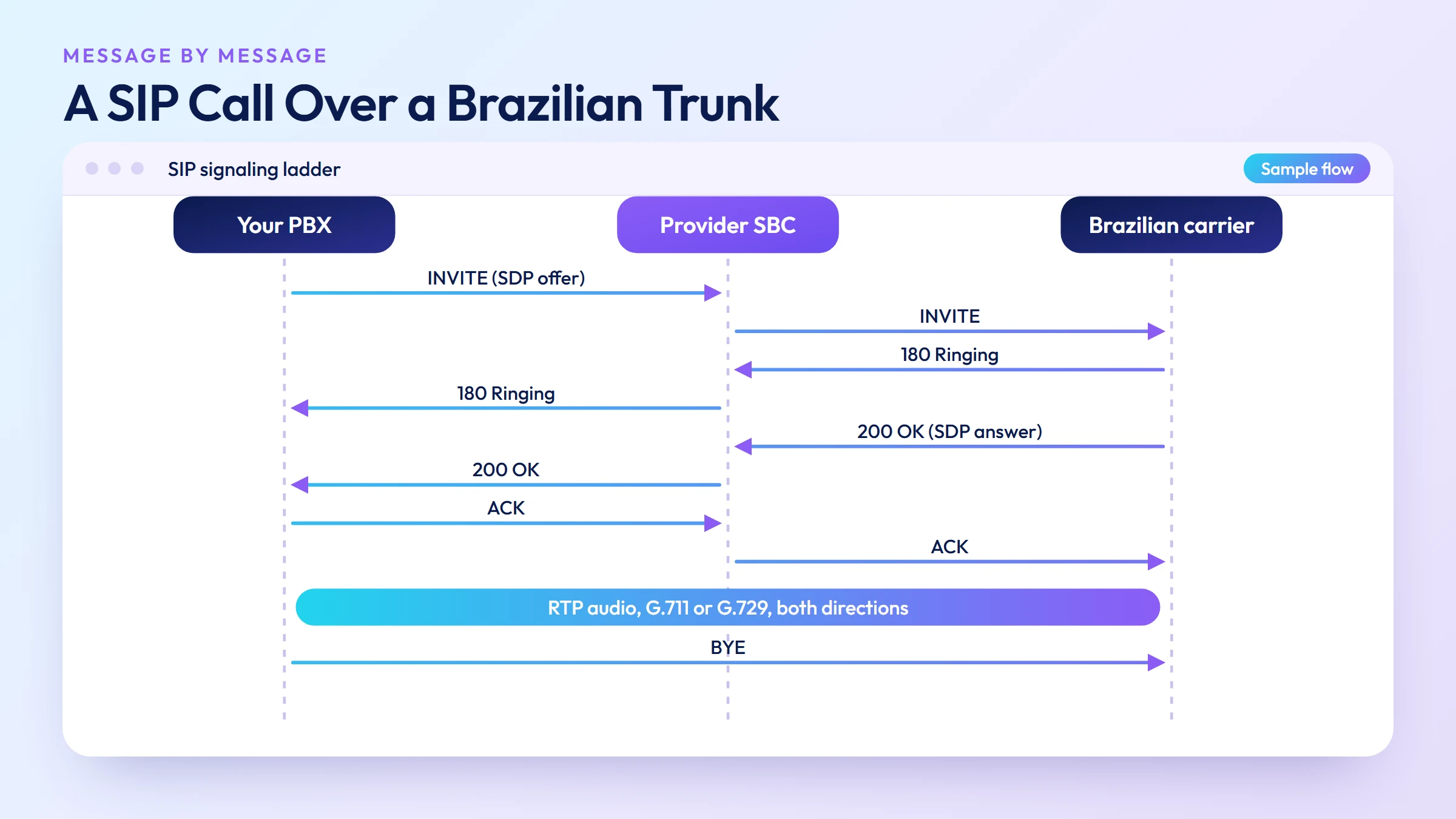
The technical flow for a Brazilian SIP trunk deployment follows the same SIP signaling architecture as any other market, with a few Brazil-specific requirements:
- Your IP PBX or UCaaS platform (Asterisk, FreePBX, 3CX, Cisco CUCM, or a cloud system like RingCentral or Zoom Phone) registers with the SIP trunk provider using SIP credentials over port 5060 (UDP/TCP) or 5061 (TLS).
- Outbound calls from your platform route through the provider's SBC (Session Border Controller) to Brazilian carrier infrastructure, then terminate to the called party's network — fixed or mobile.
- Inbound calls to your Brazilian DID numbers arrive at the provider's switch, are forwarded via SIP INVITE to your registered endpoint, and ring your agents or IVR.
- DTMF and codec negotiation happen during the SDP (Session Description Protocol) exchange — G.711 and G.729 are the most common for Brazil deployments.
For high-volume deployments — contact centers placing millions of outbound minutes to Brazilian numbers — the route quality and per-minute termination cost of the underlying wholesale voice interconnect is the dominant cost variable. This is why wholesale SIP trunk providers with direct carrier interconnects in Brazil offer significantly lower rates than retail providers re-selling third-party routes.
Ready when you are
Protect your business line.
MCM's local numbers ship with verified caller ID and smart call filtering — customers always know it's really you, and spam never reaches your team.
ANATEL Regulation: What Foreign Carriers Need to Know
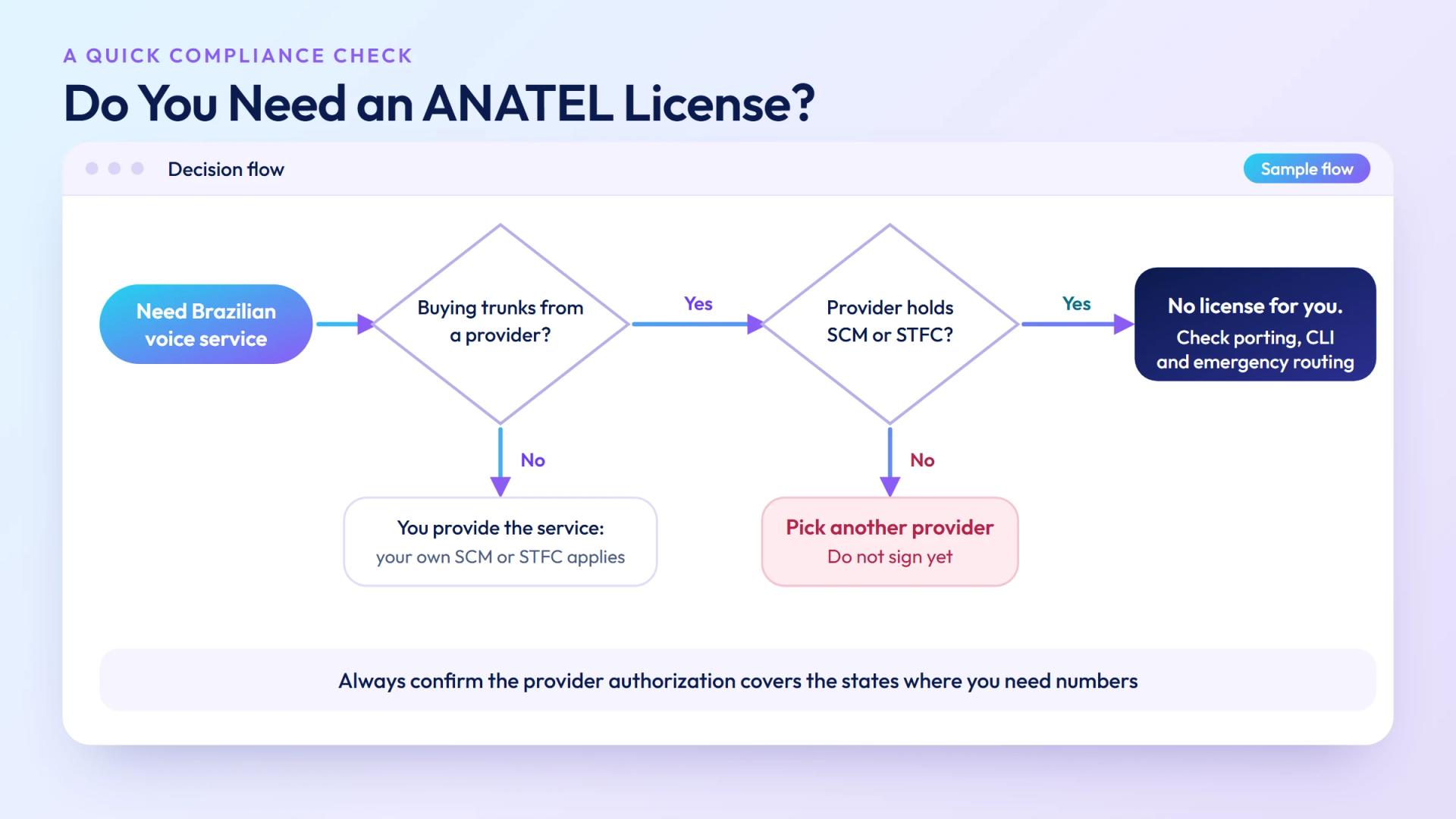
ANATEL (Agência Nacional de Telecomunicações) is Brazil's federal telecommunications regulator. Key points for businesses using SIP trunking in Brazil:
End users don't need their own license. A business buying SIP trunks from a licensed provider does not need an ANATEL authorization. The provider must hold the license — typically an SCM (Serviço de Comunicação Multimídia) authorization for data services and/or an STFC (Serviço Telefônico Fixo Comutado) authorization for fixed-line termination.
Number porting is ANATEL-regulated. Brazilian number portability is governed by ANATEL Resolution 460/2007 and administered by ABR Telecom. Porting timelines are 5–15 business days. Confirm your SIP provider supports Brazilian LNP (Local Number Portability) before signing.
Emergency services (192 and local equivalents). ANATEL requires that VoIP providers disclose emergency call limitations. Confirm how your provider handles 192 (SAMU) and 193 (Bombeiros) routing for Brazilian DIDs.
Caller ID rules. Outbound caller ID must display a valid Brazilian number for calls originating from Brazilian DIDs. Presenting a foreign CLI on a call that terminates within Brazil can violate ANATEL rules and trigger carrier-level filtering.
SIP Trunking vs. Traditional PSTN in Brazil
| Factor | SIP Trunking | Traditional PSTN (PRI/Analog) |
|---|---|---|
| Upfront cost | Low — no hardware beyond existing IP PBX | High — PRI cards, physical lines, installation |
| Monthly cost | Per-channel or per-minute — scales with usage | Fixed monthly per-line — pay whether used or not |
| Scalability | Add channels on-demand, often same day | Requires physical provisioning (weeks) |
| Geographic flexibility | Numbers in any Brazilian city from one trunk | Numbers tied to physical line location |
| Disaster recovery | Failover to backup IP endpoint instantly | Physical redundancy required (expensive) |
| International calls | Low-cost via same trunk; multiple providers | High cost; separate international access lines |
| Setup time | 24–72 hours for new DIDs | Weeks to months |
| ANATEL compliance | Provider holds authorization | Carrier holds authorization |
Brazil SIP Trunk Features: What to Look For
| Feature | Why It Matters for Brazil |
|---|---|
| Direct carrier interconnects | Lower latency and cost; avoids reseller markup; better CLI delivery to Brazilian mobiles |
| Local Brazilian DID numbers | All major cities + 0800 toll-free; local numbers increase answer rates vs. international CLI |
| Concurrent channel capacity | Contact centers need burst capacity; confirm no artificial channel limits |
| Mobile number portability (MNP) | Brazil has high MNP — your provider must route to the actual network, not the original assignee |
| G.711 and G.729 codec support | Both required for compatibility with Brazilian carrier infrastructure |
| TLS/SRTP encryption | Protects signaling and media; increasingly required for enterprise deployments |
| ANATEL-compliant CLI presentation | Prevents call filtering by Brazilian mobile operators |
| 99.99%+ uptime SLA | Brazilian customers expect high availability; contact centers cannot tolerate voice outages |
| Real-time call detail records (CDRs) | Required for billing reconciliation and ANATEL audit readiness |
Brazil Phone Numbers: DID Types and City Codes
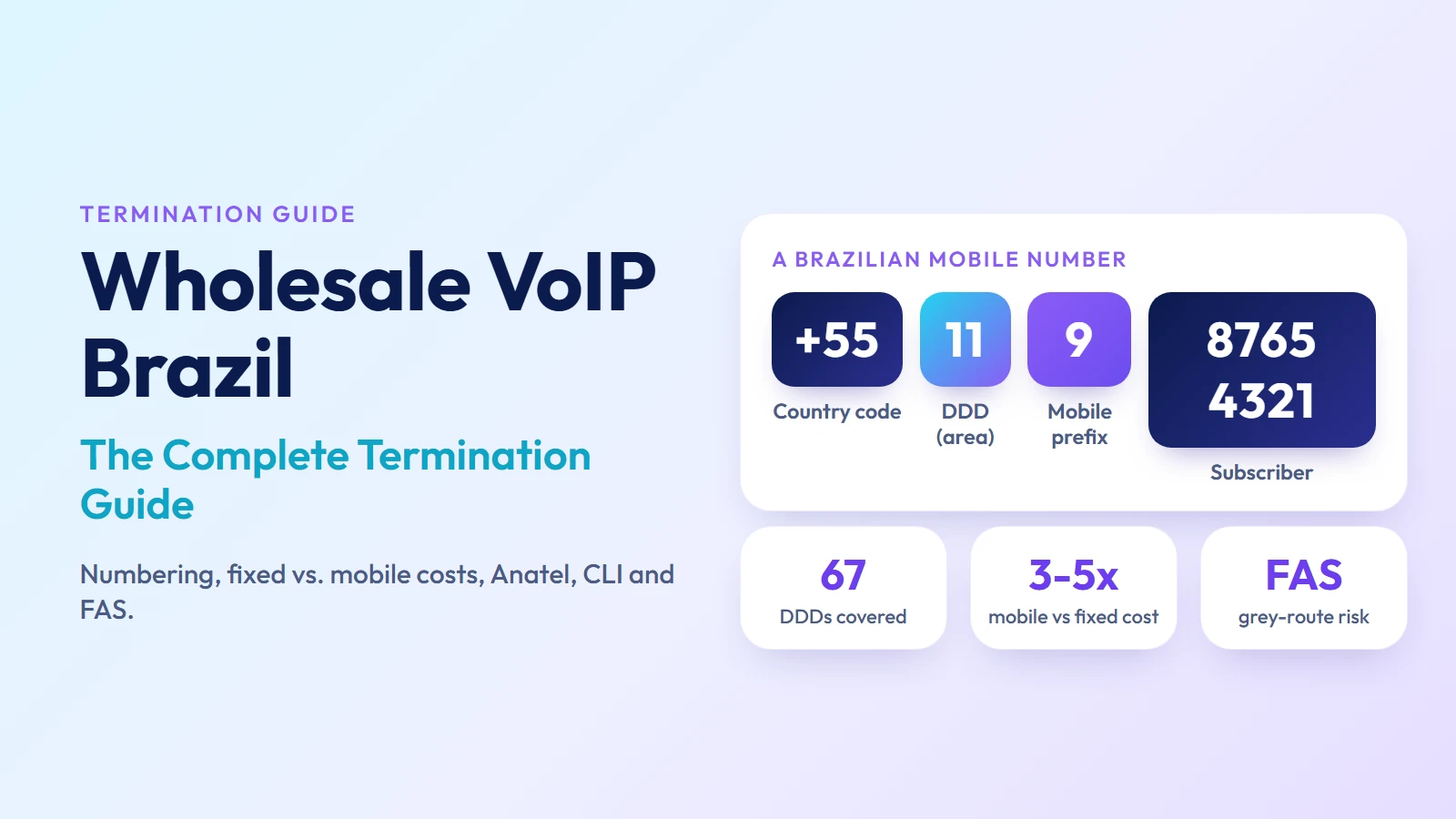
Brazilian phone numbers use a two-digit area code (DDD — Discagem Direta a Distância) followed by an 8- or 9-digit subscriber number. Mobile numbers in Brazil use a leading "9" digit, making them 9 digits long (11 total with area code). Fixed-line numbers are 8 digits.
| City | Area Code (DDD) | Number Type Available |
|---|---|---|
| São Paulo | 11 | Fixed DID, Mobile, Toll-Free |
| Rio de Janeiro | 21 | Fixed DID, Mobile, Toll-Free |
| Brasília | 61 | Fixed DID, Toll-Free |
| Belo Horizonte | 31 | Fixed DID, Toll-Free |
| Curitiba | 41 | Fixed DID, Toll-Free |
| Porto Alegre | 51 | Fixed DID, Toll-Free |
| Salvador | 71 | Fixed DID, Toll-Free |
| Fortaleza | 85 | Fixed DID, Toll-Free |
| Recife | 81 | Fixed DID, Toll-Free |
| Manaus | 92 | Fixed DID |
| National Toll-Free | 0800 | Inbound toll-free only |
For businesses running outbound contact center campaigns targeting Brazilian consumers, São Paulo (11) and Rio de Janeiro (21) DIDs produce the highest answer rates — Brazilian consumers are significantly more likely to answer calls displaying a recognizable local area code than international or unfamiliar DDDs.
SIP Trunking Rates in Brazil: What to Expect
Brazilian SIP trunking pricing has two components: the monthly DID number fee and per-minute termination charges.
DID number fees: Brazilian local numbers (fixed DID) typically run $1–$5/month per number at retail. National toll-free (0800) numbers carry a higher monthly fee ($10–$30/month) plus per-minute inbound charges that the calling party does not pay — the DID holder is billed for inbound toll-free minutes.
Termination rates: This is where the spread between retail and wholesale is widest in Brazil. Brazilian mobile termination (Claro, Vivo, TIM, Oi) is significantly more expensive than fixed-line termination due to ANATEL's mobile termination rate (MTR/VTM) framework.
- Retail SIP termination to Brazilian fixed lines: $0.025–$0.06/minute
- Retail SIP termination to Brazilian mobiles: $0.045–$0.10/minute
- Wholesale SIP termination to Brazilian fixed lines: $0.005–$0.015/minute
- Wholesale SIP termination to Brazilian mobiles: $0.015–$0.040/minute
For contact centers placing 1 million+ minutes per month into Brazilian mobile networks, the difference between retail and wholesale termination pricing is the single largest controllable cost in the operation. See our guide on wholesale VoIP in Brazil for a deeper breakdown of how carrier interconnect pricing works in the Brazilian market.
How to Set Up SIP Trunking in Brazil
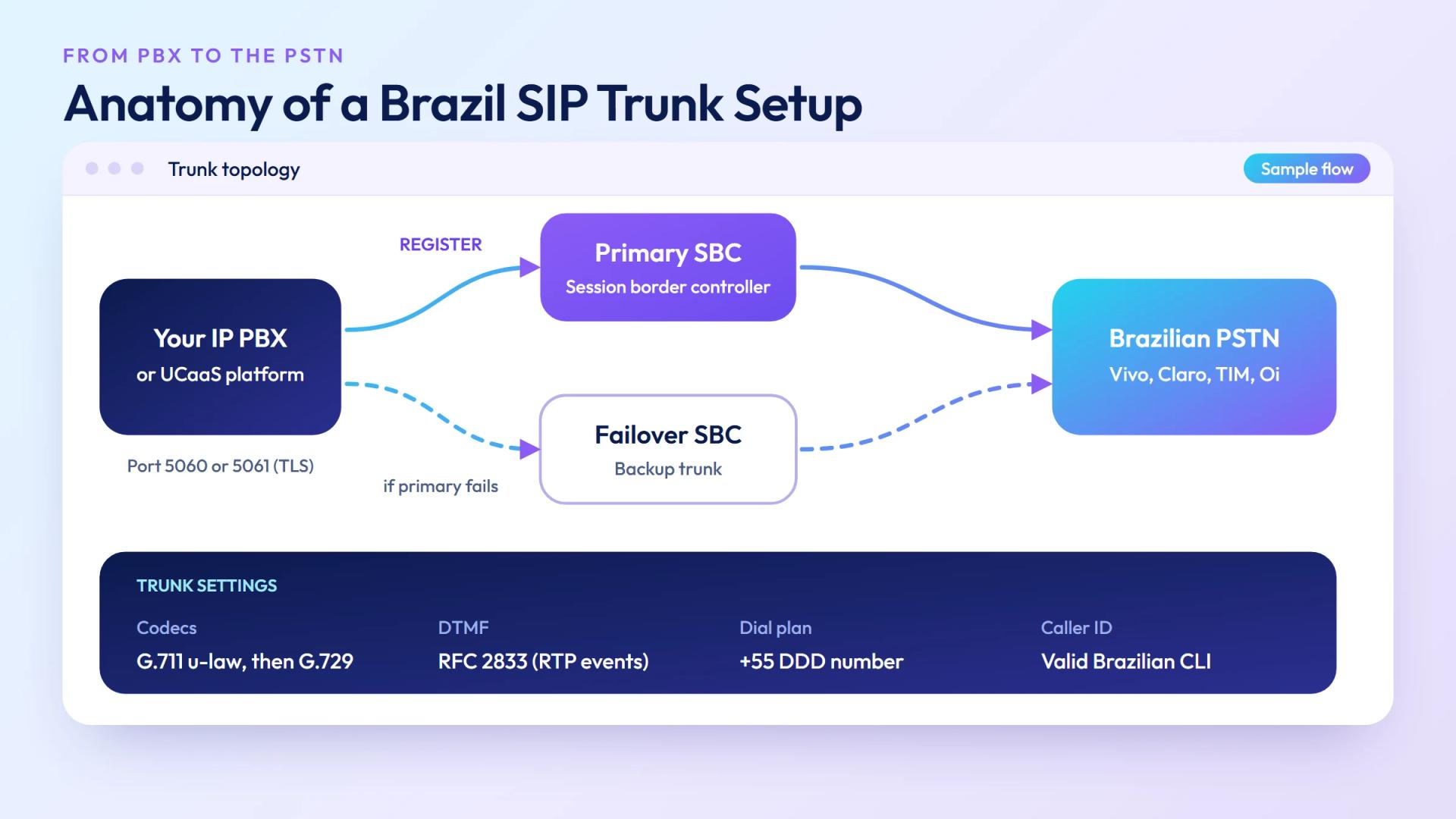
Getting a Brazilian SIP trunk operational typically takes three configuration steps on your side once the provider has provisioned the trunk:
1. Configure your SIP endpoint
Add your SIP trunk provider's server address (hostname or IP) to your PBX or UCaaS platform. Register with the SIP credentials provided — typically a username, password, and realm/domain. Set the outbound proxy to the provider's SBC IP if required. For high-availability deployments, configure both a primary and failover SBC IP.
2. Set codec and media preferences
Set G.711 (u-law preferred; a-law also supported by Brazilian carriers) as your primary codec. Add G.729 as a fallback. Disable codecs that Brazilian carrier infrastructure doesn't support (G.722 wideband is not widely deployed in Brazil's PSTN). Configure DTMF as RFC 2833 (RTP events) — in-band DTMF has reliability issues with Brazilian carrier equipment.
3. Configure dial plan and CLI
Brazilian numbers follow E.164 format: +55 (country code) + 2-digit DDD + subscriber number. Set your outbound dial plan to prefix Brazilian numbers with +55. Configure your outbound CLI (caller ID) to present a valid Brazilian number from your DID inventory — presenting a foreign CLI increases the likelihood of your calls being filtered or answered at a lower rate by Brazilian consumers and carriers.
Why Businesses Choose My Country Mobile for Brazil
My Country Mobile operates wholesale voice infrastructure with direct carrier interconnects into the Brazilian PSTN — Vivo, Claro, TIM, and Oi — rather than routing through intermediary wholesale carriers. This direct interconnect model delivers two things retail SIP providers can't match: better CLI delivery rates (your calls reach the intended network, not a transit point that re-routes them) and significantly lower per-minute termination costs.
For contact centers placing high outbound call volumes into Brazil, we offer BYOC (Bring Your Own Carrier) configurations for CCaaS and UCaaS platforms, local Brazilian DID numbers across all major DDDs, and real-time CDRs for billing reconciliation and ANATEL audit trails.
Explore My Country Mobile SIP trunking →
Ready when you are
Ready to sound local everywhere you sell?
MCM activates business numbers in minutes, with call routing, analytics, and CRM-ready integrations. Start your trial — no card to browse inventory.
Frequently asked questions
What is SIP trunking and how does it work in Brazil?
SIP trunking replaces traditional PSTN phone lines with an internet-based voice connection. In Brazil, a SIP trunk provider connects your PBX or cloud phone system to the Brazilian PSTN through SIP over IP, allowing you to make and receive local Brazilian calls without physical copper lines. The provider handles ANATEL-compliant interconnection and local number assignment.
Do I need ANATEL approval to use SIP trunking in Brazil?
End users don't need their own ANATEL license. The SIP trunk provider must hold the appropriate ANATEL authorization (SCM or STFC license) to offer voice services in Brazil. When evaluating providers, confirm they hold valid ANATEL authorization covering the Brazilian regions where you need coverage.
Can I get local Brazilian phone numbers (DIDs) with SIP trunking?
Yes. Brazilian DID numbers are available for major cities including São Paulo (11), Rio de Janeiro (21), Brasília (61), Belo Horizonte (31), Curitiba (41), Porto Alegre (51), and others. National toll-free 0800 numbers are also available. Local DIDs give your business a local presence without a physical Brazilian office.
What are typical SIP trunking rates for Brazil?
Brazilian DID numbers cost $1–$5/month at retail. Outbound termination to Brazilian mobiles runs $0.045–$0.10/minute retail, or $0.015–$0.040/minute wholesale. Fixed-line termination is significantly cheaper. Brazilian mobile termination is higher than fixed due to ANATEL's MTR framework.
What codecs are recommended for SIP trunking in Brazil?
G.711 (u-law) and G.729 are the standard codecs for Brazil SIP trunking. G.711 provides the highest quality at ~64 kbps per call. G.729 compresses to ~8 kbps for bandwidth-constrained connections. Use RFC 2833 for DTMF — in-band DTMF has reliability issues with Brazilian carrier equipment.
How long does it take to set up SIP trunking for Brazil?
New Brazilian DID numbers can be provisioned in 24–72 hours. Number porting from an existing Brazilian carrier takes 5–15 business days under ANATEL's LNP process. Emergency setup with new numbers can typically be completed same-day for smaller deployments.