Can you actually get an old phone number back?
Sometimes, yes. It depends entirely on how the number was lost and how much time has passed since then. A number canceled last week behaves very differently from one dropped two years ago.
This guide walks through the real recovery paths in the order worth trying, what actually determines whether a number is recoverable, and what to do when it isn't.
The clock matters more than anything else
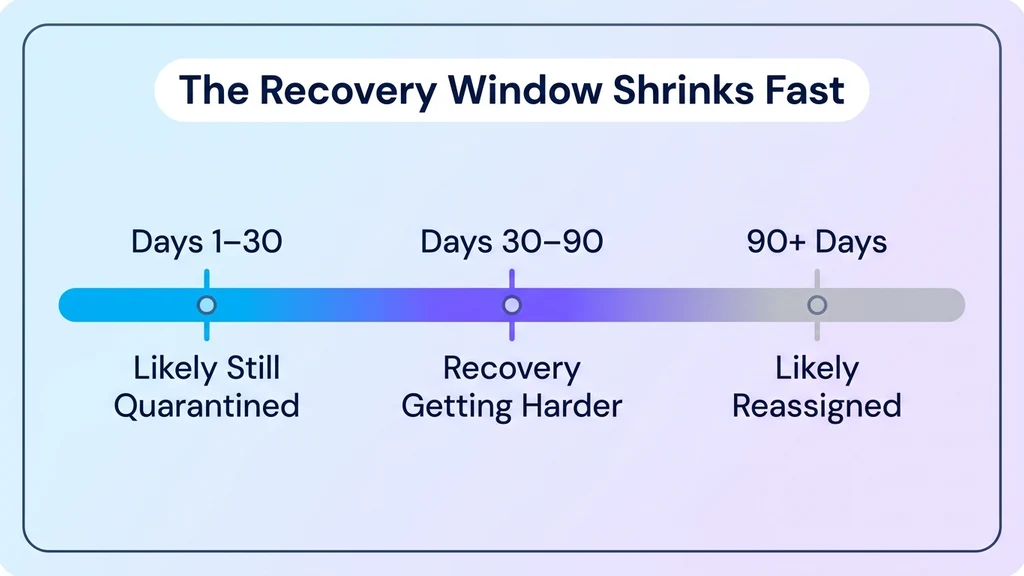
Carriers don't reassign a disconnected number immediately. Most hold it in a quarantine period — often somewhere between 30 and 90 days, depending on the carrier — before it becomes available to a new customer.
That window is the single biggest factor in whether recovery is even possible. A number disconnected last week is very likely still sitting in quarantine. A number lost a year ago has almost certainly been reassigned to someone else already.
The first move, always: call the carrier that originally issued the number and ask directly whether it's still in the quarantine period. This single call determines which of the options below actually applies.
If the number is still in quarantine
If the carrier confirms the number hasn't been reassigned yet, reactivating it is usually straightforward:
Reactivate the old account or line. If the account wasn't fully closed, some carriers allow simply restarting service on the same line, restoring the number instantly.
Request a specific number reassignment. Even after a full cancellation, some carriers can manually reassign a still-quarantined number back to a returning customer, though this varies by carrier policy and isn't guaranteed.
Act fast. Quarantine periods aren't fixed guarantees — a carrier can release a number early if demand for numbers in that area is high, so the earlier this is tried, the better the odds.
Ready when you are
Protect your business line.
MCM's local numbers ship with verified caller ID and smart call filtering — customers always know it's really you, and spam never reaches your team.
If the number has already been reassigned
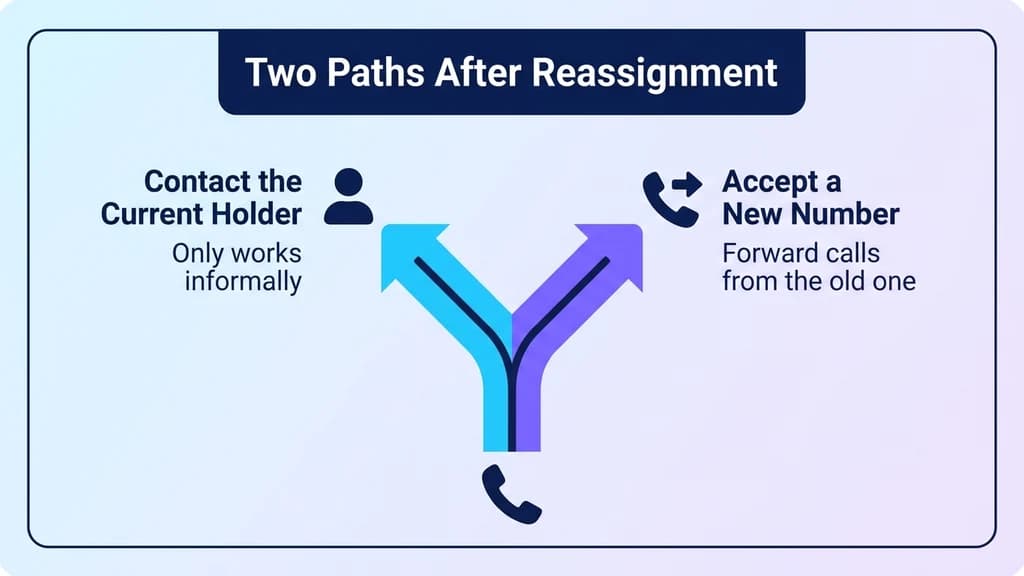
Once a carrier confirms the number now belongs to someone else, direct recovery isn't possible — carriers won't reassign a working customer's active number back to a previous owner. At this point there are two realistic paths:
Contact the current holder directly, if identifiable. This works only in rare, informal cases — for example, a family member or coworker willing to give up a number they don't actually want. It is not something a carrier will facilitate.
Accept a new number and redirect the old one's traffic. Many virtual number providers allow forwarding from a newly acquired number, or setting up a UCaaS (Unified Communications as a Service) platform — a single cloud system for calling, messaging, and video — that makes the transition easier by centralizing where calls and texts land regardless of which number they were dialed on, the same number-supply pressure covered in our guide on what NPA-NXX actually means for number assignment. My Country Mobile can set this up so contacts still relying on the old number are covered while everyone adjusts to the new one. Contact us to talk through the migration.
Why this happens more than people expect
Phone numbers are a finite, shared resource — a carrier can't leave every disconnected number sitting unused forever, especially in area codes with heavy demand. Recycling old numbers after a quarantine period is one of the ways carriers keep the supply moving instead of exhausting it faster.
How to avoid losing a number again
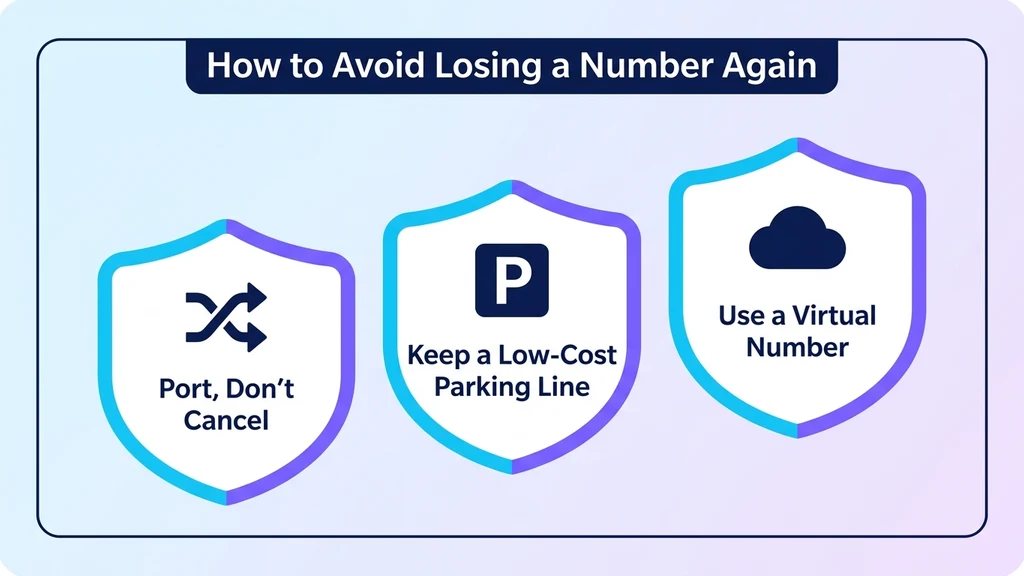
Port instead of cancel. If switching providers, porting the existing number to the new carrier keeps it alive indefinitely instead of risking cancellation and quarantine. The FCC's number portability rules require carriers to support this transfer, so it's always an available option when leaving a provider.
Keep a low-cost line active during a gap. Some providers offer a minimal-cost "parking" plan specifically to keep a number alive between contracts, cheaper than the cost of trying to recover it later.
Move to a number not tied to a physical carrier plan. A virtual number isn't at risk of the same automatic disconnection tied to unpaid device bills or plan cancellations, since it's managed independently of any specific phone or SIM.
Conclusion
Getting an old phone number back comes down almost entirely to timing: a call to the original carrier within the quarantine window is the only real path to recovering it directly. Past that window, the number is gone for good, and the practical move is accepting a new number while forwarding or redirecting the traffic that still reaches the old one. The best fix is avoiding the situation next time — porting a number instead of canceling it keeps this problem from happening again.
Key takeaways
- Carriers hold a disconnected number in quarantine for roughly 30–90 days before reassigning it — this window determines whether recovery is even possible.
- Call the original carrier first to confirm whether the number is still quarantined before trying anything else.
- Once a number is confirmed reassigned, direct recovery isn't possible — the realistic path is a new number with call forwarding set up.
- Porting instead of canceling is the actual fix that prevents this problem from happening again.
- A virtual number isn't tied to a physical carrier plan, which removes the automatic-disconnection risk entirely.
Ready when you are
Ready to sound local everywhere you sell?
MCM activates business numbers in minutes, with call routing, analytics, and CRM-ready integrations. Start your free trial — no card to browse inventory.
FAQs
How long does a carrier hold a disconnected phone number before reassigning it?
Typically somewhere between 30 and 90 days, though this varies by carrier and isn't a fixed guarantee — high demand for numbers in a given area can shorten it.
Can I get my old number back if it's already been given to someone else?
Not through the carrier — they won't reassign an active customer's working number back to a previous owner. The realistic option is accepting a new number and forwarding contacts from the old one where possible.
What's the first thing I should do if I lost my old number?
Call the carrier that originally issued the number and ask directly whether it's still in the quarantine period. That answer determines which recovery path actually applies.
Does porting a number protect it from being lost?
Yes. Porting an existing number to a new carrier keeps it continuously active, avoiding the cancellation and quarantine process that puts a number at risk of reassignment.
Is there a way to keep an old number alive without an active phone plan?
Yes. A virtual number isn't tied to a physical SIM or device plan, so it doesn't face the same automatic disconnection risk that comes with an unpaid bill or canceled plan.
Can a business recover a number lost during a provider switch?
Sometimes, if the switch happened recently and the original provider hasn't reassigned it yet. For a smoother switch next time, porting the number directly to the new provider avoids the risk altogether.