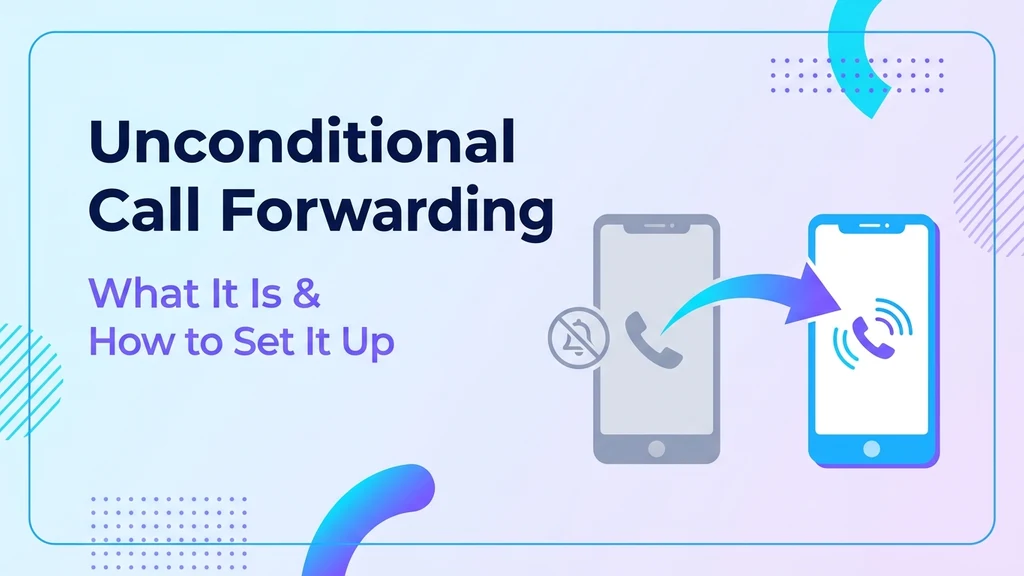
Что на самом деле означает здесь слово «безусловный»
Безусловная переадресация вызовов перенаправляет каждый входящий вызов на другой номер немедленно, без исключений — ни когда занят, ни когда без ответа, ни когда вне зоны покрытия. Это настройка «всегда», и она, скорее всего, вызовет путаницу, поскольку вызов, переадресованный таким образом, вообще никогда не звонит на исходный телефон.
В этом руководстве рассказывается, что отличает ее от условной переадресации, коды активации, которые включают ее непосредственно через сеть, а также этапы настройки на устройствах, которые люди фактически используют.
Безусловный и условный: разница, которая имеет значение
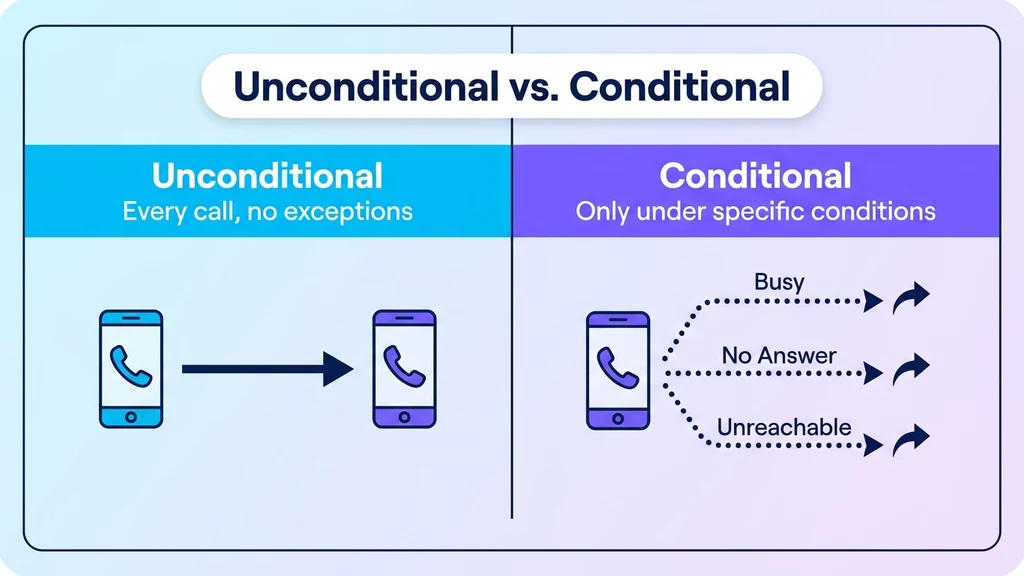
Безусловная переадресация активируется один раз и остается активным при каждом вызове, пока не будет отключен вручную. Оригинальный телефон никогда не звонит — каждый звонок поступает прямо к адресату переадресации.
Условная переадресация активируется только при определенных обстоятельствах: когда линия занята, когда после заданного количества звонков нет ответа или когда телефон недоступен (выключен или находится вне зоны покрытия). Каждое из этих трех условий контролируется отдельно от безусловной переадресации, и в телефоне может быть одновременно активировано несколько условий.
Это различие имеет значение, поскольку отключение одного не влияет на другое — частый источник путаницы для тех, кто занимается устранением неполадок телефона, который все еще перенаправляет вызовы после отключения только одного типа.
Коды активации
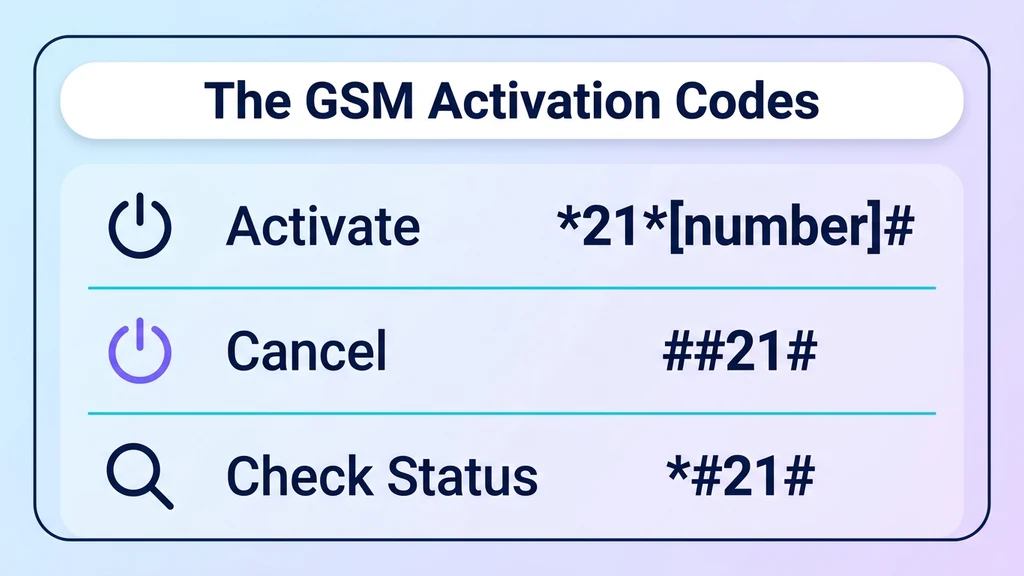
В большинстве сетей GSM по всему миру безусловная переадресация контролируется непосредственно через сеть с помощью звездного кода, независимо от какого-либо экранного меню:
- Активировать: набирать номер
*21*[destination number]#и нажмите вызов. - Отмена: набирать номер
##21#и нажмите вызов. - Проверить статус: набирать номер
*#21#и нажмите вызов — на экране отображается, активен ли он и на какой номер идут вызовы.
Эти коды работают на сетевом уровне, а это означает, что они работают даже на телефонах, где настройки скрыты в запутанном меню или вообще отсутствуют. Они происходят из стандартные коды MMI для переадресации вызовов встроен в уровень сети GSM и предназначен для всех, кому нужна техническая подготовка.
Готов, когда вы будете
Защитите свое бизнес-направление.
Местные номера MCM поставляются с проверенным идентификатором вызывающего абонента и интеллектуальной фильтрацией вызовов — клиенты всегда знают, что это действительно вы, и спам никогда не доходит до вашей команды.
Настройка на iPhone и Android
На iPhone: откройте «Настройки», затем «Телефон», затем «Переадресация вызовов», затем включите ее и введите номер назначения. Это напрямую связано с *21* код выше, просто через меню вместо набранного кода.
На Android: откройте приложение «Телефон», коснитесь трехточечного меню, перейдите в «Настройки», затем «Вызовы», затем «Переадресация вызовов» и выберите «Всегда переадресовывать» (формулировка немного различается в зависимости от производителя). Введите номер назначения и подтвердите.
Если какой-либо путь меню не работает (что чаще случается на устройствах, привязанных к оператору связи или устройствах CDMA), *21* стар-код работает напрямую через сеть независимо от того, что показывают собственные настройки телефона.
Где на самом деле используется безусловная переадресация
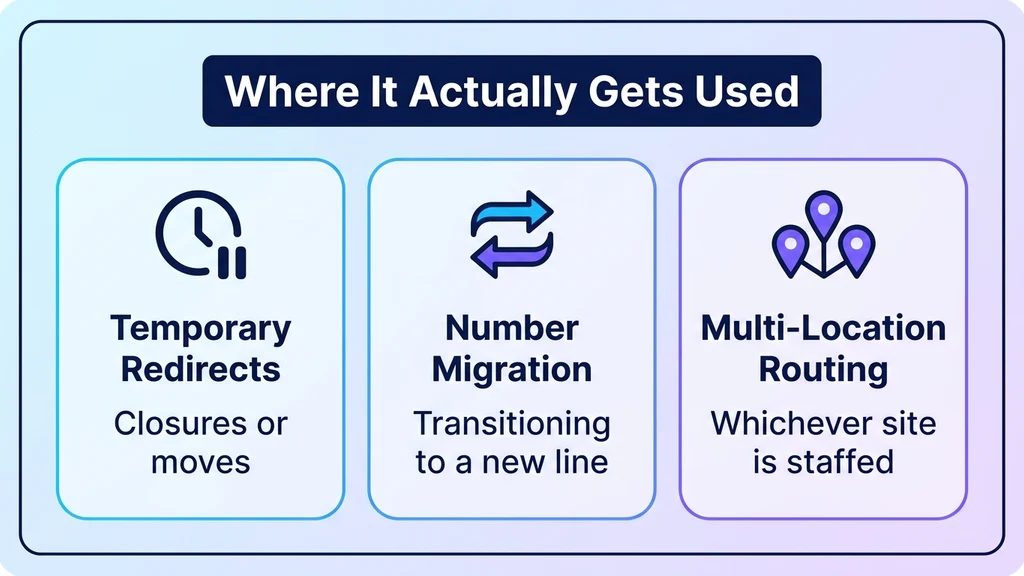
Временные полные редиректы. Переадресация каждого звонка на личный или резервный номер, пока деловая линия находится без присмотра — во время закрытия, переезда или до полной настройки новой системы — является наиболее распространенным законным использованием.
Тестирование нового номера перед переключением. Компании, переходящие на новый номер, иногда безоговорочно перенаправляют старый номер на новую линию в течение переходного периода, поэтому звонящие по старому номеру достигают нужного места, не зная, что что-то изменилось.
Маршрутизация по нескольким адресам. Один опубликованный номер может безоговорочно перенаправляться в любое место, где в тот день действительно работают сотрудники, что является одним из самых простых шаблонов маршрутизации, доступных перед настройкой полного автосекретаря или меню IVR.
Компании, использующие подобные установки в любом реальном масштабе, обычно переносят их в UCaaS (унифицированные коммуникации как услуга) платформа — единая облачная система для звонков, обмена сообщениями и видео — где правилами переадресации можно управлять централизованно по каждой линии вместо набора звездных кодов на отдельных телефонах. Тот же сдвиг описан в нашем руководство по отключению переадресации вызовов для обратного случая. My Country Mobile обеспечивает централизованную маршрутизацию вызовов для бизнес-номеров. Связаться с нами чтобы настроить правила переадресации для всей команды, а не для каждого устройства.
Одна ошибка, которая вызывает больше всего путаницы
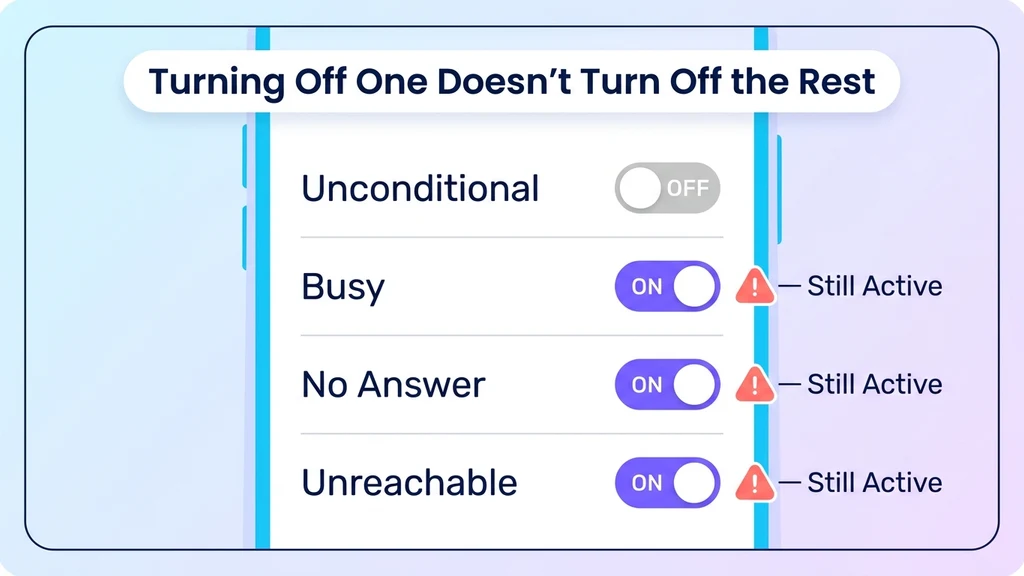
Отключение безусловной переадресации не затрагивает условную переадресацию, и наоборот — они управляются независимо, хотя оба подпадают под общий термин «переадресация вызовов». Любой, кто занимается устранением неполадок телефона, который все еще перенаправляет вызовы после отключения одного типа, должен проверить все четыре параметра (безусловный, занят, нет ответа, недоступен), а не предполагать, что кто-то отменяет остальные.
Заключение
Безусловная переадресация вызовов концептуально является самым простым из типов переадресации — каждый вызов, без исключений — но она также, скорее всего, будет включена случайно, поскольку ничто на исходном телефоне не указывает на то, что она активна, кроме самой настройки. *21* и ##21# коды надежно работают у всех операторов GSM независимо от того, что отображается в меню телефона, поэтому их стоит знать даже тем, кто вместо этого обычно управляет переадресацией через настройки.
Ключевые выводы
- Безусловная переадресация немедленно перенаправляет каждый вызов — оригинальный телефон вообще никогда не звонит, пока он активен.
- Это контролируется независимо от условной переадресации (занято, нет ответа, недоступно), поэтому отключение одного не влияет на остальные.
- The
*21*[number]#код активирует его,##21#отменяет его и*#21#проверяет свой статус в большинстве сетей GSM. - Общие законные виды использования включают временные перенаправления, миграция номеров и маршрутизация между несколькими местоположениями.
- В масштабе бизнеса, централизуя это в Платформа UCaaS заменяет ручной набор звездных кодов на отдельных телефонах.
Готов, когда вы будете
Готовы звучать локально везде, где вы продаете?
MCM активирует бизнес-номера за считанные минуты благодаря маршрутизации вызовов, аналитике и интеграции с CRM. Начните пробную версию — без карты для просмотра инвентаря.
Часто задаваемые вопросы
Что означает «безусловная» переадресация вызовов?
Это означает, что каждый входящий вызов перенаправляется немедленно, без исключений, а не только тогда, когда он занят или не отвечает. Исходный телефон никогда не звонит, пока он активен.
Какой код включает безусловную переадресацию звонков?
*21*[destination number]# активирует его в большинстве сетей GSM. ##21# отменяет его и *#21# проверяет, активен ли он в данный момент.
Отключает ли отключение безусловной переадресации и условную переадресацию?
Нет. Они контролируются независимо. При отключении безусловной переадресации любые активные условные настройки (занято, нет ответа, недоступно) остаются нетронутыми.
Будет ли звонящий знать, что его звонок был переадресован без каких-либо условий?
Обычно нет. В большинстве случаев вызов подключается к месту переадресации без уведомления вызывающего абонента.
Можно ли настроить безусловную переадресацию без кодов, используя только настройки телефона?
Да. И iPhone, и Android имеют для этого переключатель на основе меню, который соответствует той же базовой настройке сети, что и *21* код.
Почему компания хочет, чтобы каждый звонок безоговорочно перенаправлялся куда-то еще?
Общие причины включают временное закрытие, переход на новый номер во время перехода или маршрутизацию одного опубликованного номера в любое место, где в этот день есть сотрудники.