Introduction

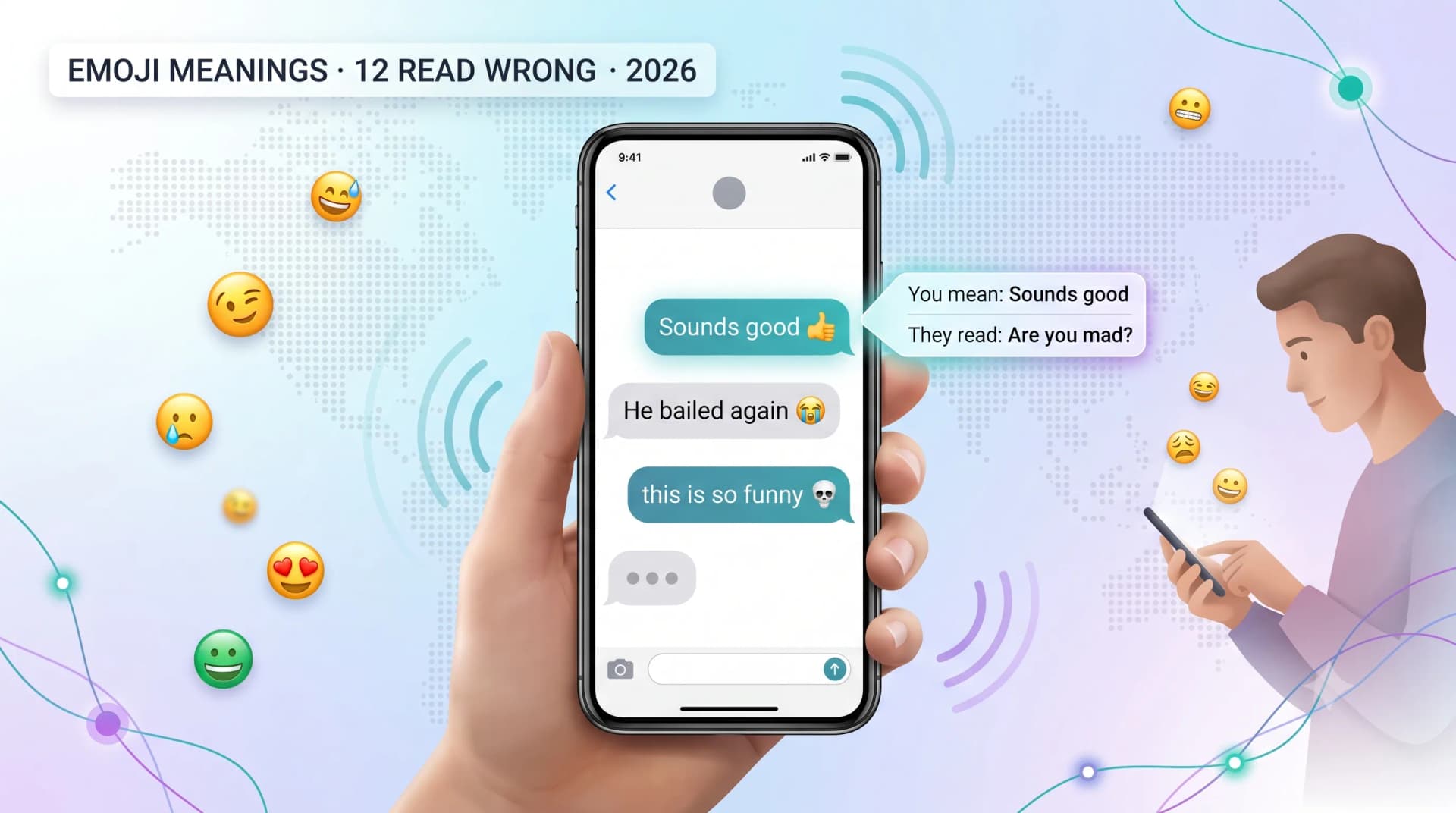
You sent a thumbs-up to close a friendly chat. The other person read it as cold and dismissive. Same emoji, two completely different messages — and neither of you was wrong.
That's the trap with emoji. The little pictures feel universal, but their meaning shifts by age group, by app, and by who's on the other end.
This isn't another A-Z list. We're walking through the twelve emoji most likely to be misread in 2026 — what people think they mean, what they often signal now, and how to use them without an awkward misfire.
7-minute read. Updated May 2026.
WHY EMOJI MEANINGS KEEP SHIFTING
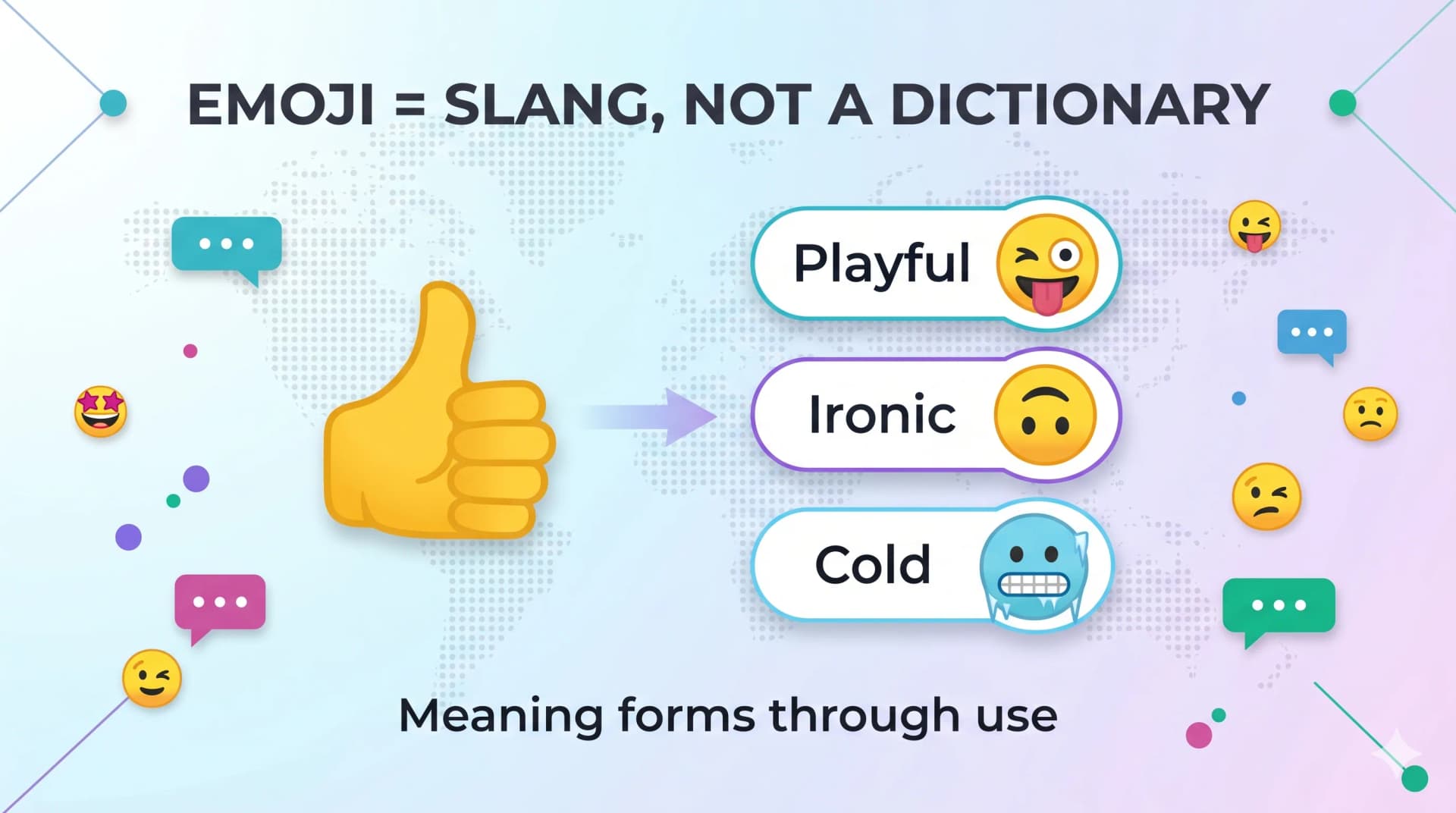
Emoji aren't a fixed language. They behave more like slang — meaning forms through use, and use changes fast.
A symbol can mean one thing to a teenager and the opposite to their parent. It can read as playful on TikTok and passive-aggressive in a work email.
If you want the plain definitions, our emoji dictionary covers those. This post tackles the harder part: context.
THE THREE FORCES THAT BEND EMOJI MEANING
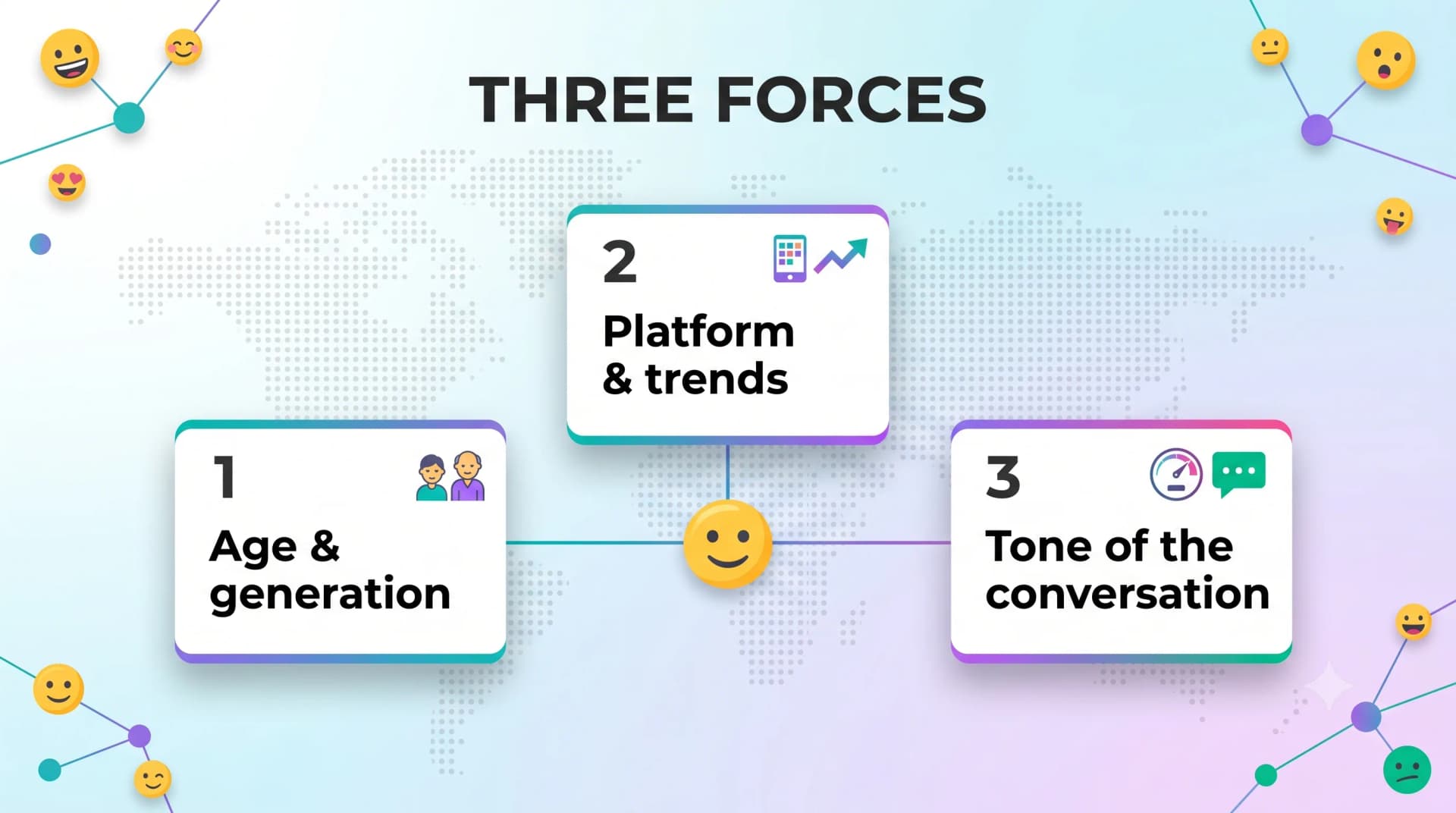
Before the list, it helps to know what's actually pulling these symbols around. Three forces do most of the work.
Age and Generation
Older users tend to read emoji literally — a smiley means happy. Younger users layer in irony, so a "happy" face can mean the exact opposite.
Platform and Trend Cycles
A meaning can blow up on one app in a week, then fade. What's current on social media often hasn't reached group texts yet.
Tone of the Conversation
The same emoji softens a joke and sharpens an insult. Surrounding words decide which.
Ready when you are
Protect your business line.
MCM's local numbers ship with verified caller ID and smart call filtering — customers always know it's really you, and spam never reaches your team.
12 EMOJI PEOPLE READ WRONG
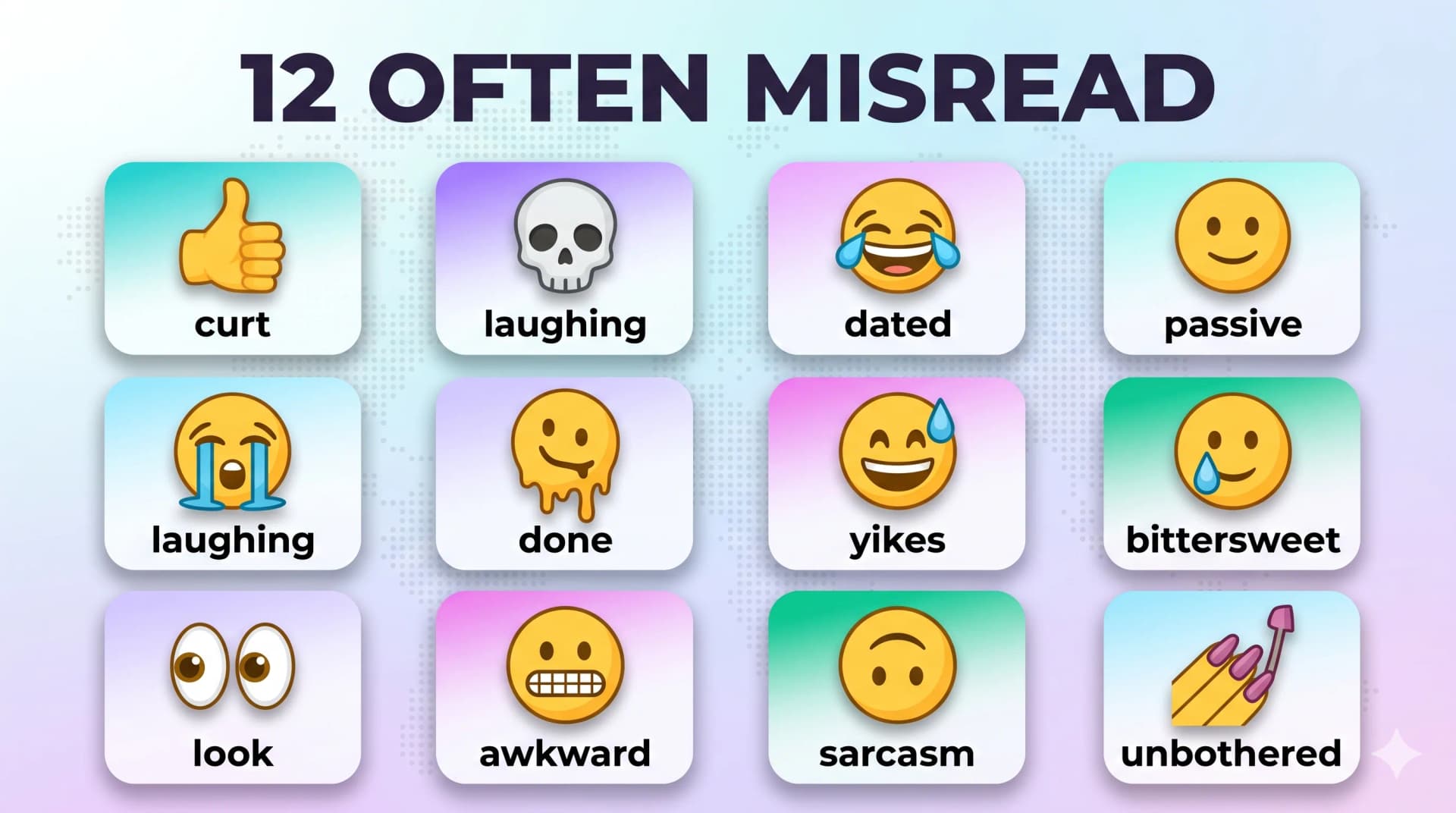
Here are the twelve worst offenders, starting with the one that causes the most everyday friction.
1. Thumbs Up 👍
You mean: "Got it, sounds good." Often read as: "I'm done talking to you." Among younger texters, a lone thumbs-up can feel curt or annoyed. A short word — "perfect!" — is safer.
2. Skull 💀
You mean: nothing morbid at all. It actually signals: "I'm dead" — as in something is so funny you can't cope. It has quietly replaced the crying-laughing face for many users.
3. Crying-Laughing Face 😂
You mean: "This is hilarious." The shift: it still works, but in some circles it now reads as slightly dated. The skull and the loudly-crying face often do the same job now.
4. Slightly Smiling Face 🙂
You mean: a gentle, pleasant smile. Often read as: forced politeness, mild irritation, or sarcasm. It's the emoji equivalent of a tight-lipped grin — use it carefully.
5. Information Desk Person 💁
You mean: confidence or sass — hand on hip, attitude on display. Original intent: someone offering help or information at a desk. The sassy reading won, but the gap still trips people up.
6. Grimacing Face 😬
You mean: people often send it as excitement or a big grin. It actually signals: discomfort, awkwardness, or "yikes." Sending it as enthusiasm can land as nervous regret instead.
7. Cap 🧢
You mean: a hat. In slang: lying or exaggerating. "No cap" means "I'm being serious." Drop a cap into a sincere message and you may accidentally call yourself a liar.
8. Snake 🐍
You mean: an animal. It actually signals: betrayal, two-facedness, or someone untrustworthy. Tag a friend with it and the joke may not land as a joke.
9. Goat 🐐
You mean: the farm animal. In slang: GOAT — Greatest Of All Time. It's praise, not a barnyard reference, and missing that flips a compliment into confusion.
10. Sparkles ✨
You mean: magic, glitter, something special. The twist: it's also used to wrap a phrase in sarcasm — "✨great✨" can mean the opposite of great. Tone decides.
11. Fire 🔥
You mean: literal fire or danger. It actually signals: something is excellent or impressive. "This is fire" is high praise — context makes it clear, but new users still pause.
12. Loudly Crying Face 😭
You mean: deep sadness. Often read as: overwhelmed laughter or being emotionally "destroyed" by something cute or funny. Real sadness and pure joy now share one face.
QUICK REFERENCE: LITERAL VS. CURRENT MEANING
| Emoji | Literal Read | Common 2026 Read |
|---|---|---|
| 👍 | Approval | Curt / dismissive |
| 💀 | Death | "So funny I'm dead" |
| 🙂 | Friendly smile | Forced / passive-aggressive |
| 🧢 | A hat | Lying ("cap") |
| 🐐 | A goat | Greatest Of All Time |
| 🔥 | Fire | Impressive / excellent |
| ✨ | Sparkle | Emphasis or sarcasm |
| 😭 | Sadness | Overwhelmed laughter |
The one rule that prevents most mistakes: match the emoji to the reader, not to yourself. Write to a 19-year-old and a 55-year-old the same way, and one of them will misread you.
HOW TO AVOID SENDING THE WRONG MESSAGE
You don't need to memorize trends. Four habits cover almost every situation.
Mirror the Other Person
If they use emoji sparingly and literally, do the same. If they're playful and ironic, you can be too.
Keep Work Chats Literal
In professional messages, stick to clear, universally understood emoji — a checkmark, a simple smile. Save irony for friends.
Use Words for Anything Important
For approvals, deadlines, or sensitive topics, a short sentence beats a symbol. Emoji add tone; they shouldn't carry the message.
When Unsure, Skip It
A plain "thanks" never gets misread. If you can't predict how an emoji will land, leaving it out is the safe call.
WHY THIS MATTERS FOR BUSINESSES
Brands text customers constantly now — order updates, support replies, reminders. A misread emoji in those messages costs trust.
A casual 🙂 in a service reply can read as sarcastic to an already-frustrated customer. Teams sending business SMS should keep emoji minimal and unambiguous.
If your company runs customer messaging at scale, our overview of business SMS explains how to keep tone consistent across every text.
WHERE TO GO FROM HERE
Emoji meanings will keep moving — that's the nature of a living, informal language. The goal isn't to chase every trend.
It's simpler: read your audience, keep important messages in plain words, and treat emoji as seasoning, not the meal. Do that and you'll rarely send the wrong signal.
Run customer messaging for your business? Explore SMS and voice tools at mycountrymobile.com No credit card to start · quick setup · clear, reliable delivery
Want to go deeper on the symbols themselves? Our emoji dictionary lists definitions for hundreds of them.
THE BOTTOM LINE
Emoji feel universal, but they aren't. The twelve above prove how easily a friendly symbol becomes a cold one — or a compliment becomes confusion.
Next time you reach for an emoji, pause for one second and ask who's reading it. That single habit fixes most miscommunication before it happens.
Ready when you are
Ready to sound local everywhere you sell?
MCM activates business numbers in minutes, with call routing, analytics, and CRM-ready integrations. Start your trial — no card to browse inventory.
FAQs
Why do emoji meanings change so often?
Emoji work like slang. Meaning is shaped by how people use a symbol, and online culture moves fast — so a meaning can shift within months, especially among younger users on trend-driven apps.
Does the same emoji mean different things on different apps?
Yes. Designs vary slightly between Apple, Google, and Samsung, which can change tone. Usage also differs — what's common on one platform may be rare on another.
Is the thumbs-up emoji rude?
Not inherently. But among many younger texters it can read as dismissive or "conversation over." In casual chats with that group, a short word is friendlier; in formal messages, a thumbs-up is usually fine.
Why do people use 💀 to mean something is funny?
It's shorthand for "I'm dead" — the idea that something is so funny it figuratively killed you. It has largely taken over the role the crying-laughing face used to play.
Which emoji are safest for work messages?
Stick to clear, literal ones: a checkmark, a simple smiley, a wave. Avoid emoji known for irony or slang meanings, since misreads in a professional context are costly.
How can businesses avoid emoji misunderstandings with customers?
Keep it minimal and literal. Use emoji only to add light warmth, never to carry key information like order status or deadlines, and keep the tone consistent across every message.
Are there emoji that mean the opposite of how they look?
Several. Sparkles ✨ can signal sarcasm, a slightly smiling face 🙂 can read as irritation, and a loudly crying face 😭 often means overwhelmed laughter rather than sadness.