
What Does SMH Mean in Text?
SMH means "shaking my head." It is a quick way to show disbelief, disappointment, or mild frustration without typing a full sentence.
You will see it everywhere — group chats, Instagram comments, TikTok replies, Snapchat. It is one of the most common texting acronyms in use, and it has been for years.
This post gives you the fast answer, real examples, the tone behind it, and a few related acronyms so you never misread a message again.
SMH MEANING EXPLAINED
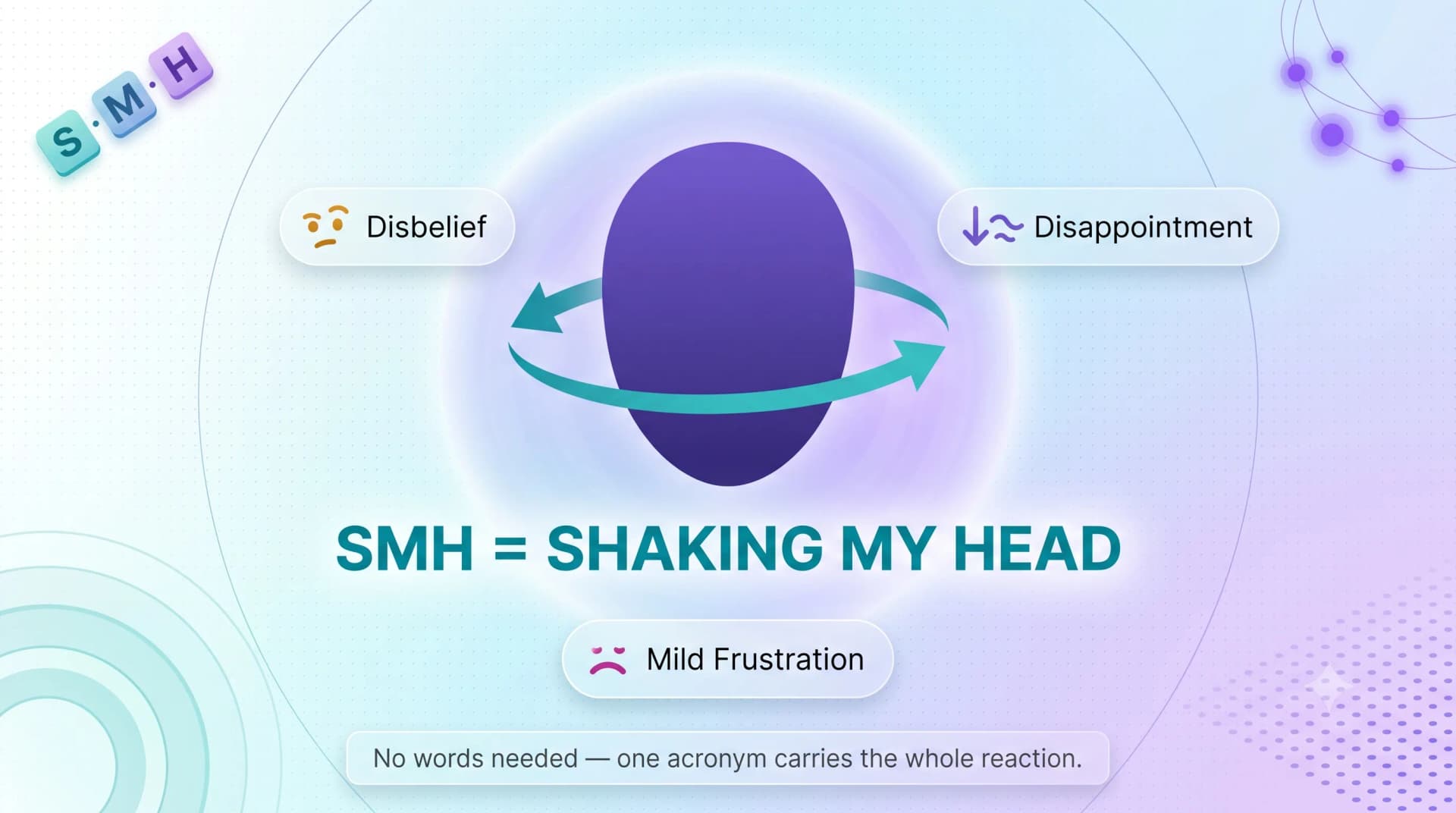
SMH is shorthand for the physical act of shaking your head — the thing you do in real life when something is hard to believe.
When someone types it, they are reacting. They saw something silly, frustrating, or disappointing, and "shaking my head" sums up the feeling instantly.
It works as a full reply on its own. A single "smh" can carry a whole emotion.
Why People Use It
The appeal is speed. Typing "smh" takes a second; explaining your reaction takes a paragraph.
It also softens things. Instead of a harsh comment, "smh" lands as a light eye-roll — there but not aggressive.
HOW TO USE SMH IN A TEXT
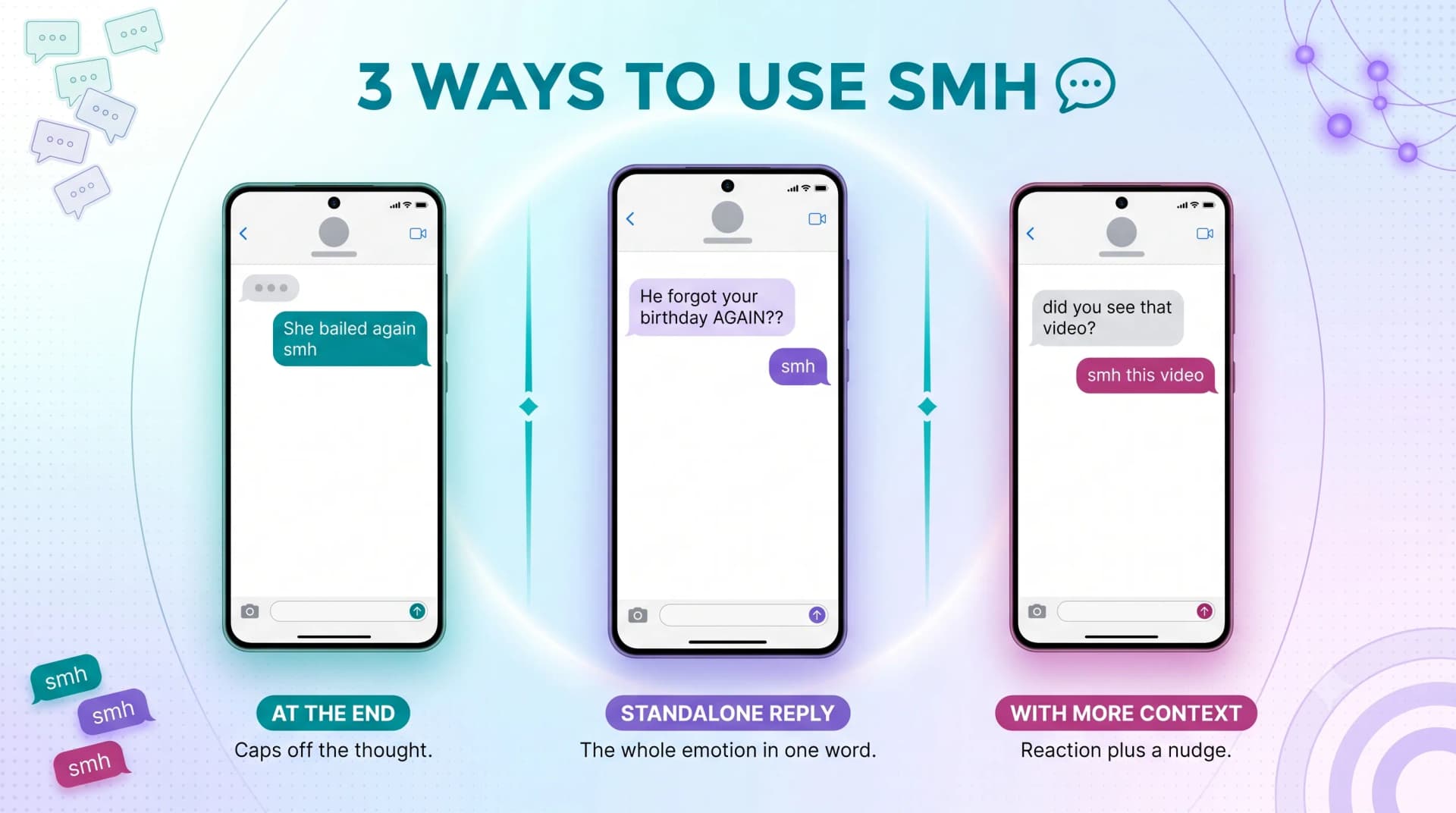
SMH usually goes at the start or end of a message, or stands completely alone.
At the End of a Sentence
Here it caps off a thought with a reaction. "He forgot my birthday again, smh."
The acronym adds the emotional punchline without extra words.
As a Standalone Reply
Sometimes "smh" is the whole message. A friend sends bad news or a ridiculous screenshot, and you just reply: "smh."
It signals you have read it and you are not impressed — no further explanation needed.
Real Text Examples
| Situation | Example message | What it means |
|---|---|---|
| Plans cancelled | "She bailed again smh" | Disappointed, not shocked |
| Cringe content | "smh this video" | Mild secondhand embarrassment |
| Obvious mistake | "You replied-all to the whole company smh" | Playful disapproval |
| Bad news | "smh" | Quiet frustration, no words needed |
Ready when you are
Protect your business line.
MCM's local numbers ship with verified caller ID and smart call filtering — customers always know it's really you, and spam never reaches your team.
THE TONE BEHIND SMH
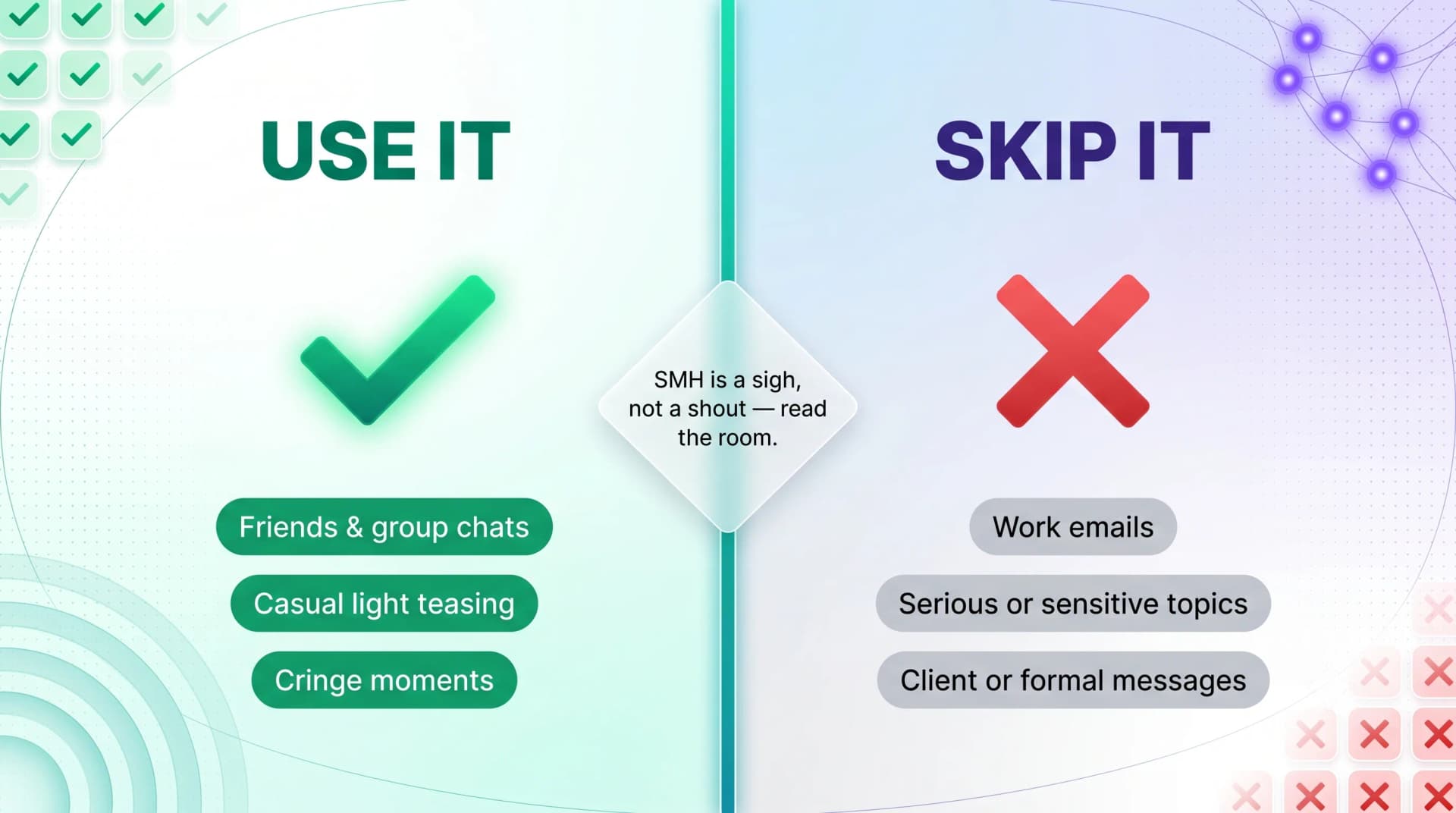
SMH is mild. It signals disappointment, not rage — closer to a sigh than a shout.
When It Fits
Use it for small letdowns, harmless mistakes, cringe moments, and playful teasing. Among friends it reads as casual and good-natured.
It is the right call when you want to react without making a big deal of it.
When to Skip It
Avoid SMH in formal messages — work emails, client texts, anything professional. It reads as too casual and slightly judgmental.
For serious situations, real disappointment, or sensitive topics, type out what you actually mean. An acronym cannot do that job.
OTHER MEANINGS OF SMH
"Shaking my head" is by far the main meaning, but context occasionally shifts it.
You may see SMH stand for "scratching my head" (confusion), "so much hype" (excitement), or "so much hate" (negativity). These are rare.
When in doubt, default to "shaking my head" — it is correct the vast majority of the time.
RELATED TEXTING ACRONYMS WORTH KNOWING
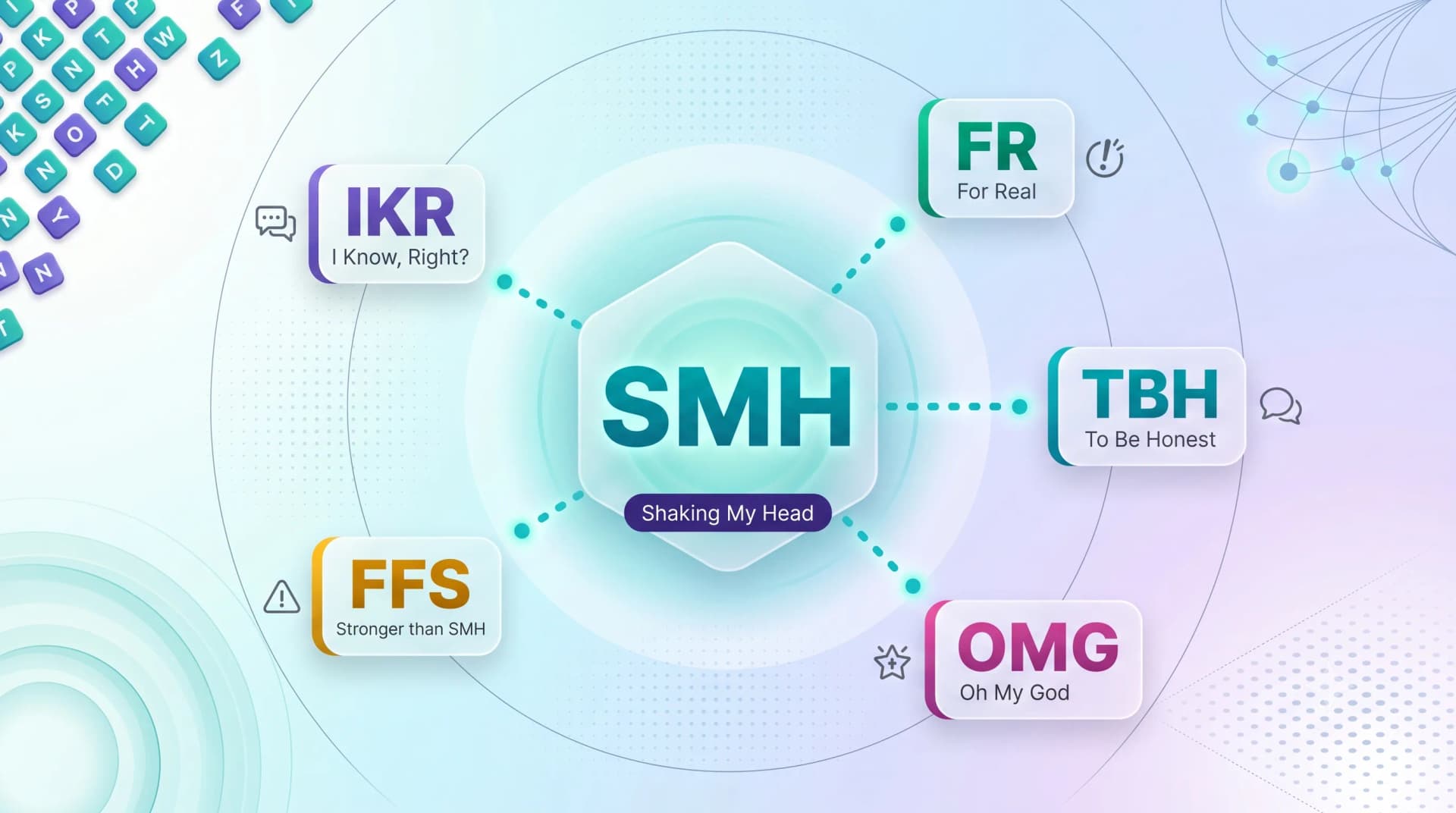
SMH rarely travels alone. These acronyms often appear in the same conversations.
Reaction Acronyms
IKR — "I know, right?" Agreement with a shared reaction. FR — "for real," used to confirm or emphasize.
TBH — "to be honest," signaling a candid opinion is coming.
Disbelief and Frustration
OMG — "oh my God," surprise or shock. WYD — "what you doing," a casual check-in.
FFS — a stronger, blunter cousin of SMH. Use that one carefully.
TEXTING SLANG AND CLEAR COMMUNICATION
Slang like SMH makes casual chat fast and expressive. But the same shorthand can blur meaning when the message actually matters.
Tone is hard to read in text. A reaction acronym can land as funny to one person and dismissive to another.
That is why businesses keep customer messaging clear and human — services built on virtual phone numbers help teams text customers professionally, without the guesswork that slang can create.
Ready when you are
Ready to sound local everywhere you sell?
MCM activates business numbers in minutes, with call routing, analytics, and CRM-ready integrations. Start your free trial — no card to browse inventory.
FAQs
What does SMH mean in a text?
SMH means "shaking my head." It expresses disbelief, disappointment, or mild frustration in a quick, casual way.
Is SMH rude?
Not usually. It signals a light eye-roll rather than anger. It can read as dismissive in formal settings, so keep it for casual chats.
Can SMH mean something other than "shaking my head"?
Occasionally. It can mean "scratching my head," "so much hype," or "so much hate," but "shaking my head" is the standard meaning.
Where do people use SMH the most?
It is common on Instagram, TikTok, Snapchat, WhatsApp, and in everyday group texts — anywhere quick reactions happen.
Should I use SMH in professional messages?
It is best to avoid it. SMH is informal and slightly judgmental, so use plain language in work emails and client texts.
QUICK RECAP
SMH means "shaking my head" — a fast, casual way to react with mild disbelief or disappointment. It works alone or alongside another thought, and it keeps a light tone.
Use it freely with friends, skip it in formal messages, and default to the "shaking my head" meaning when context is unclear. Now you will never misread an "smh" again — and you can fire one back with confidence.


