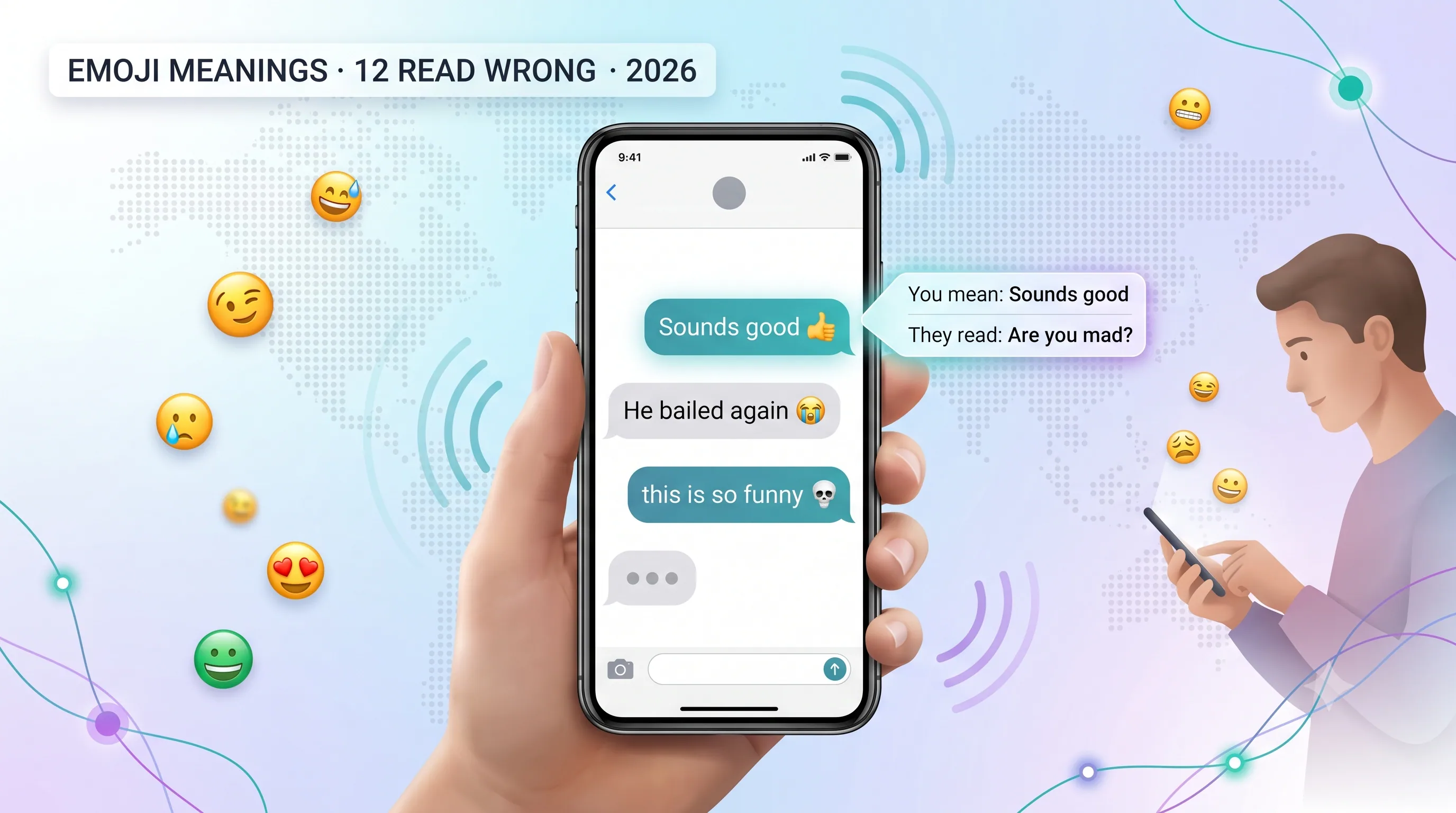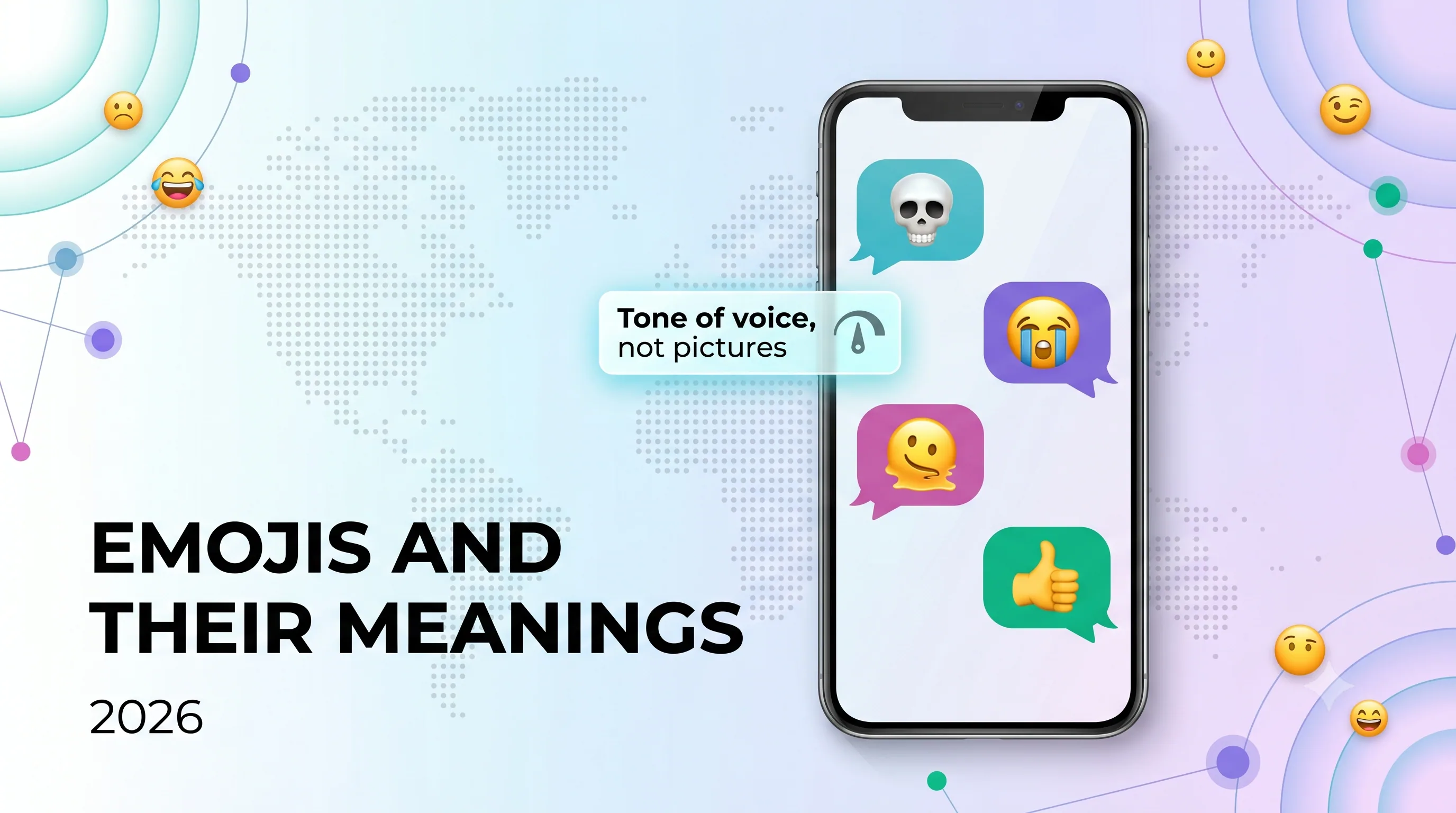
Quick answer: In 2026, emojis work like tone of voice, not literal pictures. 💀 means "dying of laughter," 😭 usually means laughter or overwhelm (not sadness), 🫠 is ironic "I give up," and a standalone 👍 can read as cold to younger users. Meaning depends on the sender, context, and generation.
Send a thumbs up to a teenager and you may have just started an argument. The 👍 you meant as "sounds good" can read as cold, dismissive or passive-aggressive — and that gap is the whole story of emoji in 2026.
Emojis stopped being literal a long time ago. A skull does not mean death, a crying face rarely means sadness, and tone now matters more than the picture itself.
This guide walks through emojis and their meanings as people actually use them today — the classics, the ones that flipped, and the small symbols that carry the most subtext. Read it and you will misfire far less often.
Why Emoji Meanings Keep Shifting
Emojis work less like a dictionary and more like tone of voice. The same symbol can be sincere, sarcastic or ironic depending on who sent it.
Generation Drives the Divide
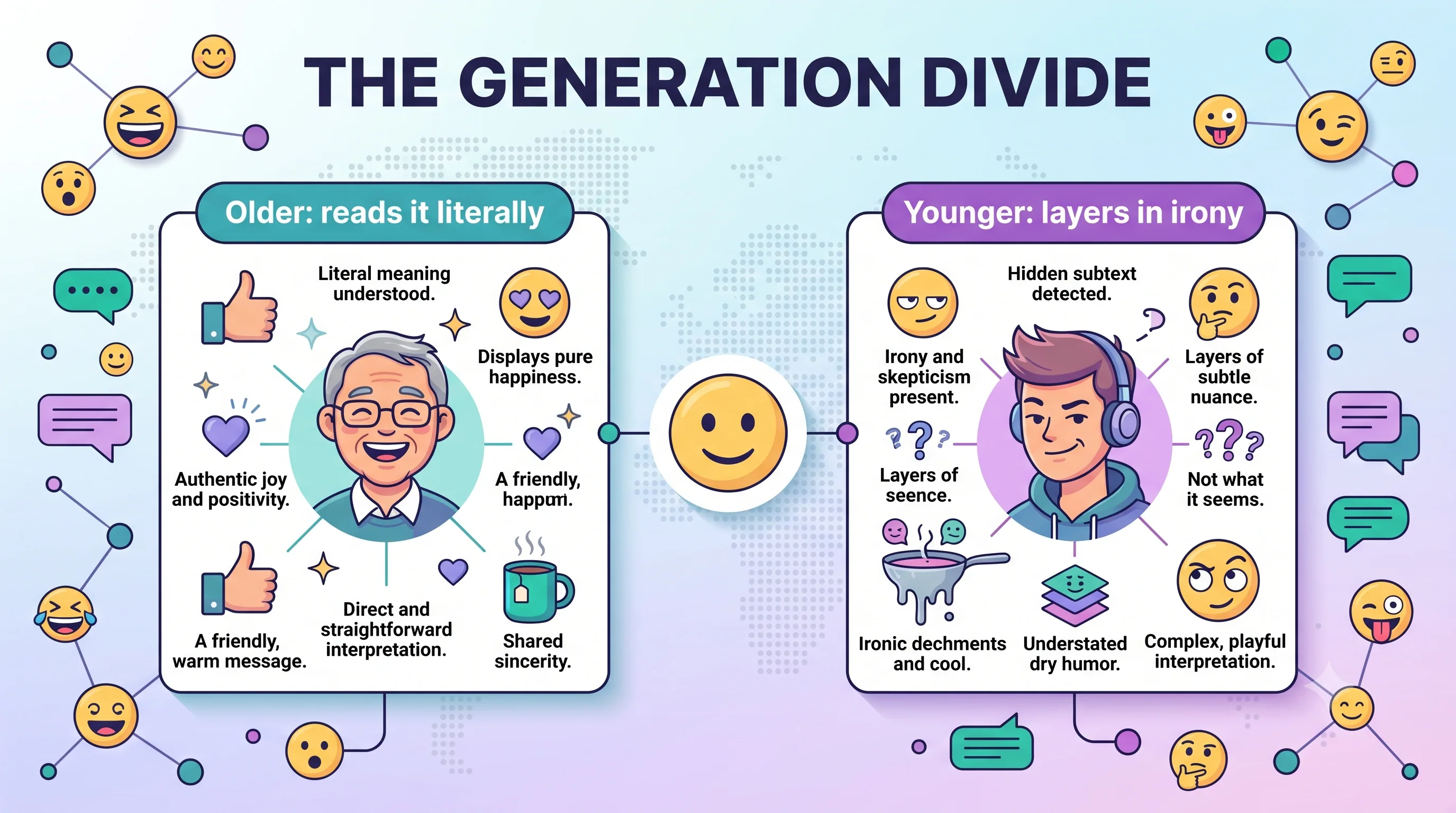
The biggest split is age. Older users tend to read emojis literally, while younger users layer in irony and reuse symbols for effect.
That is why one emoji can spark genuine confusion between a parent and a teen.
Context Beats the Picture
Placement, the rest of the message, and your relationship with the sender all change the meaning. An emoji at the end of a joke means something different than the same emoji after bad news.
The Emojis That Completely Changed Meaning
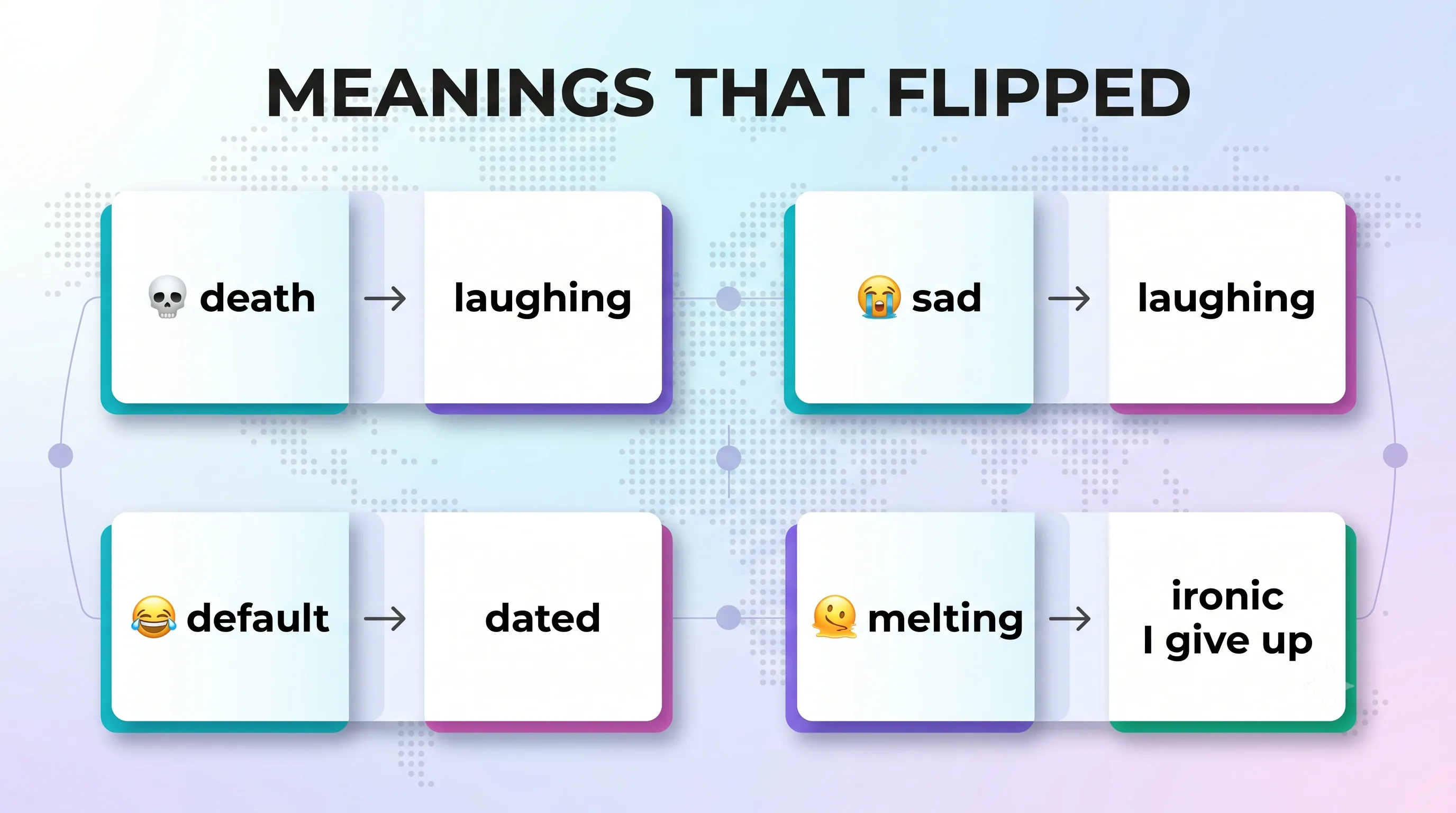
These are the symbols most likely to cause a misread. Their modern use has drifted far from the original design.
💀 Skull — "I'm Dead" (Laughing)
The skull no longer signals death or danger. It means something is hilarious — short for "I'm dead," as in dying of laughter.
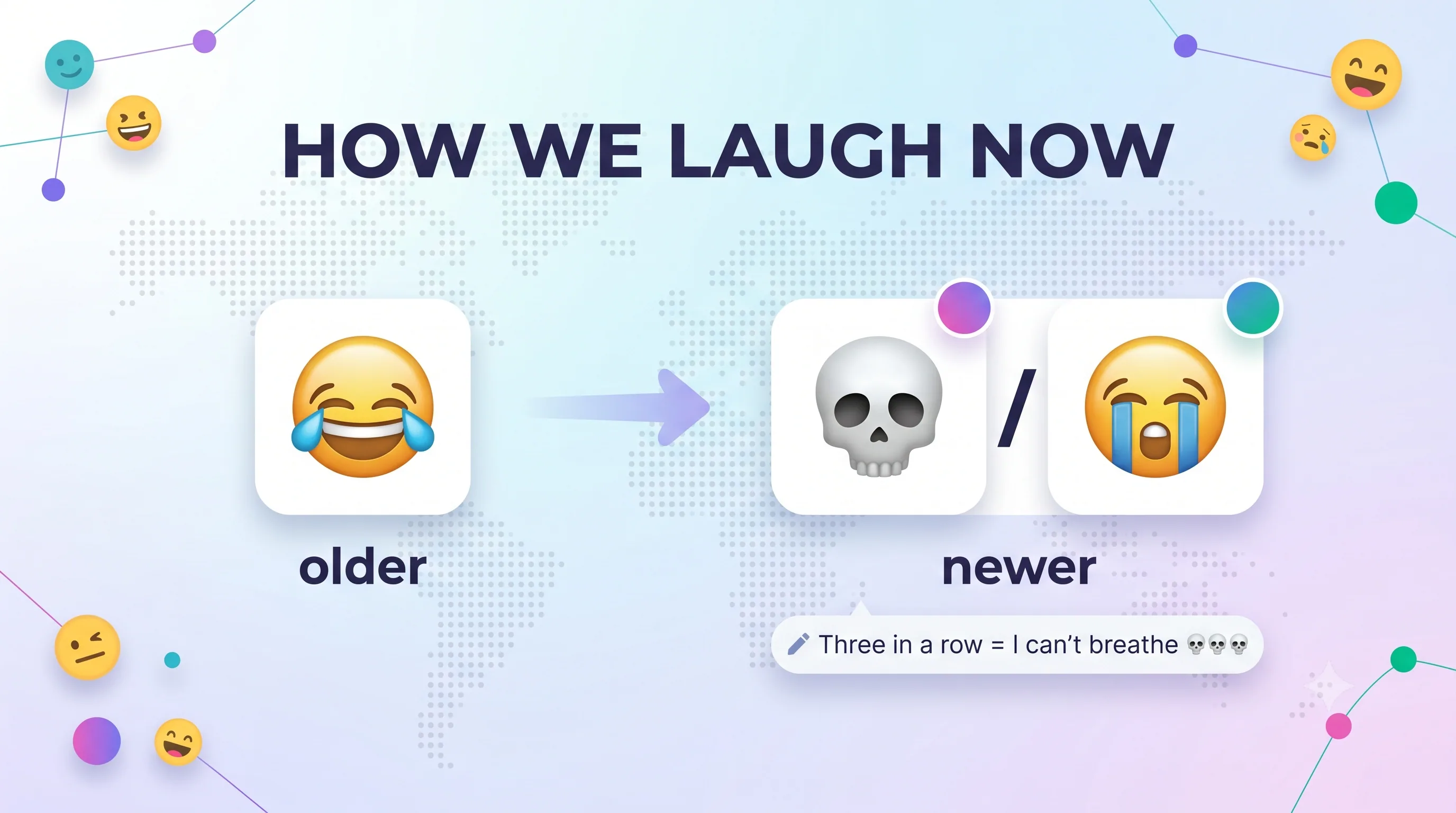
One 💀 means "that's funny." Three in a row means "I genuinely can't breathe."
😭 Loudly Crying Face — Usually Laughter
Despite the tears, 😭 is mostly used for laughter or emotional overflow. People send it for funny clips, cute animals and great songs.
It can still mean real sadness — but context will make that clear when it does.
😂 Face With Tears of Joy — The "Older" Laugh
Once the default laughing emoji, 😂 now reads as slightly dated. Younger users have largely swapped it for 💀 or 😭.
Using it sincerely is not wrong — it just quietly signals you are likely 30 or older.
🫠 Melting Face — Ironic "I Give Up"
The melting face means ironic acceptance of a chaotic or cringe situation. The subtext is "I know this is bad, and I have made peace with it."
It is self-aware humor, not literal distress.
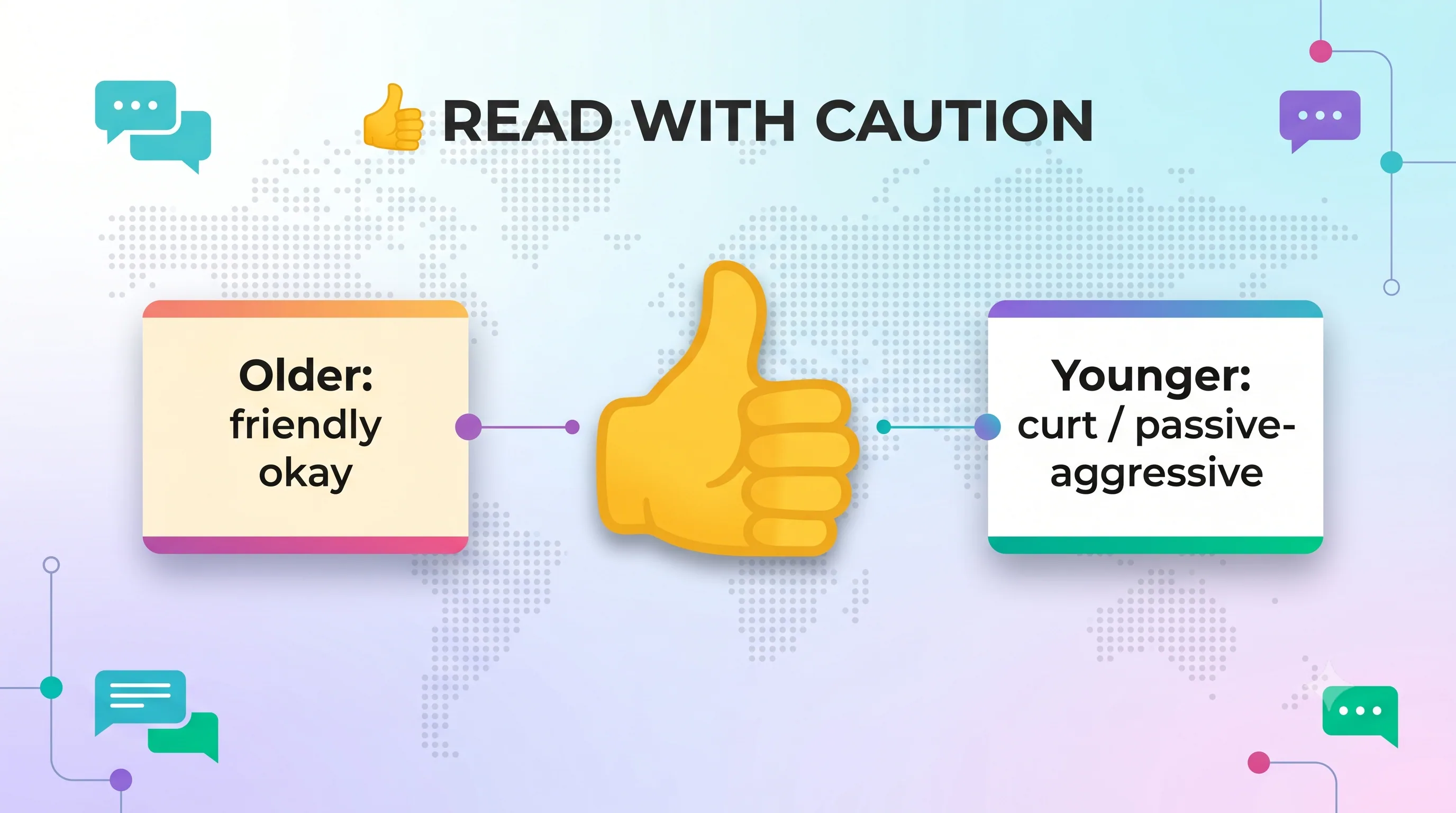
👍 Thumbs Up — Read With Caution
To older users, 👍 is a friendly "okay." To many younger users, it can feel curt or passive-aggressive.
In casual chats, a few words or a warmer emoji often lands better.
Classic Emojis and Their Standard Meanings
Not everything has flipped. These emojis still mostly mean what they look like — useful, low-risk choices.
| Emoji | Common Meaning | Best Used For |
|---|---|---|
| 😀 / 🙂 | Friendly, pleasant | Warm but neutral replies |
| ❤️ | Love, strong appreciation | Family, close friends, sincere thanks |
| 🔥 | Impressive, excellent | Praising work, looks or news |
| 🎉 | Celebration | Congratulations, milestones |
| 🙏 | Thanks, or please | Gratitude or a polite request |
| 👀 | "I'm watching" / intrigued | Reacting to drama or a tease |
| ✅ | Done, confirmed | Task updates, checklists |
| 😅 | Nervous or awkward laugh | Light embarrassment |
A Note on ❤️ vs. Other Hearts
The red heart reads as genuine love or warmth. Lighter hearts — 🩷, 💛 — feel more friendly and platonic, which makes them safer for casual contacts.
Ready when you are
Protect your business line.
MCM's local numbers ship with verified caller ID and smart call filtering — customers always know it's really you, and spam never reaches your team.
Emojis With Hidden or Double Meanings
Some emojis carry meanings you would never guess from the image. These are worth knowing before you send them.
💀 vs. ☠️
The cartoon skull 💀 means laughter. The skull-and-crossbones ☠️ leans more toward genuine danger or "this is bad" — a small difference that changes the message.
🧢 Cap — "That's a Lie"
A cap emoji means someone is lying or exaggerating. "No 🧢" means "no lie — I'm serious."
🐐 Goat — "Greatest of All Time"
The goat is praise. Calling someone the 🐐 means they are the best at what they do.
🫶 Heart Hands — Affection and Support
This gesture means love, gratitude or "I've got you." It is warm and sincere, with little risk of being misread.
Using Emojis at Work
Emojis are common in workplace chats now, but the rules are stricter. A misread emoji with a colleague is more costly than one with a friend.
Keep It Simple and Literal
In professional messages, stick to clear emojis: ✅, 👍 (when the relationship is casual), 🎉 and 🙏. Skip the ironic ones.
Watch the Audience
A reaction that lands with a teammate may confuse a client. When in doubt, fewer emojis — or none — is the safe call.
For teams that handle high message volume, My Country Mobile (MCM) provides reliable virtual numbers and messaging tools that keep business communication clear.
Quick Tips for Reading Emojis Right
A few habits will keep you from misfiring.
Match the Sender's Energy
If someone uses ironic emojis, they will read yours the same way. If they are literal, keep yours literal too.
When Unsure, Use Words
If an emoji could be taken two ways and the stakes are real, add a short sentence. Clarity beats cleverness.
Don't Overthink Friendly Chats
Among close friends, most emojis are forgiving. The caution mainly applies to work, new contacts and cross-generation messages.
The Bottom Line
The real skill with emojis is not memorizing a glossary — it is reading tone. The picture is only half the message; the sender, the context and the irony level carry the rest.
When an emoji could land two ways and it actually matters, add a few words. A clear sentence will always beat a misread symbol. (Curious about text slang too? See our guide to what TS means in text.)
Ready when you are
Ready to sound local everywhere you sell?
MCM activates business numbers in minutes, with call routing, analytics, and CRM-ready integrations. Start your free trial — no card to browse inventory.
FAQs
What does the 💀 emoji mean?
The skull emoji means something is extremely funny — short for "I'm dead" from laughing. It rarely refers to actual death in casual messaging.
Why is the 👍 emoji considered rude?
Many younger users read a standalone thumbs up as cold or dismissive. Older users still use it sincerely, so the meaning depends heavily on the audience.
Does 😭 mean someone is sad?
Usually not. The loudly crying face is most often used for laughter or being overwhelmed by something cute or funny. Context shows when it means genuine sadness.
Why do emoji meanings change so often?
Emojis function as tone, not fixed symbols. As irony and generational humor spread online, the same emoji gets reused in new ways, shifting its meaning.
Which emojis are safe to use at work?
Clear, literal emojis like ✅, 🎉 and 🙏 are low-risk. Avoid ironic ones such as 🫠 or 💀, which can confuse colleagues and clients.
What does the 🧢 cap emoji mean?
The cap emoji means lying or exaggerating. Saying "no cap" or "no 🧢" means the person is being completely honest.
Are emoji meanings the same everywhere?
No. Meanings vary by age group, platform and even country. The same emoji can read very differently depending on who sends and receives it.