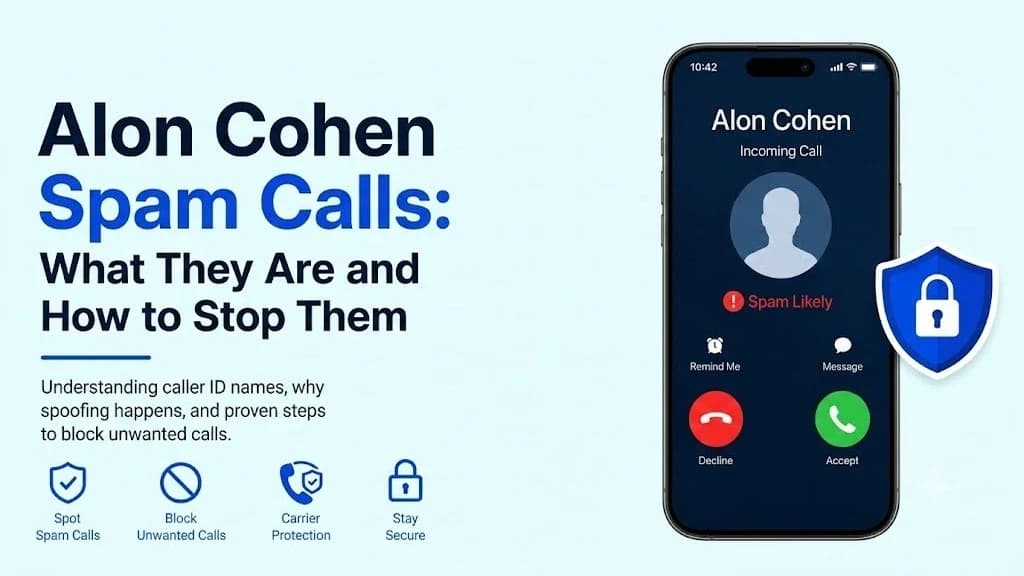
Quick answer: The name "Alon Cohen" appearing on a spam call does not mean a real person by that name is calling you. Caller ID has two separate parts — the number and the name (CNAM) — and the name is a database lookup that can be spoofed, outdated, or attached to a recycled number. Treat the name as a label, not an identity. To cut the noise: block repeat offenders, turn on your carrier's free spam-labeling tool, silence unknown callers in iOS or Android settings, and never press buttons to "be removed" — that just confirms your line is live. The phone industry's STIR/SHAKEN authentication is doing the rest at the network level.
Getting "Alon Cohen" spam calls? Here's what's actually happening
Your phone rings. The caller ID shows a name you don't recognize — say, "Alon Cohen" — and you've never given that person your number. Then it happens again the next day.
It's a frustrating, common experience. People search the name they see hoping to learn whether it's safe to answer.
This post explains what a caller ID name really tells you, why unfamiliar names show up on unwanted calls, and the concrete steps that actually reduce them. No accusations, no guesswork — just how phone calls work.
What a caller ID name actually means
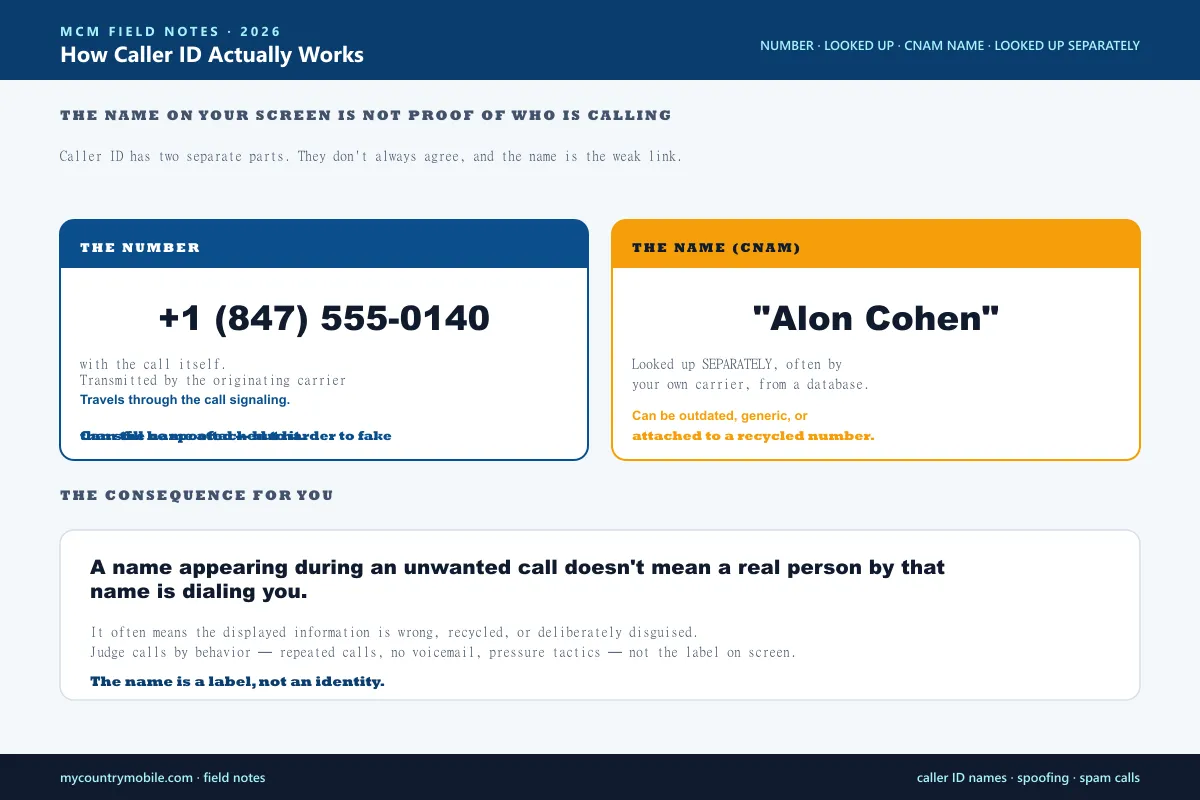
First, an important truth: the name on your screen is not proof of who is calling. Caller ID is far easier to fake than most people assume.
A name like "Alon Cohen" appearing during an unwanted call doesn't mean a real person by that name is dialing you. It often means the displayed information is wrong, recycled, or deliberately disguised.
Where the name comes from
Caller ID has two separate parts, and they don't always agree.
- The number — transmitted by the originating carrier
- The name (CNAM) — looked up separately from a database, often by your own carrier
Because the name is a separate lookup, it can be outdated, generic, or attached to a number that has changed hands many times.
Why unwanted calls show random names
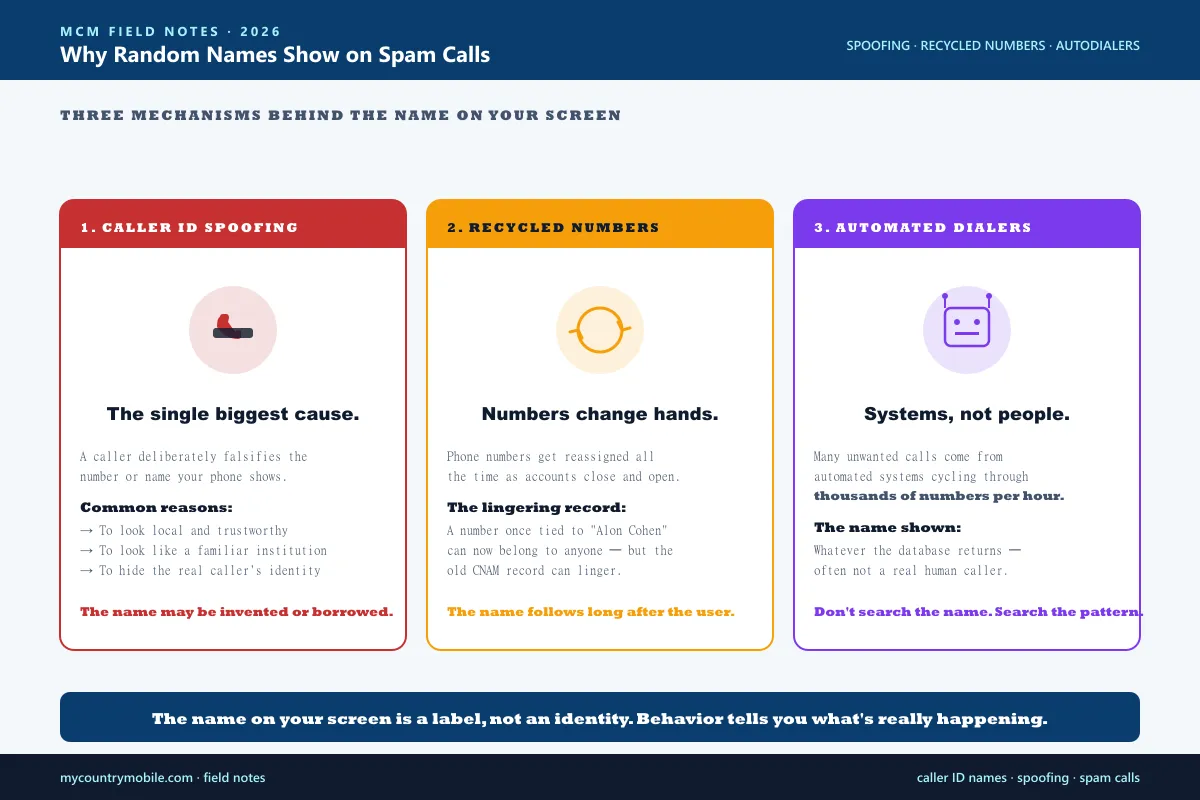
If you're getting repeated calls tied to a name you don't know, a few common mechanisms are usually behind it.
Caller ID spoofing
Spoofing is when a caller deliberately falsifies the number or name your phone displays. It's the single biggest reason a strange name appears.
Scammers spoof to look local, look familiar, or simply to hide their real identity. The name shown may be invented or borrowed entirely.
Recycled phone numbers
Phone numbers get reassigned constantly. A number once registered to a person named "Alon Cohen" can later belong to someone — or something — completely different.
The old CNAM record can linger, so the original name still flashes on screens long after the number moved on.
Automated dialers
Many unwanted calls come from automated systems that cycle through thousands of numbers. The name attached is often whatever the database returns, not a real caller.
Ready when you are
Protect your business line.
MCM's local numbers ship with verified caller ID and smart call filtering — customers always know it's really you, and spam never reaches your team.
How to tell a real call from a spam call
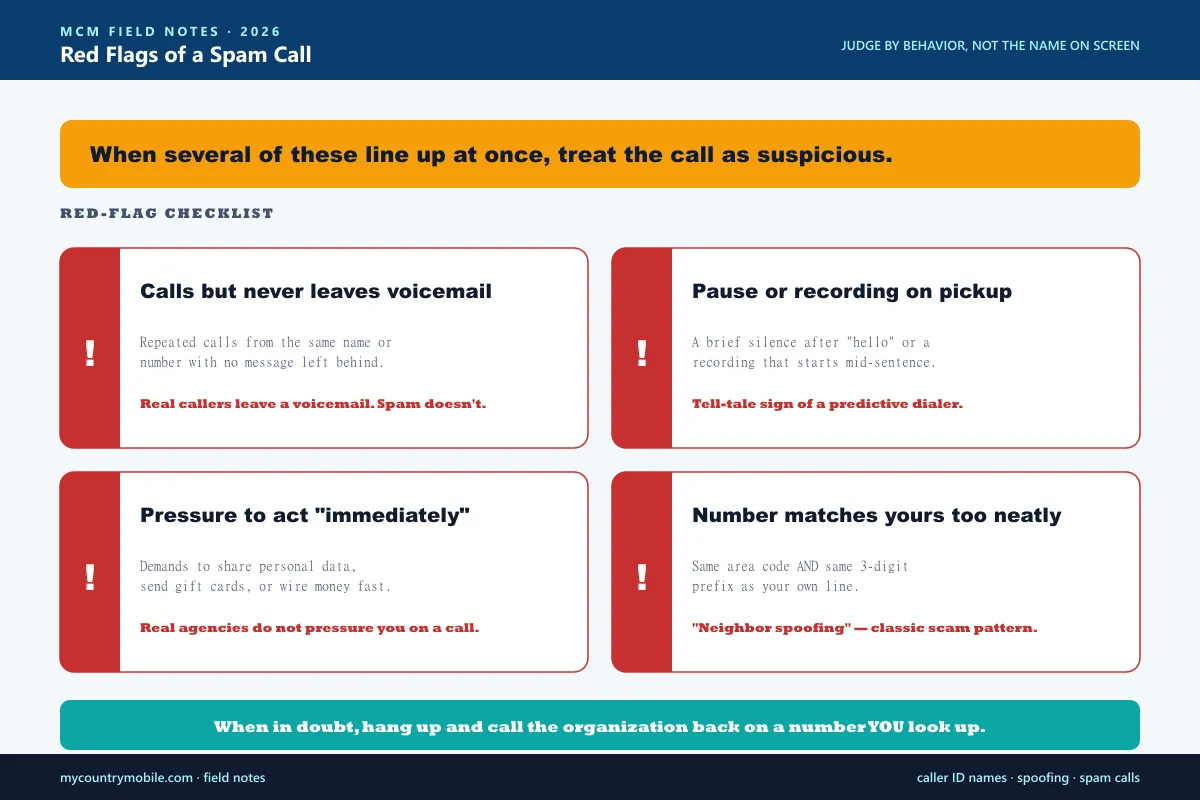
You can't always know for certain, but a few signals strongly suggest a call isn't legitimate.
Red flags to watch for
When several of these line up, treat the call with caution.
- It calls repeatedly but never leaves a voicemail
- The caller pauses before speaking, or a recording starts
- You're pressured to act "immediately" or share personal data
- The number matches your own area code and prefix too neatly
When in doubt, don't engage
If a call claims to be from a bank, agency, or company, hang up and call that organization back using a number you find independently. A legitimate caller will never object to that.
The technology built to fight this
The good news: the phone industry has real tools working against fraudulent caller ID, and they've improved sharply.
STIR/SHAKEN authentication
STIR/SHAKEN is an industry framework that lets carriers digitally "sign" a call as legitimate. The originating carrier vouches for the number, and the receiving carrier verifies it.
When a call passes, your phone may show a "verified" or checkmark label. When it fails, many carriers flag it as "Spam Likely."
Stronger rules
Regulators continue to tighten the system. In 2026, the FCC advanced proposals requiring carriers to better trace upstream call sources and to transmit verified caller identity to handsets.
The direction is clear: more accountability for the networks that let bad traffic through.
Practical steps to stop unwanted calls
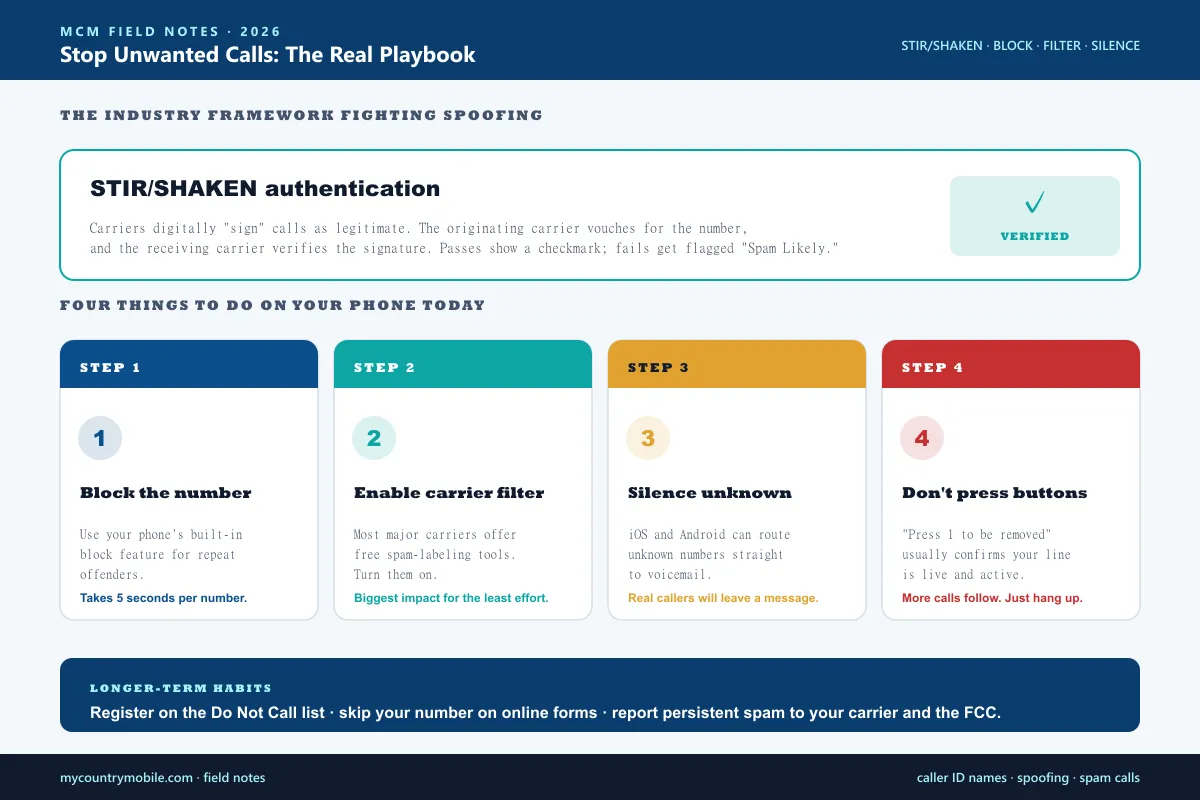
You don't have to wait for regulation to catch up. Here's what you can do right now.
On your phone
These take minutes and make an immediate difference.
- Block the number — use your phone's built-in block feature for repeat offenders
- Enable carrier filtering — most major carriers offer free spam-labeling tools
- Silence unknown callers — both iOS and Android can route unknown numbers to voicemail
- Don't press buttons — "press 1 to be removed" usually confirms your number is live
Longer-term habits
A few habits reduce how often your number gets targeted at all.
- Register your number on the national Do Not Call list
- Be cautious about entering your number into online forms and contests
- Report persistent unwanted calls to your carrier and the FCC
How quality networks reduce spam at the source
Blocking calls on your handset is the last line of defense. The bigger fight happens inside the networks that carry calls.
Reputable carriers screen the traffic they accept and refuse to relay obvious fraud.
For example, My Country Mobile (MCM) operates within the FCC's Robocall Mitigation Database, applies STIR/SHAKEN authentication, and runs AI-driven systems that flag suspicious calling patterns in real time.
When networks take that responsibility seriously, fewer spoofed calls ever reach a consumer's phone in the first place.
The bottom line
A name on your caller ID — whether it's "Alon Cohen" or any other — is a label, not an identity. Treat unexpected calls with healthy skepticism, and judge them by behavior, not the name on the screen.
Block the repeat offenders, turn on your carrier's free filtering, and silence unknown callers. Those three steps alone will cut the noise dramatically.
Want fewer interruptions for good? Reviewing your carrier's call-protection settings takes about five minutes and costs nothing.
Ready when you are
Ready to sound local everywhere you sell?
MCM activates business numbers in minutes, with call routing, analytics, and CRM-ready integrations. Start your trial — no card to browse inventory.
Frequently asked questions
Why do I keep getting Alon Cohen spam calls?
The name on your screen is likely spoofed or attached to a recycled number. Repeated unwanted calls usually come from automated dialers cycling through numbers, not from a specific named individual.
Does the name on caller ID prove who is calling?
No. The caller name (CNAM) is a separate database lookup that can be faked, outdated, or wrong. Never trust a call based on the displayed name alone.
Is it safe to answer a call from an unknown name?
If you don't recognize the caller and aren't expecting a call, it's safer to let it go to voicemail. Legitimate callers will leave a message.
What is caller ID spoofing?
Spoofing is the deliberate falsification of the number or name shown on your phone. Scammers use it to appear local, trustworthy, or anonymous.
Can STIR/SHAKEN completely stop spam calls?
It significantly reduces spoofed calls by letting carriers verify caller identity, but it isn't a total fix. Combining it with carrier filtering and call blocking works best.
Should I call back a number that left no voicemail?
Generally, no. Calling back an unknown number that left no message can confirm your line is active and lead to more calls.
How do I report persistent spam calls?
Report them to your phone carrier and to the FCC. You can also register your number on the national Do Not Call list to reduce legitimate telemarketing.
Want a cleaner line for your business?
If spoofed calls reach your team's published number, the real fix lives at the network level.
My Country Mobile operates within the FCC's Robocall Mitigation Database, applies STIR/SHAKEN caller authentication, and runs AI-driven filtering that flags suspicious patterns before they hit your phones. Pair that with call forwarding, voicemail-to-email, and AI transcription on every number worldwide.