How to Track Down a Phone Number: Legal Ways to Identify an Unknown Caller
An unknown number calls three times in an hour. No voicemail. Your gut says scam — but you're not sure. You want a name.
Here's the honest version most articles skip: you cannot legally find a stranger's home address or live location from their phone number. Only law enforcement, with a warrant, can do that. What you can do is identify who is behind a number using public information and reporting channels.
This guide covers the legal, legitimate methods — reverse phone lookup, caller ID apps, search engines, and proper reporting. We work in telecom at My Country Mobile (MCM), and we'll be clear about what each method can and can't do.
WHAT YOU CAN AND CAN'T DO — READ THIS FIRST
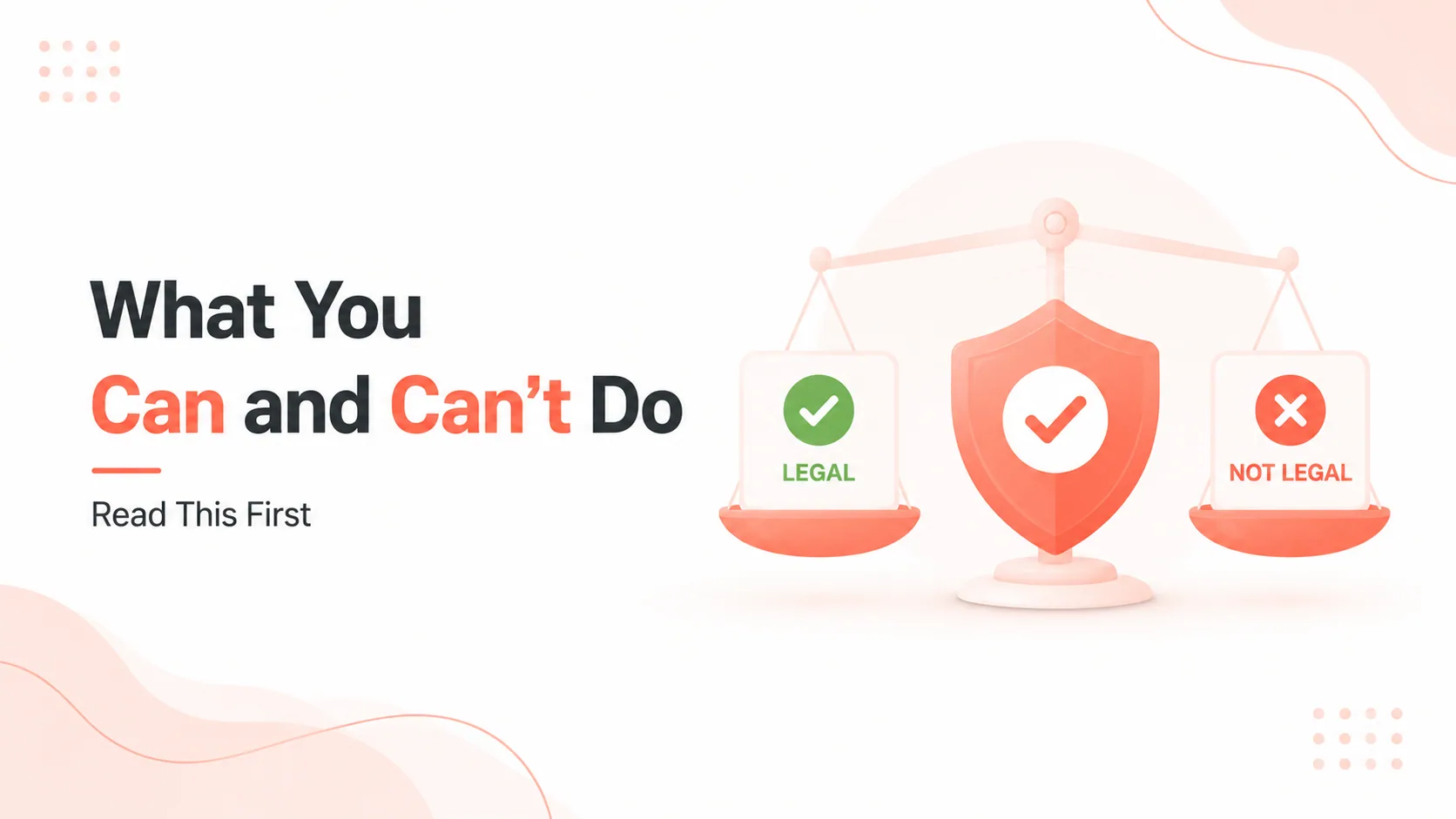
The line between identifying a caller and surveilling a person matters. One is normal. The other is illegal.
Legal: Using public directories, caller ID databases, and search engines to identify who registered a number. Reporting harassment to your carrier or the authorities.
Not legal: Buying someone's real-time location, accessing their private records, or using "tracker" apps to follow a person without consent. That's stalking, and it carries criminal penalties.
This article only covers the first category. If a number is threatening you, skip to the reporting section below.
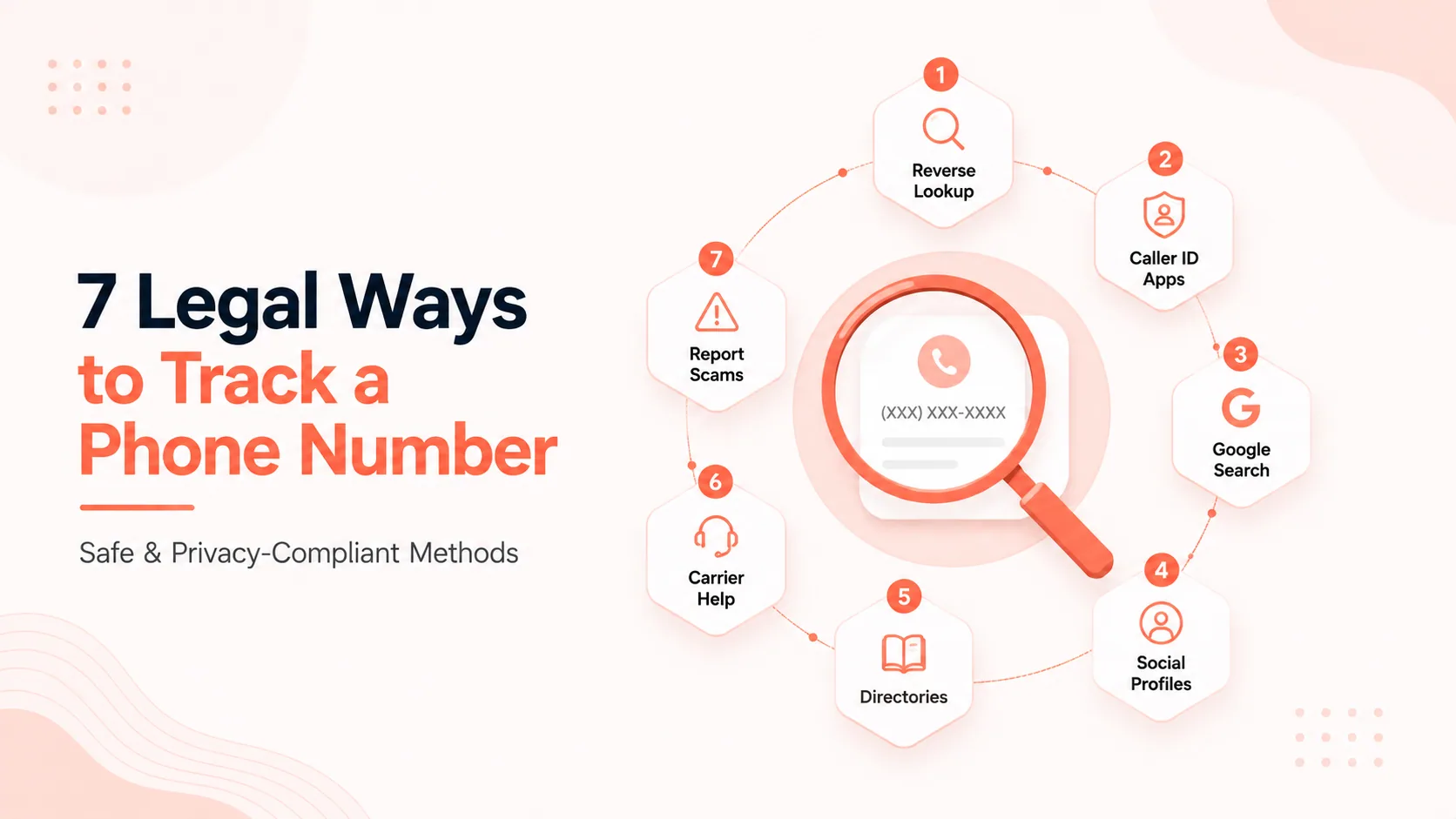
METHOD 1: RUN A REVERSE PHONE LOOKUP
A reverse phone lookup checks a number against public records and listed-directory data.
Trusted services like Whitepages and similar directories let you enter a number and see a name or general area if the number is publicly listed. Business numbers turn up reliably; personal cell numbers often don't.
Free results are usually limited to a name and city. Be cautious — some sites bait you with a "full report" that costs money and rarely adds anything verified.
Want a straightforward starting point? MCM's reverse phone lookup tool checks publicly available information without the upsell.
Ready when you are
Protect your business line.
MCM's local numbers ship with verified caller ID and smart call filtering — customers always know it's really you, and spam never reaches your team.
METHOD 2: USE A CALLER ID AND SPAM-DETECTION APP
Caller ID apps are the most practical tool for unknown callers, especially scammers.
Apps like Truecaller and Hiya cross-reference numbers against community-reported databases. If thousands of people have flagged a number as spam, the app tells you before you even pick up.
These apps won't reveal a private individual's identity. What they do well is label robocalls, telemarketers, and known scam numbers — which is usually the real question.
METHOD 3: SEARCH THE NUMBER ON GOOGLE
A plain search engine query is free, fast, and often enough.
Type the full number into Google, including the area code, in quotation marks: "555-123-4567". Businesses, listings, and scam-report forums frequently surface this way.
If the number belongs to a company, you'll likely find it on their contact page. If strangers have reported it, complaint threads will show up. Personal numbers rarely appear — and that's by design.
METHOD 4: CHECK SOCIAL MEDIA AND MESSAGING APPS
Some people link a phone number to their public profiles.
On platforms that allow contact search, a number may match a profile if the owner made it discoverable. WhatsApp will show a profile name if you save the number and it's registered.
This only works when the person chose to be findable. Don't try to bypass privacy settings — respect the result you get.
METHOD 5: USE AN ONLINE DIRECTORY OR PHONEBOOK
Public directories like Yellow Pages and White Pages still help with listed numbers.
Their reverse-lookup features work best for landlines and businesses, which are far more likely to be publicly listed than mobile numbers. Enter the number and check for a matching listing.
Treat the results as a starting point, not proof. Directory data can be outdated, and absence of a listing simply means the number is private.
METHOD 6: CONTACT YOUR PHONE CARRIER
Your carrier can't hand over another person's identity — but they can help with the calls themselves.
If a number is harassing you, carriers can block it, document a pattern of unwanted calls, and advise on next steps. Many also offer built-in spam filtering you can switch on.
Call customer service, explain the situation, and ask what call-blocking and reporting tools your plan includes. This is the right channel for persistent nuisance calls.
METHOD 7: REPORT HARASSMENT OR SCAMS TO THE AUTHORITIES
When a number crosses into threats, fraud, or harassment, identifying it yourself is no longer the goal — reporting is.
In the US, file robocall and scam complaints with the FCC (fcc.gov) and fraud reports with the FTC. For threats or stalking, contact local law enforcement directly.
These bodies have lawful authority to investigate and trace a number. They can do what private tools cannot — and they're the correct route for anything dangerous.
WHY PEOPLE WANT TO IDENTIFY UNKNOWN NUMBERS
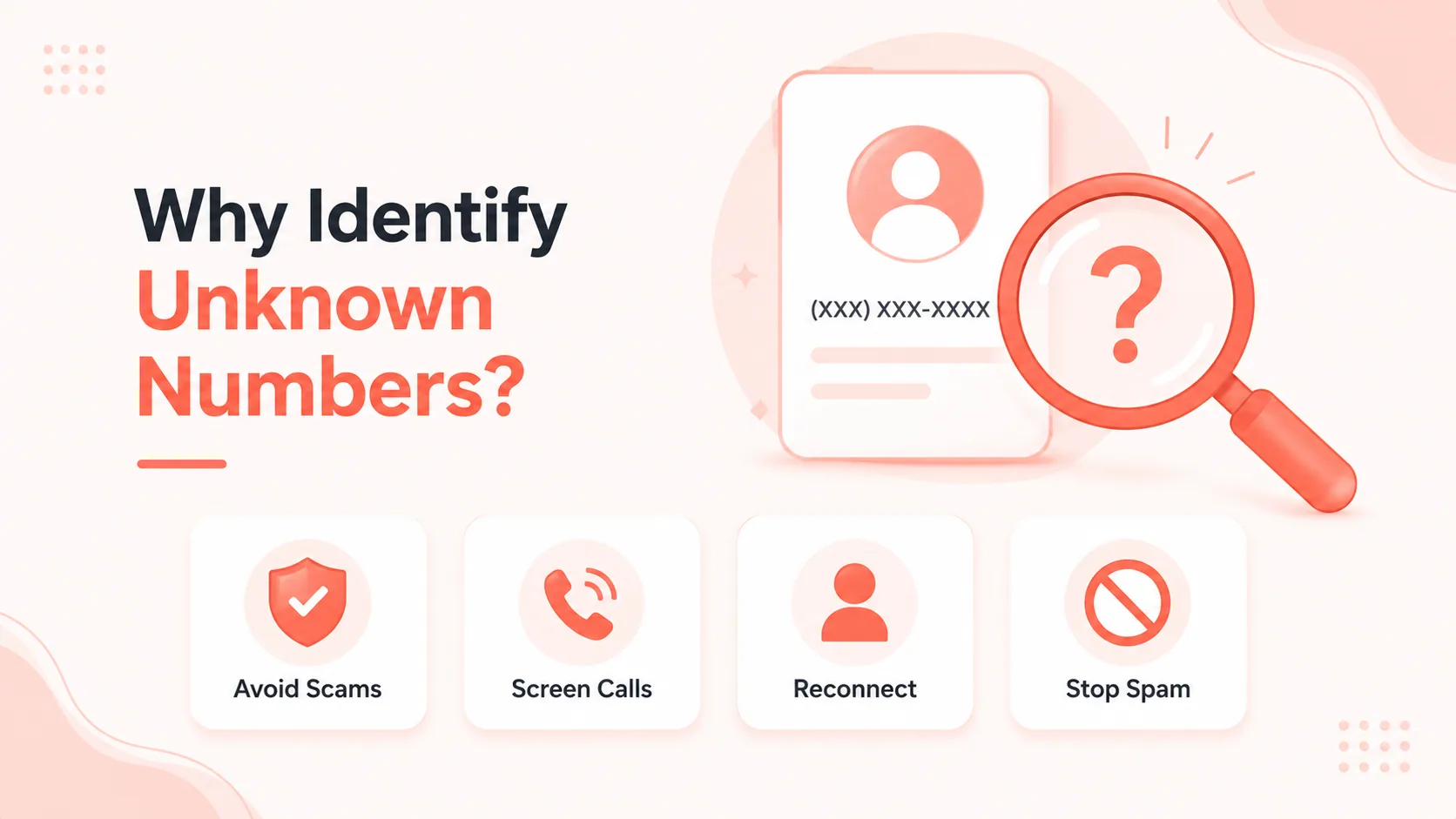
Most of the time, the motive is simple and reasonable.
- Avoiding scams — confirming a "bank" or "delivery" caller is fake before engaging
- Screening calls — deciding whether a missed call is worth returning
- Reconnecting — matching a number to an old contact
- Stopping nuisance calls — building a record to block or report
Notice that none of these require someone's location. Identifying who a caller is — not where they are — solves the actual problem.
WHAT TO DO NEXT
Start with the cheapest, most legal tools first: search the number on Google, then check it in a caller ID app. That answers the "is this a scam?" question for most calls in under a minute.
If the calls are harassing or threatening, stop investigating and start reporting. Your carrier blocks the number; the FCC, FTC, or police handle the rest.
Curious what a number's carrier or area says about it? Try MCM's free carrier lookup tool — a safe, public-data way to learn more.
Ready when you are
Ready to sound local everywhere you sell?
MCM activates business numbers in minutes, with call routing, analytics, and CRM-ready integrations. Start your free trial — no card to browse inventory.
FAQs
Can I find someone's exact location from their phone number?
No. Legally, only law enforcement with a court order can obtain a person's location from a phone number. Consumer tools and apps cannot, and services claiming otherwise are unreliable or unlawful.
What is the best free way to identify an unknown caller?
Search the full number on Google in quotation marks, then check it in a caller ID app like Truecaller or Hiya. Together these identify most spam and business numbers at no cost.
Are reverse phone lookup services accurate?
For business and landline numbers, often yes. For personal mobile numbers, results are limited because those numbers usually aren't publicly listed. Treat any result as a lead, not confirmation.
Is it legal to look up a phone number?
Yes — using public directories, caller ID apps, and search engines is legal. What's illegal is accessing someone's private records or tracking their location without consent.
What should I do about a harassing or threatening number?
Stop trying to investigate it yourself. Ask your carrier to block it, then report it to the FCC and FTC, or contact local law enforcement if you feel unsafe.
Why can't I find the owner of a mobile number?
Mobile numbers are private by default and rarely appear in public directories. That's a privacy protection, not a flaw — it's the same protection that keeps your own number unlisted.
Do caller ID apps reveal a person's name?
They mainly identify businesses and known spam numbers using community-reported data. For private individuals, they typically show only whether the number has been flagged, not a personal identity.