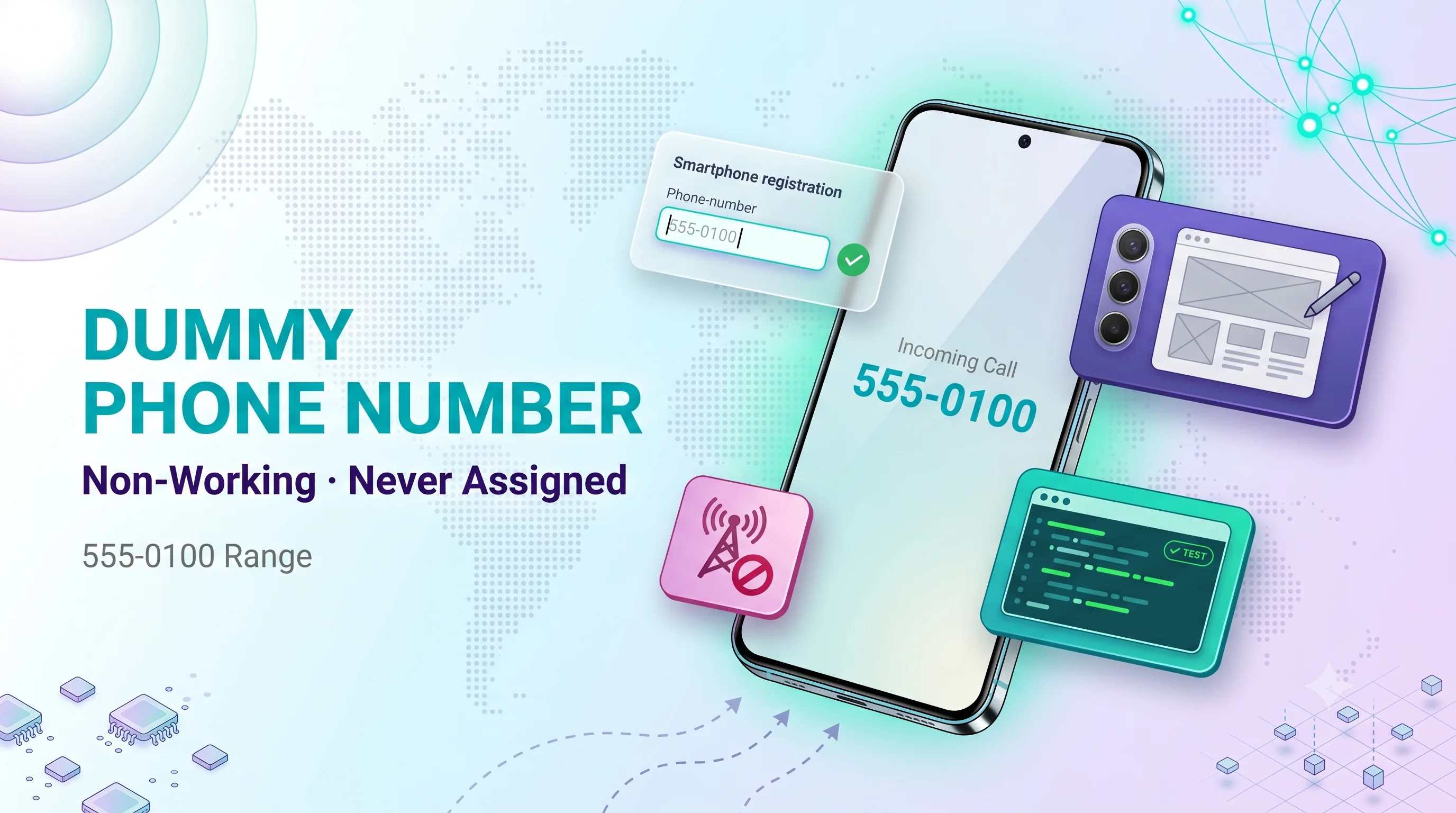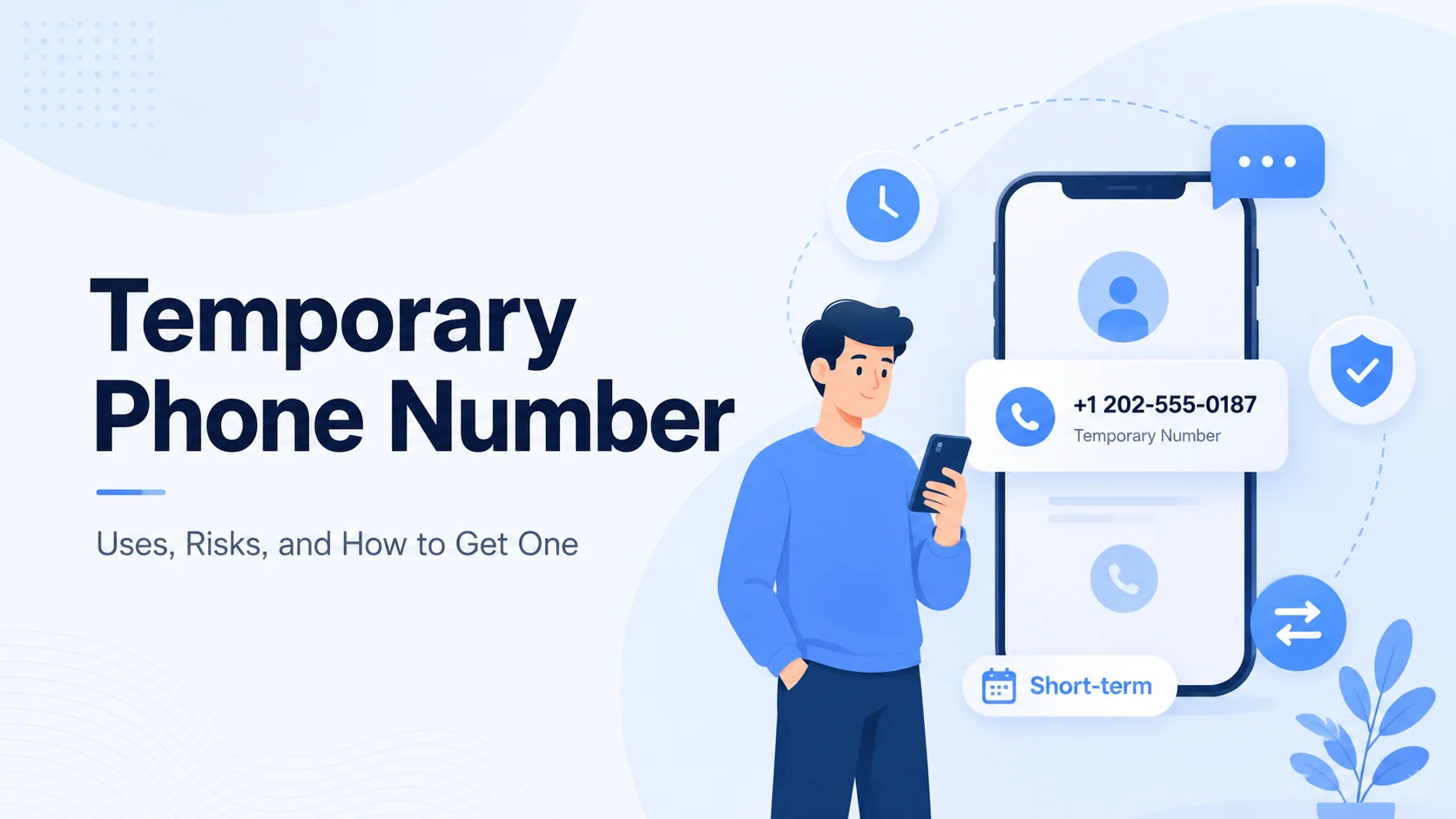
A temporary phone number is a disposable number you use for a short time and then discard — a way to sign up, verify, or stay reachable without handing out your real personal number. People reach for one to protect their privacy on a dating app, to receive a one-time verification code, to try a free trial, or to list something for sale without inviting a flood of spam to their main line.
This guide explains what temporary numbers are, the legitimate ways people use them, how to get one (free and paid), and — importantly — the risks of the free public options so you can choose the right tool for the job.
What is a temporary phone number?
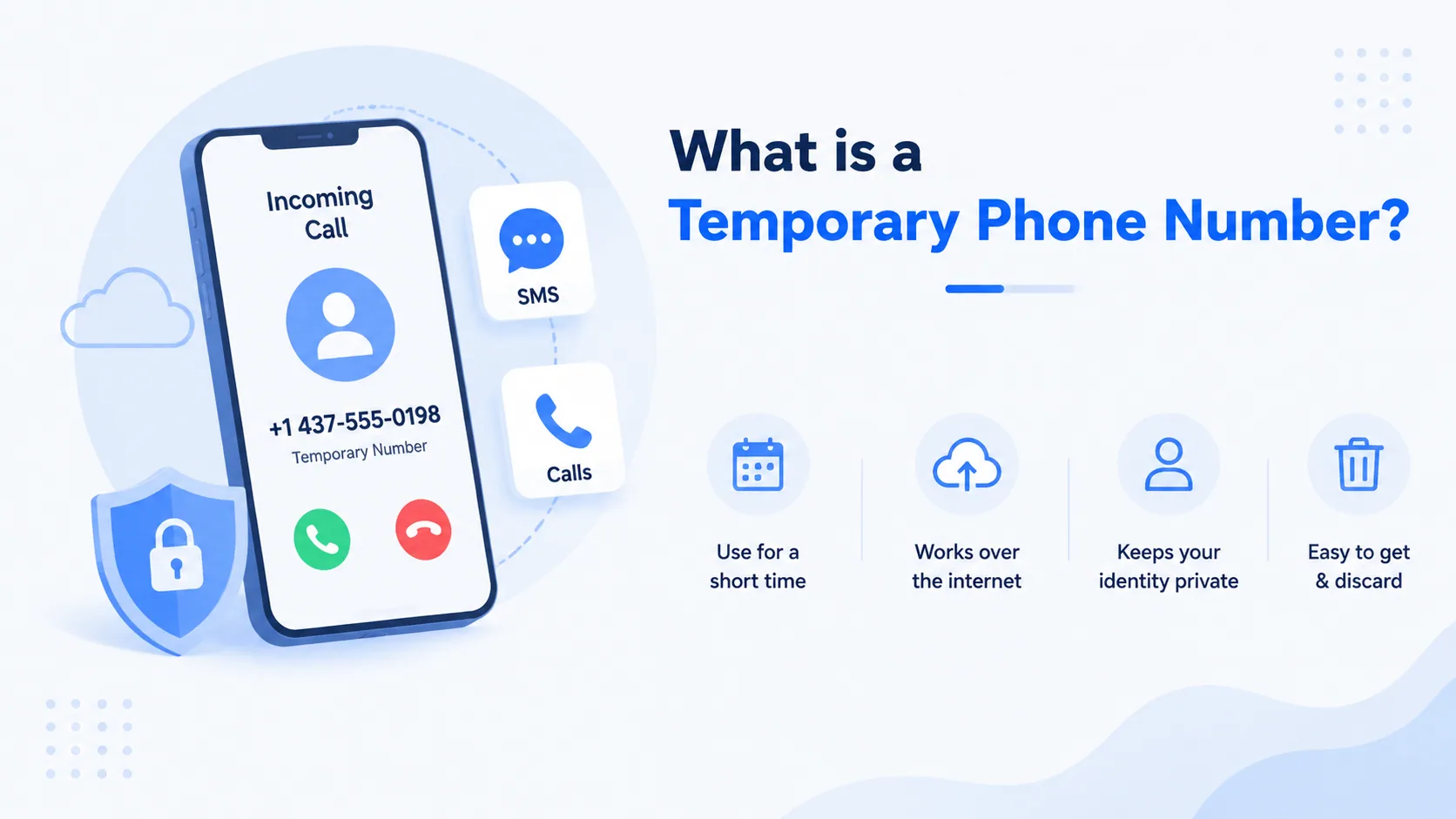
A temporary phone number is a real, working number that isn't tied to your physical SIM or your long-term identity. It can send and/or receive calls or texts for a limited period — minutes, days, or as long as you keep it active — and then you let it go.
Most temporary numbers are VoIP numbers, meaning they live in the cloud and route over the internet rather than through a traditional carrier. That's what makes them easy to spin up and throw away.
Why people use temporary numbers
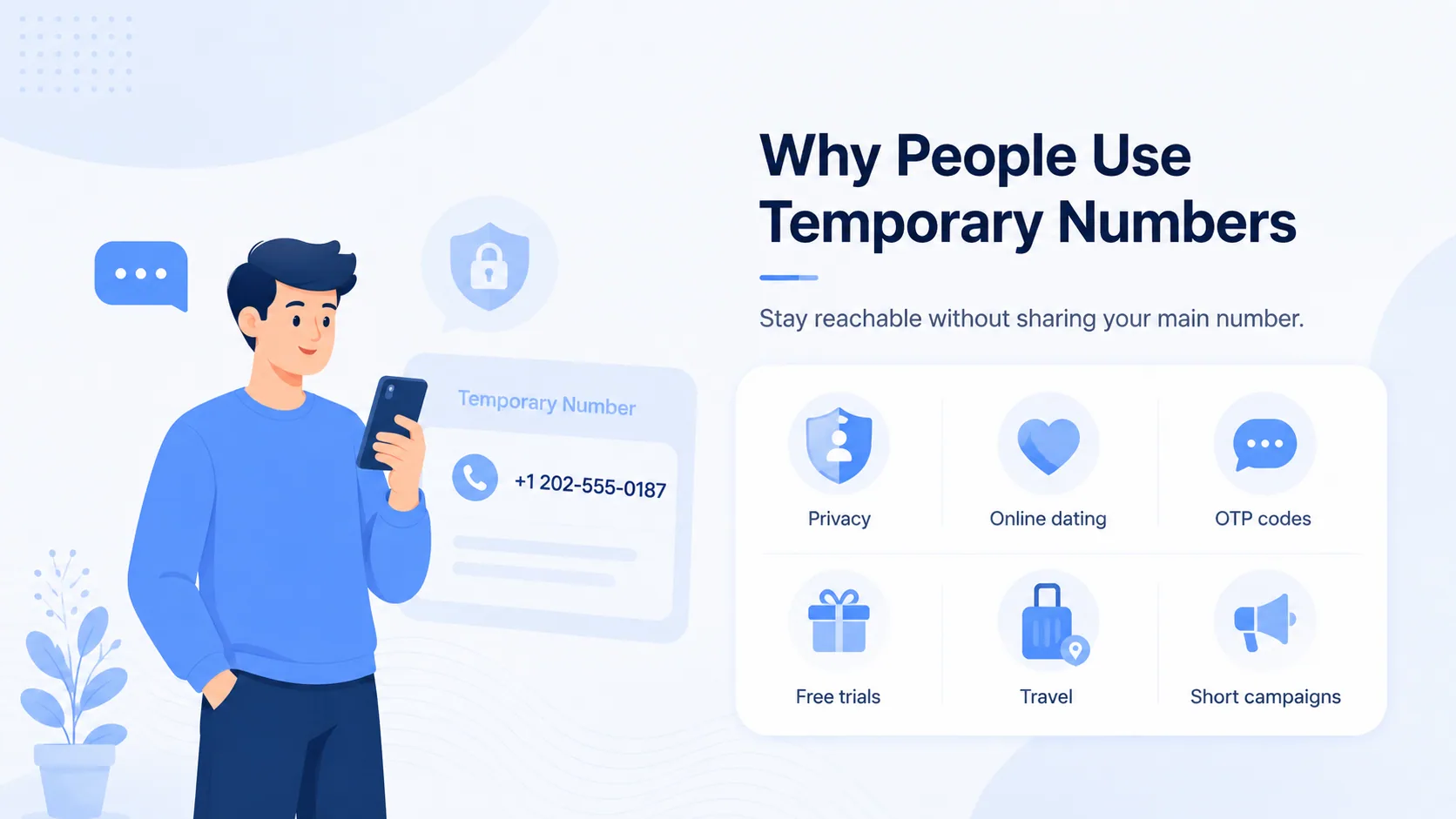
There are plenty of perfectly normal reasons to want one:
- Privacy on classifieds and marketplaces — sell on Craigslist, Facebook Marketplace, or similar without exposing your real number.
- Online dating — chat before you're ready to share a permanent contact.
- One-time verification (OTP) — receive a sign-up code without giving an app your primary number.
- Free trials and one-off signups — register for something you don't want texting you forever.
- Travel — a local-looking number in a place you're visiting briefly.
- Short campaigns — a business running a limited promotion or event line that it will retire afterward.
The common thread: you want to be reachable for a specific, limited purpose without permanent exposure.
How to get a temporary phone number
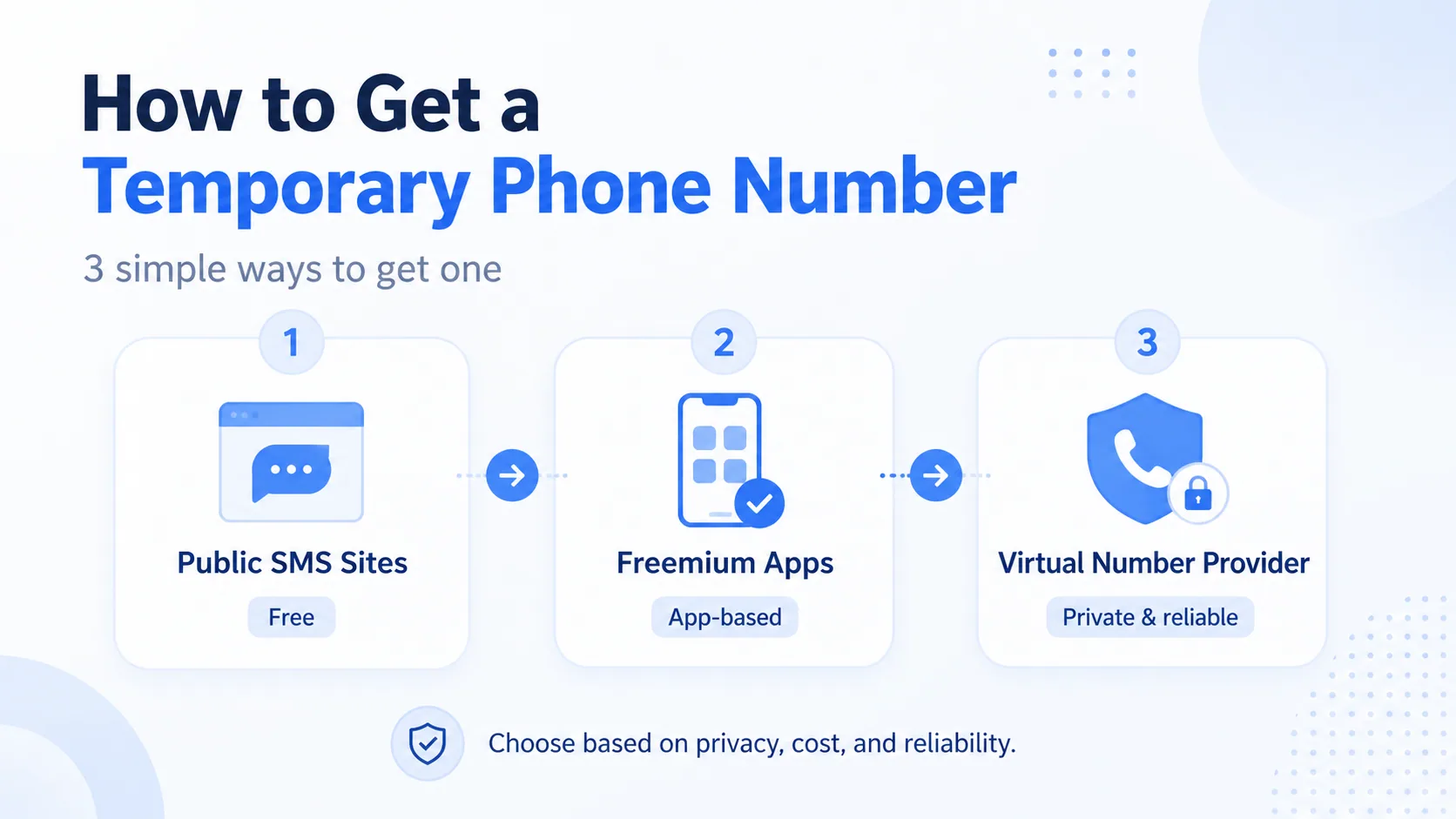
There are three broad routes, in rough order of privacy and reliability:
- Free public "receive SMS online" sites. Websites that list shared numbers anyone can use to receive texts in a browser. Zero cost, zero signup — but also zero privacy (see the risks below).
- Free or freemium apps. Apps like Burner, TextNow, and similar give you an app-based number, often free over Wi-Fi with ads, or cheap for a dedicated line.
- A virtual number provider. A cloud telephony service issues you a private number — by the day or month — that only you control, with proper calling, texting, and routing. This is the paid, reliable end of the spectrum.
Ready when you are
Protect your business line.
MCM's local numbers ship with verified caller ID and smart call filtering — customers always know it's really you, and spam never reaches your team.
Free vs. paid temporary numbers
| Free public SMS sites | Paid / private virtual number | |
|---|---|---|
| Cost | Free | Low monthly or per-use fee |
| Privacy | None — shared & public | Private to you |
| OTP success | Often blocked or already used | Far more reliable |
| Calls | Usually receive-only | Two-way calling & texting |
| Control | None — number is shared | You own and manage it |
| Good for | Throwaway, low-stakes signups | Anything you'll reuse or rely on |
The risks of free temporary numbers
Free public numbers are genuinely useful for low-stakes, one-time tasks — but understand what you're trading away:
- They're public. Anyone can read the texts sent to a shared number, including a verification code meant for you. Never use one for anything sensitive — banking, primary email, or any account that matters.
- They're reused. Thousands of people may have used the same number, so a service may have already "seen" it and will reject it.
- They get blocked. Many platforms maintain blocklists of known free VoIP and shared numbers and won't accept them for verification at all.
- They vanish. A free number can stop working or be recycled at any moment, so anything tied to it can be lost.
Rule of thumb: a free public number is fine for a disposable signup you'll never need again — and a bad idea for anything you'd be upset to lose or have someone else read.
When you need a dedicated number instead
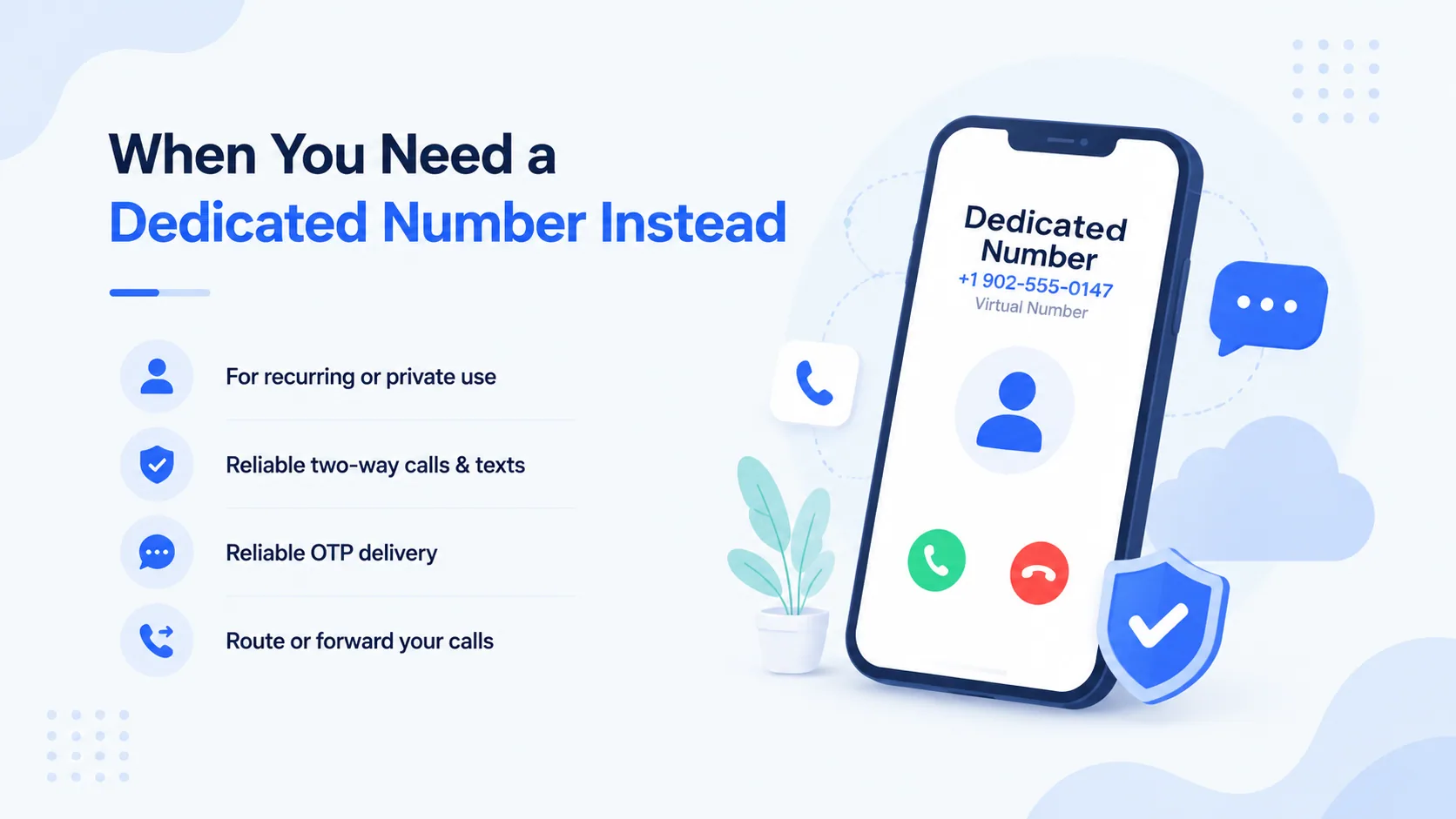
If you find yourself needing a temporary number repeatedly, or for anything that has to be private and reliable, a throwaway public number stops making sense. Recurring use, business signups, customer-facing campaigns, or any account you actually care about all call for a number you control.
In those cases a virtual number from a cloud provider is the better fit. You get a private line — by the month, so it's still "temporary" in the sense that you can drop it whenever you want — with two-way calling and texting, reliable OTP delivery, and the option to route or forward it however you like.
A provider such as My Country Mobile lets you spin up a dedicated number in minutes and release it when you're done, without the privacy and reliability trade-offs of a shared free number.
Key takeaways
- A temporary phone number is a disposable, usually VoIP number for short-term, privacy-conscious use.
- Common uses: classifieds, dating, OTP verification, free trials, travel, and short campaigns.
- You can get one from free public SMS sites, freemium apps, or a virtual number provider.
- Free public numbers are not private, are often reused or blocked, and can disappear — keep them to low-stakes tasks.
- For anything recurring, private, or important, use a dedicated virtual number you control.
Ready when you are
Ready to sound local everywhere you sell?
MCM activates business numbers in minutes, with call routing, analytics, and CRM-ready integrations. Start your free trial — no card to browse inventory.
Frequently asked questions
What is a temporary phone number?
It's a real but disposable number — usually a VoIP number — that you use for a short time to make or receive calls and texts, then discard, so you don't have to share your personal number.
Are temporary phone numbers free?
Some are. Free public "receive SMS" sites and freemium apps exist, but they trade away privacy and reliability. Private, dependable temporary numbers from a virtual provider carry a small fee.
Can I use a temporary number to receive verification codes?
Sometimes. Free shared numbers are frequently blocked or already used for OTP. A private virtual number is far more reliable for verification codes.
Are free temporary numbers safe?
For low-stakes, one-time signups, yes. But because the texts are public on shared numbers, never use a free temporary number for banking, email, or any sensitive account.
How long does a temporary number last?
It varies — from a few minutes on a public site to as long as you keep a paid number active. Free numbers can be recycled without warning.
What's the difference between a temporary number and a burner number?
They overlap. "Burner" usually means an app-based number you can create and delete on demand; "temporary number" is the broader term for any short-term, disposable number.
Can I make calls from a temporary number, or only receive?
Free public numbers are often receive-only. App-based and provider numbers typically support two-way calling and texting.
What if I need a temporary number regularly?
If you need one often or for anything private, get a dedicated virtual number from a cloud provider — you control it, it's reliable for verification, and you can release it whenever you like.