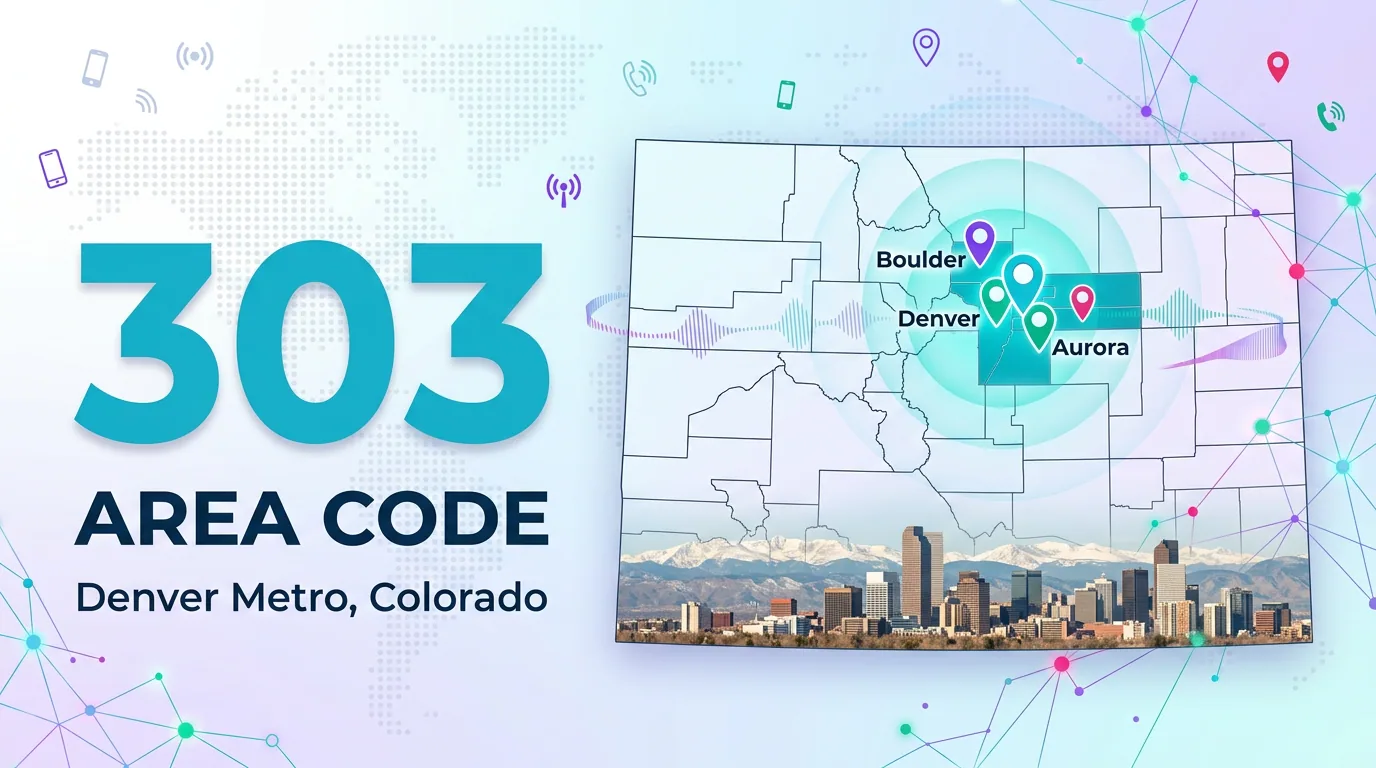
Quick answer: The 303 area code serves the Denver metropolitan area in north-central Colorado — Denver, Boulder, Aurora, Lakewood, and surrounding suburbs across about ten counties. It sits in the Mountain Time Zone, is the original 1947 Colorado code, and now shares its territory with two overlays (720 and 983), so every local call requires all 10 digits.
Here is something most people never think about: in 1947, one phone code covered all of Colorado. That code was 303.
It could not last. Denver grew, the suburbs sprawled, and a single code ran out of numbers. This guide covers what the 303 area code reaches today, how it shrank from a statewide code to a metro one, the dialing rules now in force, and how a business can claim a 303 number from anywhere.
What the 303 Area Code Covers Today
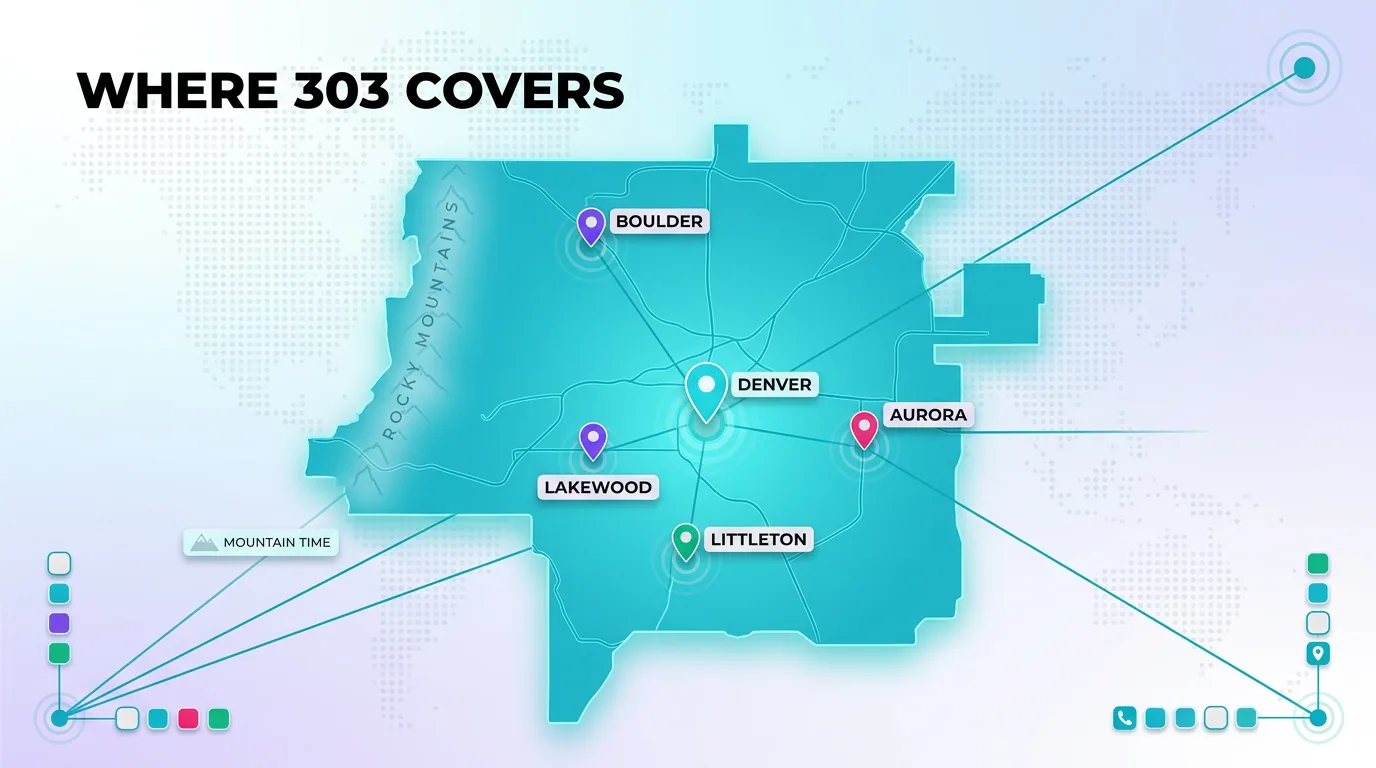
The 303 serves the Denver metropolitan area in north-central Colorado, within the Mountain Time Zone. It is the original Colorado area code, though it no longer covers the whole state — decades of growth pulled its footprint into the urban core.
The Cities
Denver anchors the region, alongside Boulder, Aurora, Lakewood, Littleton, Longmont, Westminster, Thornton, and Centennial. Suburbs such as Broomfield and Castle Rock also fall inside the coverage zone.
The Counties
The numbering area spans roughly ten counties, including Denver, Jefferson, Arapahoe, Adams, Boulder, and Douglas. That is a dense, fast-growing corridor — which is exactly why the region needed extra capacity.
From Statewide Code to Denver Metro
When the 303 first launched, Colorado had a fraction of today's population. One code handled every call in the state with room to spare.
Then the Front Range boomed. Mobile phones, fax lines, and second numbers drained the supply fast.
The Splits That Came First
In 1988, Colorado split off 719 for the southern part of the state. In 1995, 970 carved out the northern and western regions. That left the 303 covering just the Denver metro — still the busiest slice of Colorado by far.
The Overlay Era
Splitting eventually stopped working, so regulators switched to overlays. An overlay adds a new code to the same geography without forcing anyone to change a number.
- 303 — the 1947 original Colorado code.
- 720 — the first overlay for the Denver metro, added in 1998.
- 983 — the newest overlay, added in 2022, covering the same region.
Today the 303, 720, and 983 all share the exact same Denver-area footprint.
Dialing Rules in the 303 Region
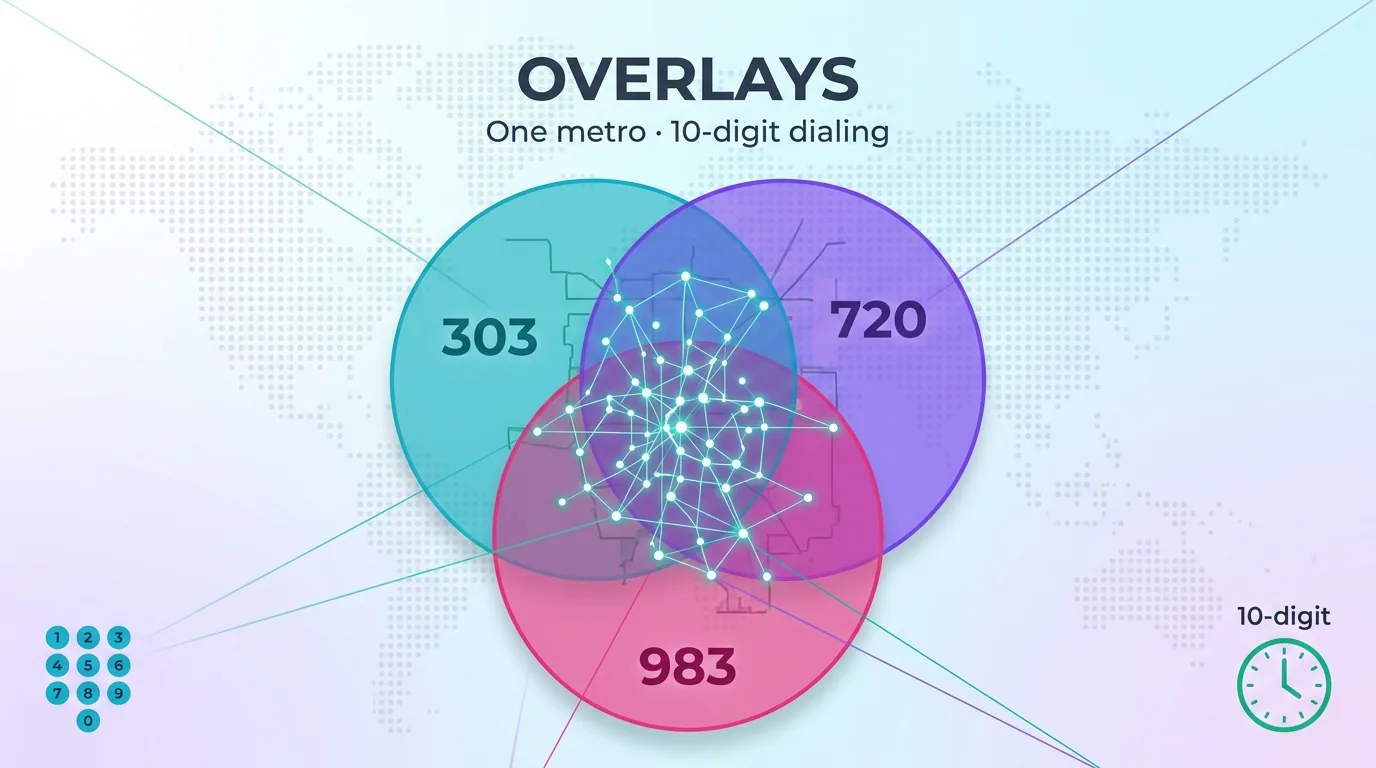
Because three codes share one geography, ten-digit dialing is mandatory. Seven digits will not connect a call.
Always dial the area code plus the seven-digit number, even for a neighbor across the street. For long-distance, add a 1 up front. From outside the US, dial +1, then 303, then the number.
A practical tip: store every contact with the full ten digits. It is the simplest way to avoid failed calls.
Ready when you are
Protect your business line.
MCM's local numbers ship with verified caller ID and smart call filtering — customers always know it's really you, and spam never reaches your team.
Why a 303 Number Still Matters for Business
People answer calls that look local. A familiar Denver code earns a pickup that an unknown number does not, and that edge shows up in answer rates and callback rates alike.
Who Gains the Most
- Local service providers — contractors, clinics, and agencies chasing inbound calls.
- Out-of-state companies — brands serving Denver customers from elsewhere.
- Growing startups — teams that want instant local credibility.
A 303 number signals roots. It tells a Denver customer you are part of their community, not a faceless call center.
Watching Out for 303 Scam Calls
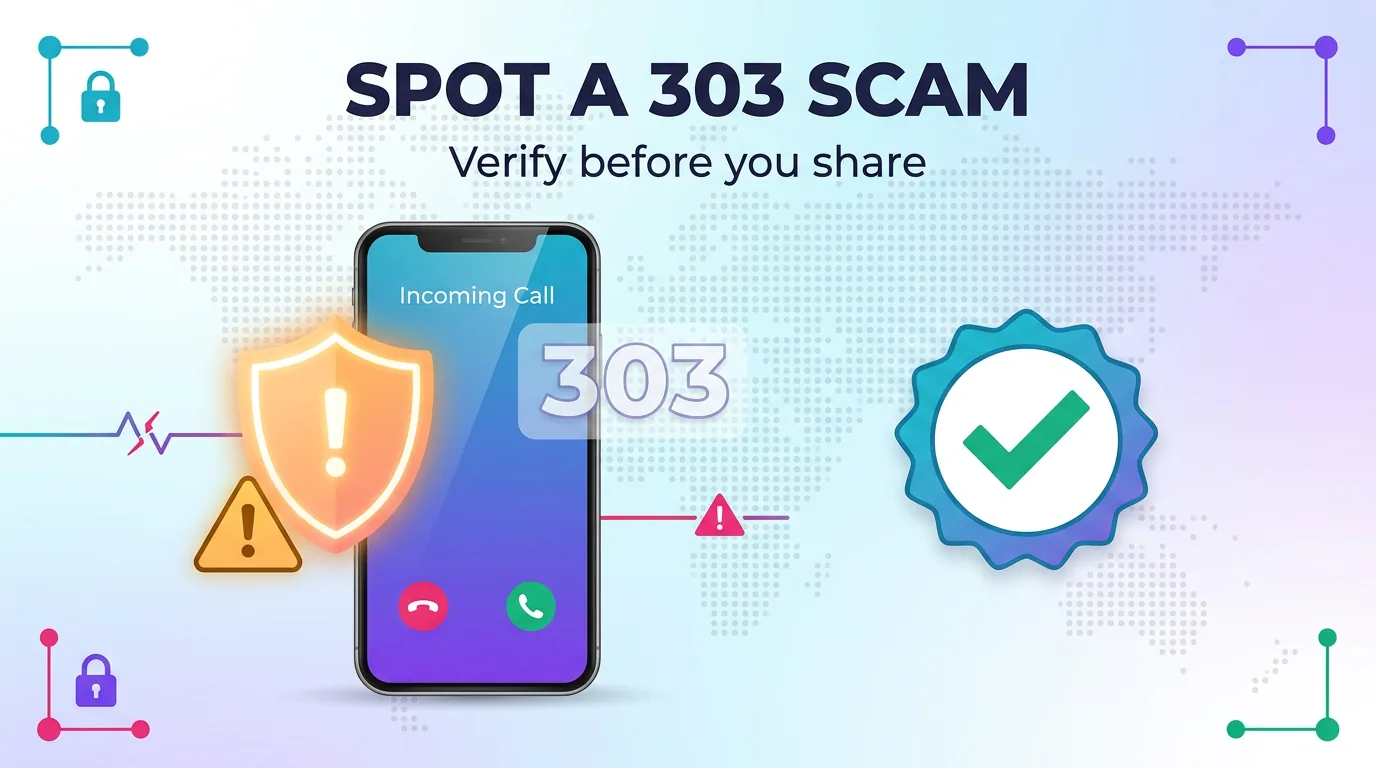
The 303 area code is fully legitimate. But scammers spoof well-known codes to seem trustworthy — spoofing fakes the caller ID, so a fraud call can show a Denver number even when it is not one.
Never trust a call on its area code alone. Confirm the caller's identity before sharing personal or financial details. Carriers that use STIR/SHAKEN caller authentication help verify legitimate calls and reduce spoofed ones.
How to Get a 303 Area Code Number
You do not need to live in Colorado. A virtual 303 number works over the internet from anywhere, and most businesses go live the same day.
The process is quick: choose a provider that offers Colorado numbers, search the 303 inventory for an available line, configure call forwarding and routing, then activate. With My Country Mobile, a 303 number includes call forwarding, voicemail-to-email, and routing to any device, with setup in about five minutes.
The Bottom Line
The 303 went from covering an entire state to anchoring one of the fastest-growing metros in the country. That history is exactly why it still carries weight.
A 303 number is an easy, low-cost way to look local and get answered in Denver. Pick a provider, claim your number, and you can be live before the day ends.
Ready when you are
Ready to sound local everywhere you sell?
MCM activates business numbers in minutes, with call routing, analytics, and CRM-ready integrations. Start your trial — no card to browse inventory.
FAQs
What cities are in the 303 area code?
It serves the Denver metro, including Denver, Boulder, Aurora, Lakewood, Littleton, Longmont, Westminster, Thornton, and Centennial.
What overlay codes share the 303 region?
Two overlays cover the same Denver-area geography: 720 (added 1998) and 983 (added 2022). All three codes serve identical territory.
Do I need to dial ten digits in the 303 area?
Yes. With the overlays in place, every local call requires the area code plus the seven-digit number. Long-distance calls also need a leading 1.
What time zone does the 303 area code use?
The Mountain Time Zone, the same as the rest of Colorado.
Can I get a 303 number without living in Colorado?
Yes. A virtual 303 number from a VoIP provider works from any location and still displays a Denver caller ID.
How quickly can I activate a 303 number?
Most providers let you search, select, and activate a 303 number in roughly five minutes, with the line live the same day.