Explicación de los números 888: ¿Es segura la llamada y cómo funciona el número gratuito?
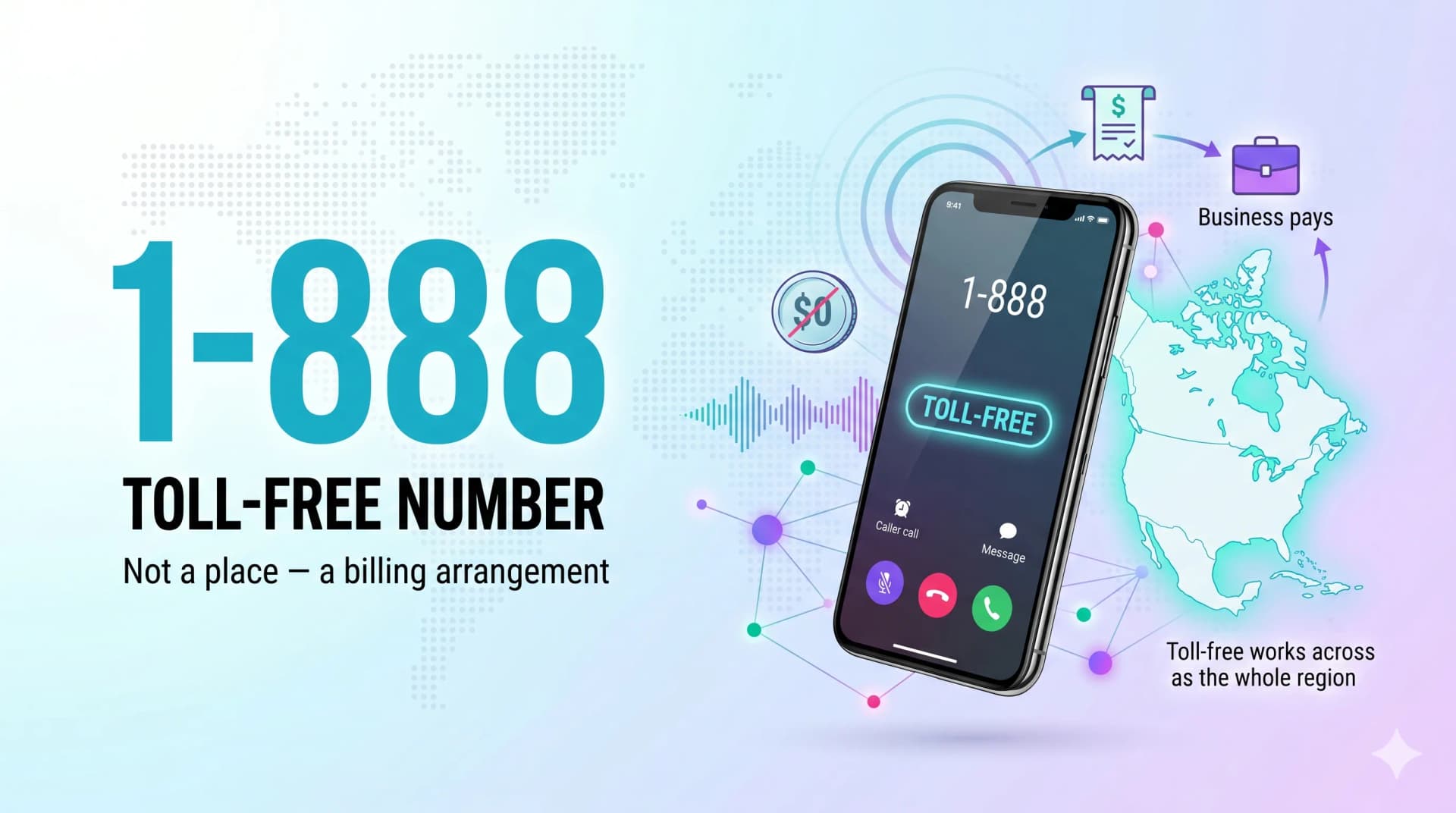
Su teléfono suena y la pantalla muestra 1-888. Antes de decidir si responder, esto es lo primero que vale la pena saber: 888 no es un lugar. No está vinculado en absoluto a una ciudad o estado.
Es un prefijo gratuito. Esta guía explica lo que eso realmente significa, si es seguro atender una llamada entrante al 888, cómo funciona el enrutamiento detrás de escena y cómo una empresa obtiene una.
888 ES UN PREFIJO, NO UNA UBICACIÓN
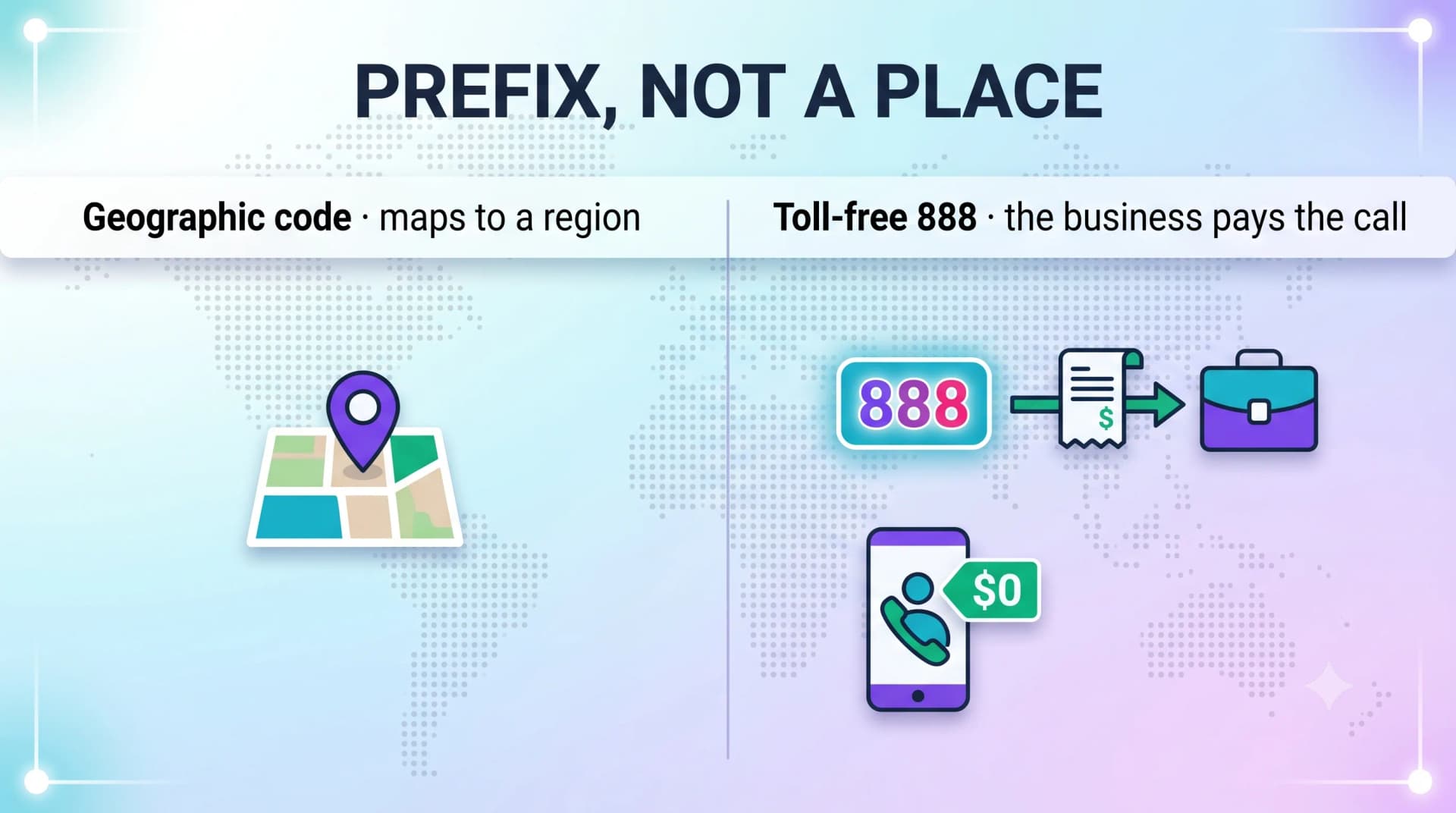
La gente suele buscar "código de área 888" esperando una ciudad, del mismo modo que 212 significa Nueva York. No hay ninguno.
Un código de área geográfica se asigna a una región. En cambio, un prefijo gratuito se asigna a un acuerdo de facturación: la empresa paga por la llamada, no la persona que llama.
Lo que realmente significa "llamada gratuita"
Cuando marca un número gratuito, el cargo de la llamada recae en la empresa propietaria de la línea. No pagas nada.
Ese acuerdo funciona en cualquier lugar dentro del Plan de Numeración de América del Norte, que cubre Estados Unidos, Canadá y partes del Caribe.
La familia de prefijos gratuitos
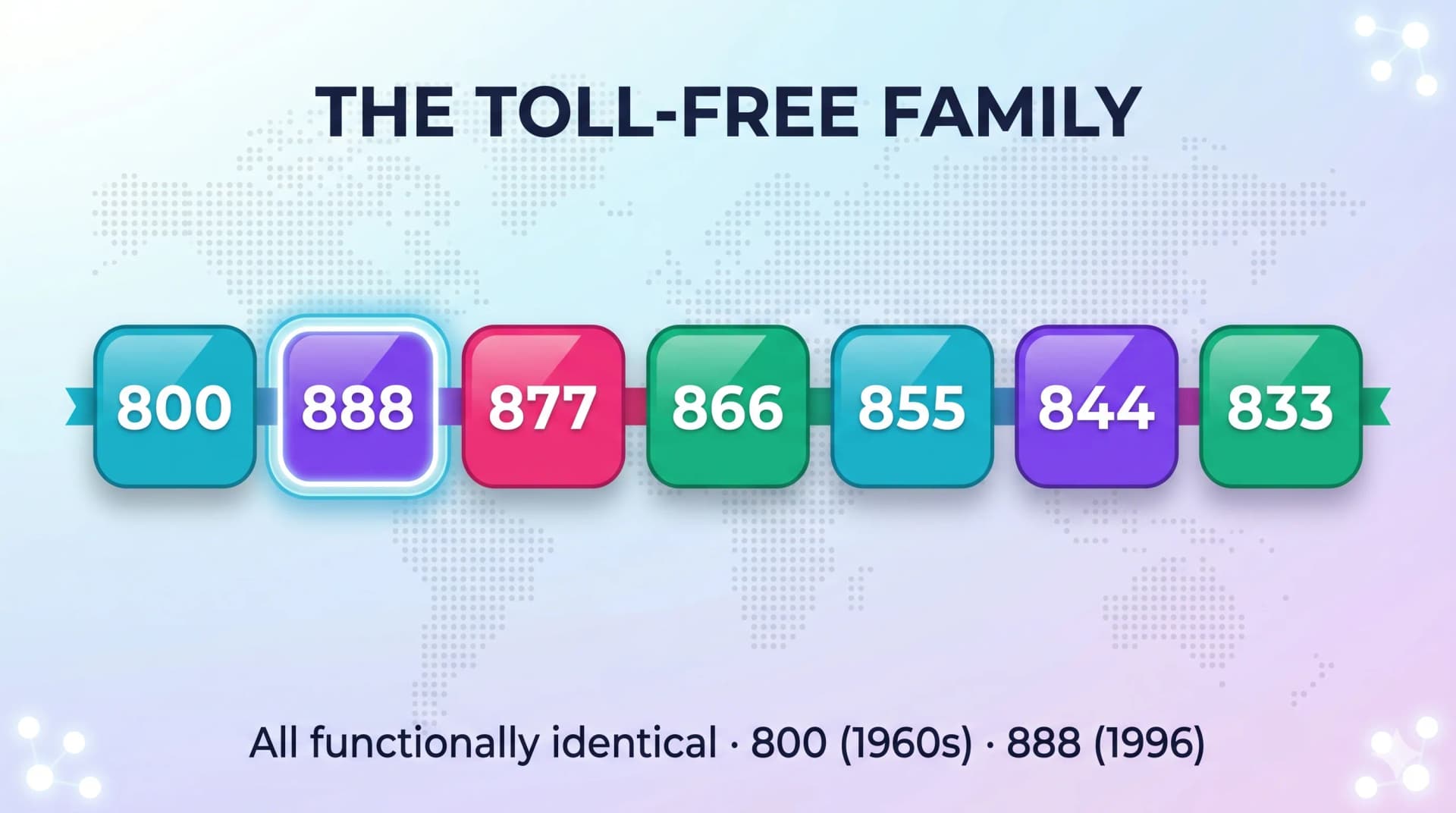
888 es uno de varios prefijos gratuitos. El original era el 800, introducido en los años 1960.
Como 800 números se agotaron, 888 se lanzó el 1 de marzo de 1996. Más tarde vinieron 877, 866, 855, 844 y 833, todos funcionalmente idénticos.
¿ES SEGURA UNA LLAMADA DESDE UN NÚMERO 888?
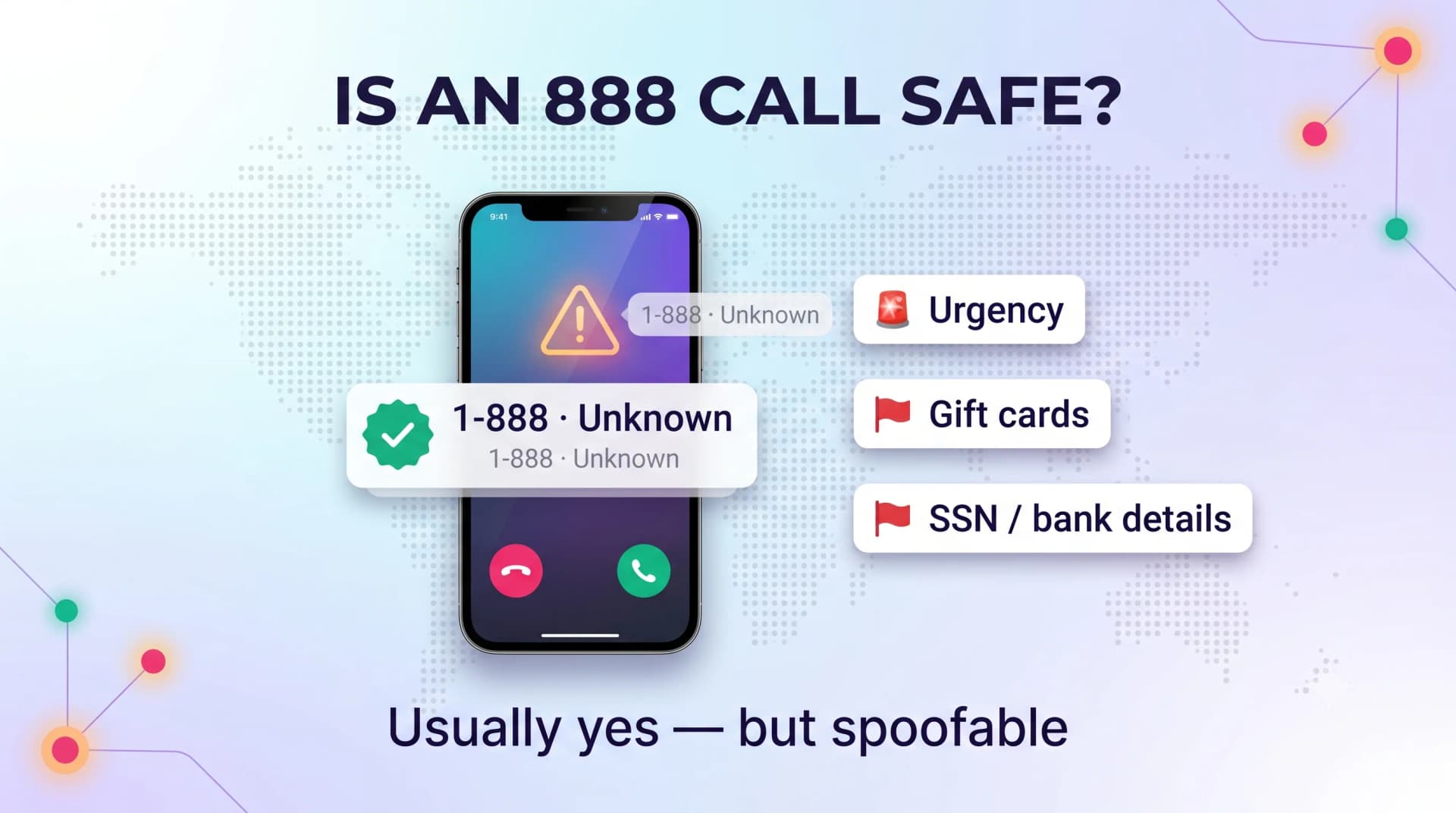
Esta es la pregunta que realmente se hace la mayoría de la gente. La respuesta honesta: normalmente sí, pero no siempre.
Las líneas gratuitas alimentan los servicios de atención al cliente, las líneas directas de soporte y las líneas de ventas para empresas legítimas en todas partes. La mayoría de las llamadas al 888 son exactamente lo que parecen ser.
Por qué los estafadores se dirigen a los números gratuitos
Aquí está la parte incómoda. Las encuestas muestran que es más probable que las personas respondan llamadas gratuitas porque el prefijo parece oficial.
Los estafadores lo saben. También saben que los números gratuitos son fáciles de obtener, lo que hace que el prefijo sea atractivo para el fraude.
Spoofing: el truco para entender
Un estafador ni siquiera necesita tener un número 888. La suplantación de identidad les permite falsificar uno en su identificador de llamadas mientras llaman desde cualquier lugar del mundo.
Por lo tanto, un identificador de llamadas gratuito no prueba nada sobre quién llama realmente. Juzgue la llamada por su contenido, no por su prefijo.
Banderas rojas en cualquier llamada entrante
Cuelgue si una persona que llama exige una acción urgente, lo amenaza, le solicita su Seguro Social o sus datos bancarios, o quiere un pago mediante tarjeta de regalo, transferencia bancaria o criptografía.
Cuando no esté seguro, cuelgue y vuelva a llamar a la empresa utilizando el número que aparece en su sitio web oficial. Denuncie el fraude a la Comisión Federal de Comercio.
Si tiene una empresa y le preocupa que sus propios números sean falsificados, nuestra guía de sistemas telefónicos VoIP cubre funciones modernas de autenticación de llamadas.
Listo cuando lo estés
Protege tu línea de negocio.
Los números locales de MCM se envían con identificador de llamadas verificado y filtrado inteligente de llamadas: los clientes siempre saben que eres realmente tú y el spam nunca llega a tu equipo.
CÓMO FUNCIONAN LAS RUTAS GRATUITAS DETRÁS DE ESCENAS
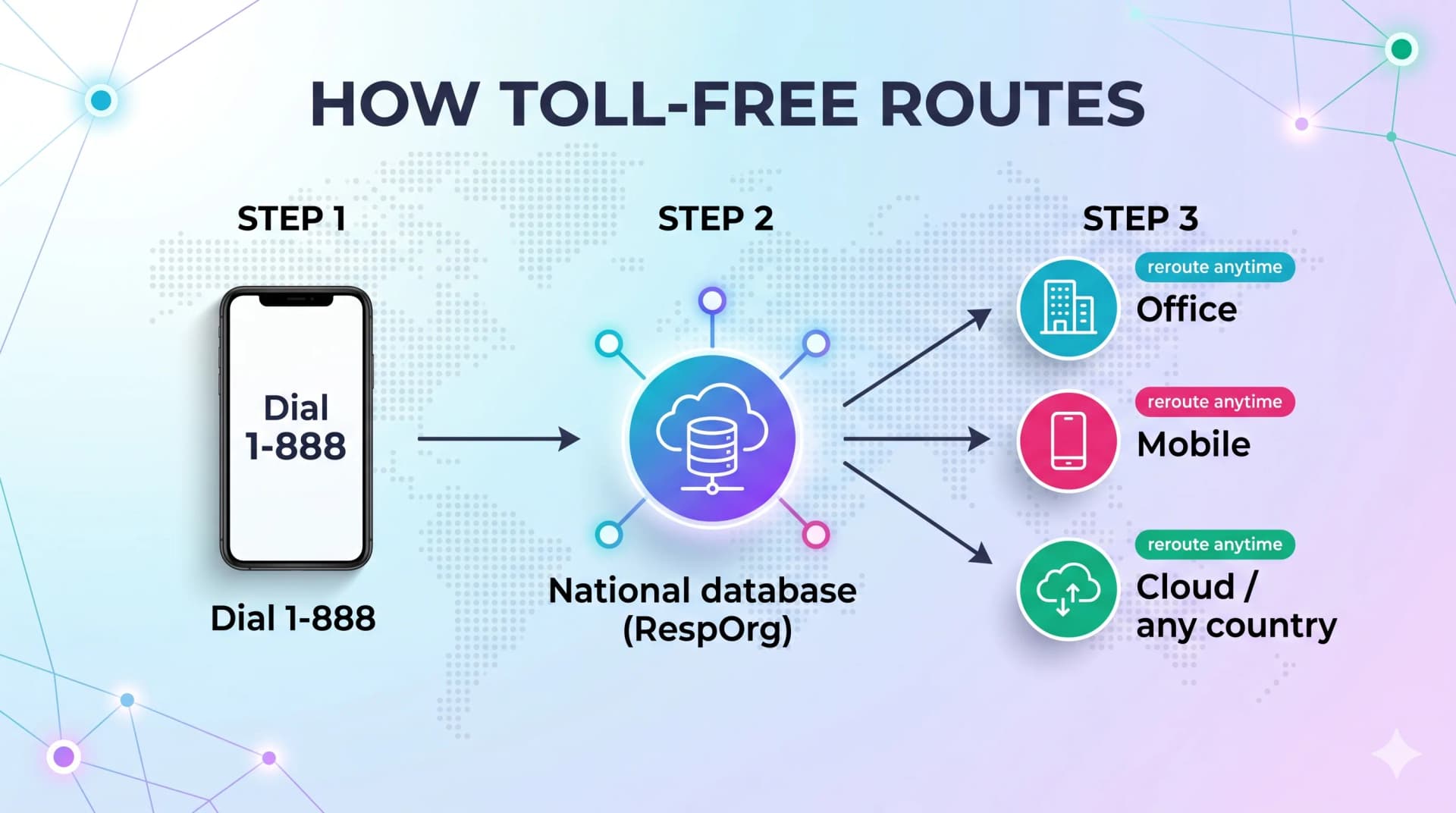
Un número gratuito no está conectado a un solo teléfono. Es una instrucción de enrutamiento almacenada en una base de datos nacional compartida.
Esa base de datos es administrada por Somos, Inc., el administrador oficial de números gratuitos.
El papel de RespOrg
Cada número gratuito es administrado por una "Organización Responsable" o RespOrg. La RespOrg controla hacia dónde apunta el número.
Cuando alguien marca su número, la llamada llega a la red, busca el registro de enrutamiento de RespOrg y se envía al destino elegido.
Dónde puede aterrizar la llamada
Ese destino es flexible. Puede ser un teléfono fijo, un teléfono móvil o un sistema telefónico empresarial basado en la nube.
Puede redirigir el número en cualquier momento (a una oficina diferente, a un equipo diferente, incluso a un país diferente) sin que la persona que llama se dé cuenta.
Reglas que protegen el sistema
Las reglas de la FCC prohíben el "almacenamiento": una RespOrg no puede acumular números gratuitos sin suscriptores reales. Se aplican sanciones.
Eso mantiene el grupo gratuito justo y disponible para empresas que realmente necesitan un número.
POR QUÉ LAS EMPRESAS ELIGEN NÚMEROS GRATUITOS
Una línea gratuita hace más que ahorrarles una tarifa a quienes llaman. Da forma a cómo los clientes ven su empresa.
Para una pequeña empresa, proyecta la imagen de una operación establecida a nivel nacional.
Los beneficios comerciales
| Beneficio | Por qué es importante |
|---|---|
| Presencia nacional | Un número funciona en EE. UU. y Canadá |
| Credibilidad | Señala una operación establecida y profesional. |
| Sin barreras de contacto | Los clientes llaman gratis, por lo que llaman más |
| Portabilidad | El número se mueve contigo si te mudas |
| Opciones de tocador | Deletrea una palabra, como 1-888-FLOWERS, para recordarla |
| Seguimiento de campaña | Asigne números únicos para medir el rendimiento de los anuncios |
¿Está considerando una línea gratuita? My Country Mobile (MCM) le permite buscar números disponibles, incluidas opciones personalizadas, y puede iniciar una prueba gratuita en mycountrymobile.com sin tarifa de instalación.
CÓMO UNA EMPRESA OBTIENE UN NÚMERO 888
No se puede comprar un número gratuito al gobierno. Usted recurre a un proveedor certificado que actúa como su RespOrg.
El proceso es rápido, a menudo en el mismo día.
Paso 1: elija un proveedor
Busque precios transparentes, enrutamiento confiable y funciones útiles como menús IVR y análisis de llamadas.
Paso 2: buscar y seleccionar
Explore los números gratuitos disponibles. Si un número personalizado memorable se adapta a su marca, consígalo.
Paso 3: configurar el enrutamiento
Apunte el número a su teléfono existente, línea de oficina o sistema telefónico comercial. Ajústelo cada vez que cambie su configuración.
¿Ya tienes un número gratuito en otro lugar? En la mayoría de los casos, puede transferirlo a un nuevo proveedor; lea nuestro desglose completo en la guía de números gratuitos.
EL RESULTADO FINAL
888 no es una región: es un prefijo gratuito que traslada los costos de las llamadas a la empresa. Para las personas que llaman, eso significa que una llamada al 888 suele ser legítima, pero la suplantación de identidad significa que debes juzgarla por lo que dice la persona que llama, no por el número.
Para las empresas, una línea gratuita es una forma asequible de parecer nacional, ganarse la confianza y facilitar que los clientes se comuniquen con usted.
¿Quieres reclamar uno hoy? Inicie una prueba gratuita en mycountrymobile.com: sin contratos, sin tarjeta de crédito y su número estará disponible en minutos.
Listo cuando lo estés
¿Listo para sonar local en todos los lugares donde vendes?
MCM activa números comerciales en minutos, con enrutamiento de llamadas, análisis e integraciones listas para CRM. Inicie su prueba gratuita: sin tarjeta para explorar el inventario.
Preguntas frecuentes
¿Es 888 un código de área?
No en el sentido geográfico. Es un prefijo gratuito dentro del Plan de Numeración de América del Norte, por lo que no está vinculado a ninguna ciudad o estado.
¿Los números 888 son gratuitos para quien llama?
Sí. La persona que llama no paga nada dentro de la región NANP. La empresa propietaria del número cubre el coste de las llamadas entrantes.
¿Es seguro contestar una llamada de un número 888?
A menudo sí, muchas son empresas legítimas. Pero los estafadores pueden falsificar los identificadores de llamadas gratuitas, así que esté atento a tácticas de alta presión o solicitudes de datos personales y cuelgue si una llamada no le parece correcta.
¿Cuál es la diferencia entre los números 888 y 800?
Funcionan de manera idéntica. 800 es el prefijo gratuito original y más reconocido, mientras que 888 ofrece el mismo servicio con mejor disponibilidad.
¿Puedo conservar mi número 888 si cambio de proveedor?
Sí. En la mayoría de los casos, puede transferir un número gratuito existente a un nuevo proveedor, y el proceso de transferencia suele ser sencillo.
¿Qué tan rápido puede una empresa obtener un número gratuito?
A través de un proveedor certificado, suele ser el mismo día. Una vez que elijas un número y un plan, la activación puede tardar unos minutos.
¿Puedo obtener un número 888 personalizado o personalizado?
Sí, sujeto a disponibilidad. Muchos proveedores ofrecen herramientas de búsqueda para que pueda encontrar un número que deletrea una palabra o sigue un patrón fácil de recordar.