If you're terminating voice calls to Brazil at scale, you already know the challenges: a complex regulatory environment under ANATEL, a dominant carrier duopoly where Vivo and Claro control over 70% of the market, and rates that vary dramatically depending on route quality and destination type.
For the carrier ecosystem, origination and reseller models, see our wholesale voice guide for Brazil; for numbering format, FAS fraud and Anatel licensing in more depth, see the wholesale VoIP Brazil termination guide. This guide covers everything you need: how wholesale VoIP termination works in Brazil, the compliance requirements that matter, what separates a premium CLI route from a gray route, and how to benchmark quality before you commit to a carrier.
What Is Wholesale VoIP?
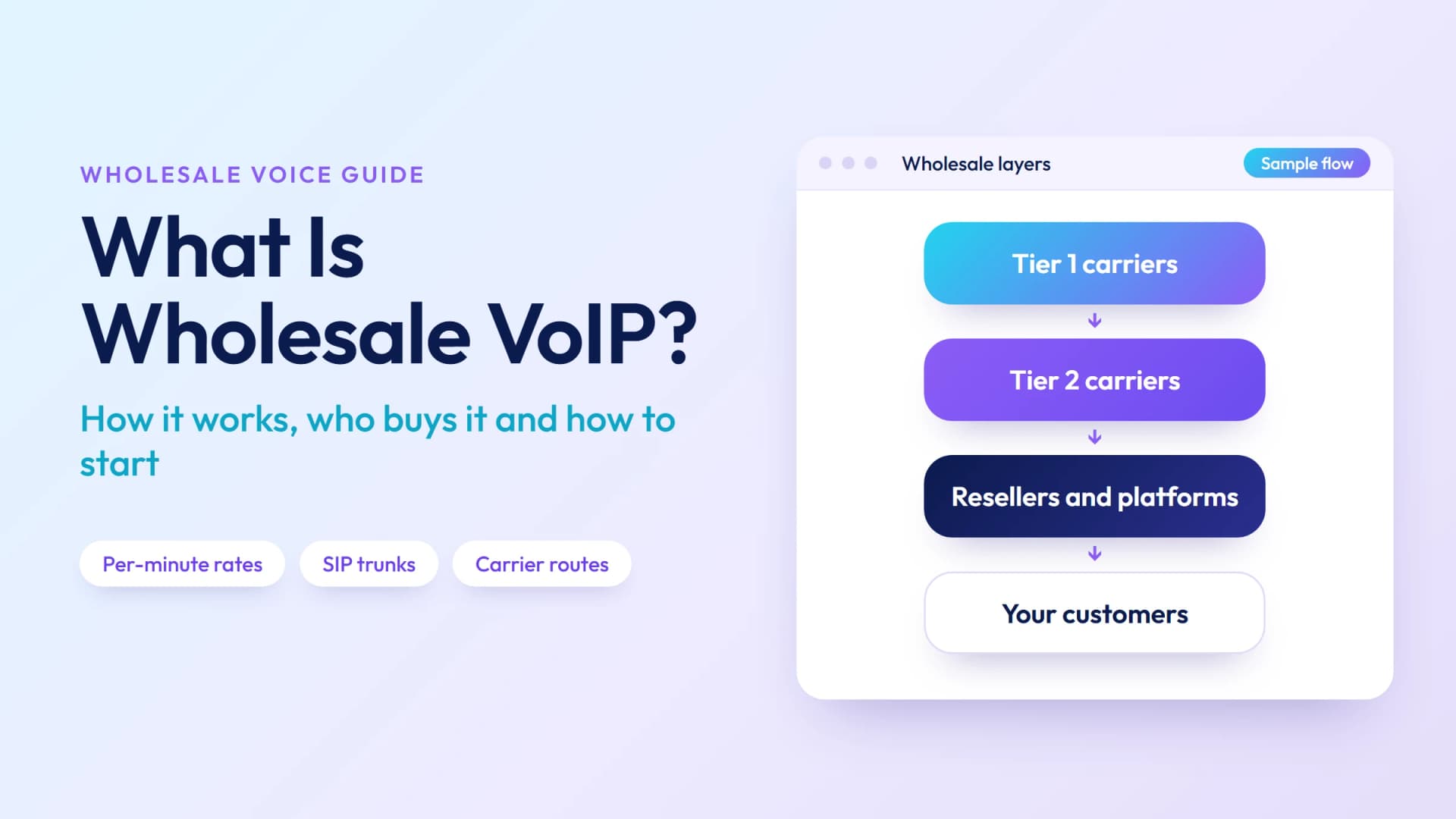
Wholesale VoIP is voice-over-IP telephony sold in bulk — by the minute, at carrier rates — rather than as a retail service to end users. Wholesale buyers include telecom carriers, call center operators, business phone system providers, and SMS/voice platforms that need to terminate large call volumes to end subscribers.
Unlike retail VoIP, where a provider sells you a phone number and a monthly plan, wholesale VoIP is infrastructure: you connect your SIP trunk or softswitch to a carrier's network, and they route and terminate the calls. Pricing is per minute, typically with no minimums for established customers, and quality is measured in hard metrics like ASR and ACD rather than customer satisfaction scores.
Brazil's VoIP Market in 2026
Brazil is the largest telecom market in Latin America and one of the top ten globally by mobile subscriber count.
| Carrier | Subscribers | Market Share |
|---|---|---|
| Vivo (Telefónica Brasil) | ~98 million | ~39% |
| Claro (América Móvil) | ~83 million | ~33% |
| TIM Brasil | ~62 million | ~25% |
| Algar Telecom | ~4.5 million | ~2% |
| Others | ~4 million | ~2% |
Source: ANATEL subscriber data, mid-2026
5G networks now reach 753 Brazilian cities, with 4G covering over 95% of the population. Fixed-line penetration remains around 20%, but mobile VoIP and OTT calling continue to grow rapidly, particularly in São Paulo, Rio de Janeiro, and Belo Horizonte.
For wholesale carriers, Brazil's geographic diversity matters: a call to São Paulo (area code 11) terminates on different infrastructure and at different rates than a call to a rural Pará state number (area code 91). Route selection and pricing must account for both fixed and mobile destinations across Brazil's 27 states.
How Wholesale VoIP Termination Works in Brazil
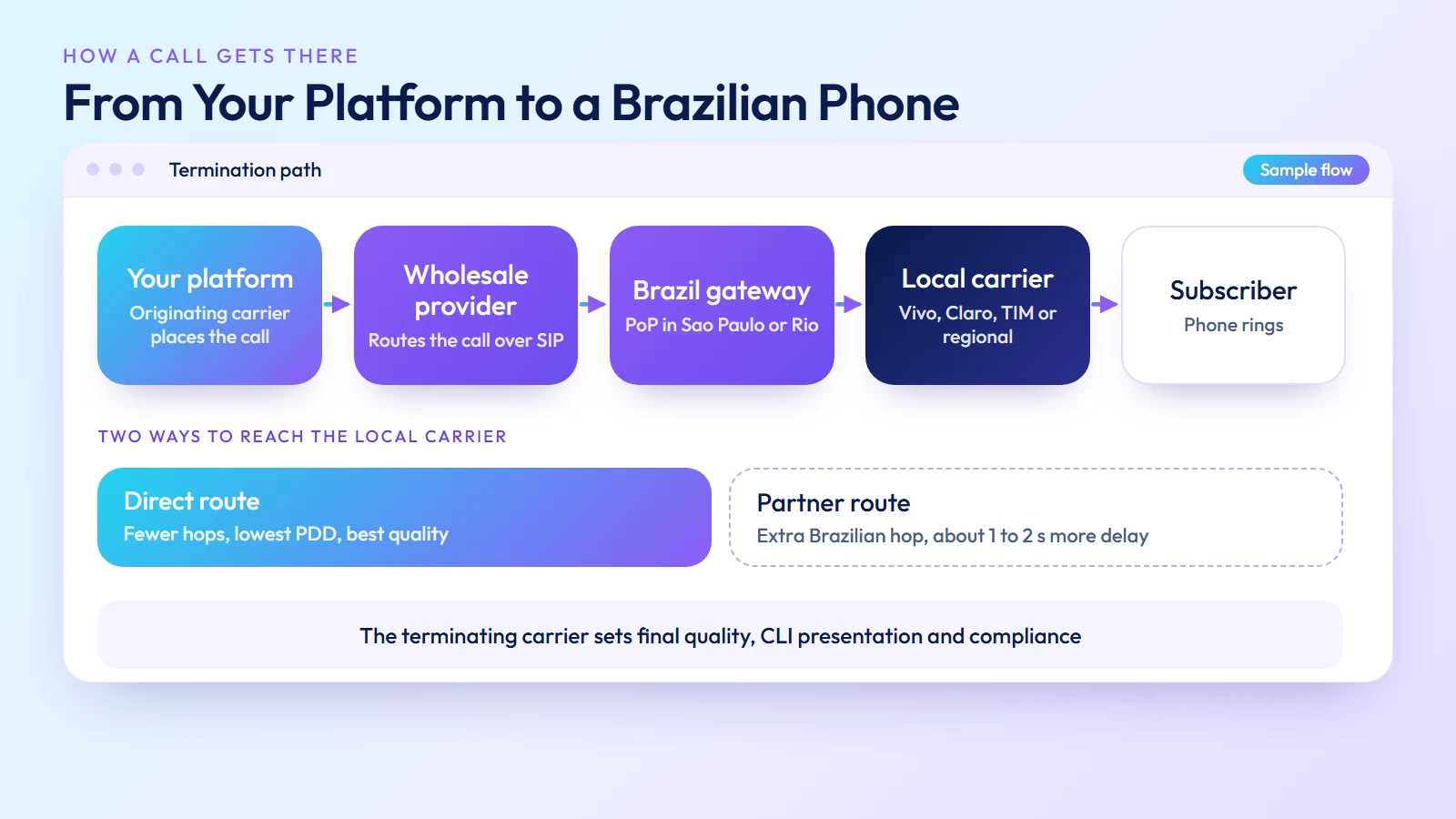
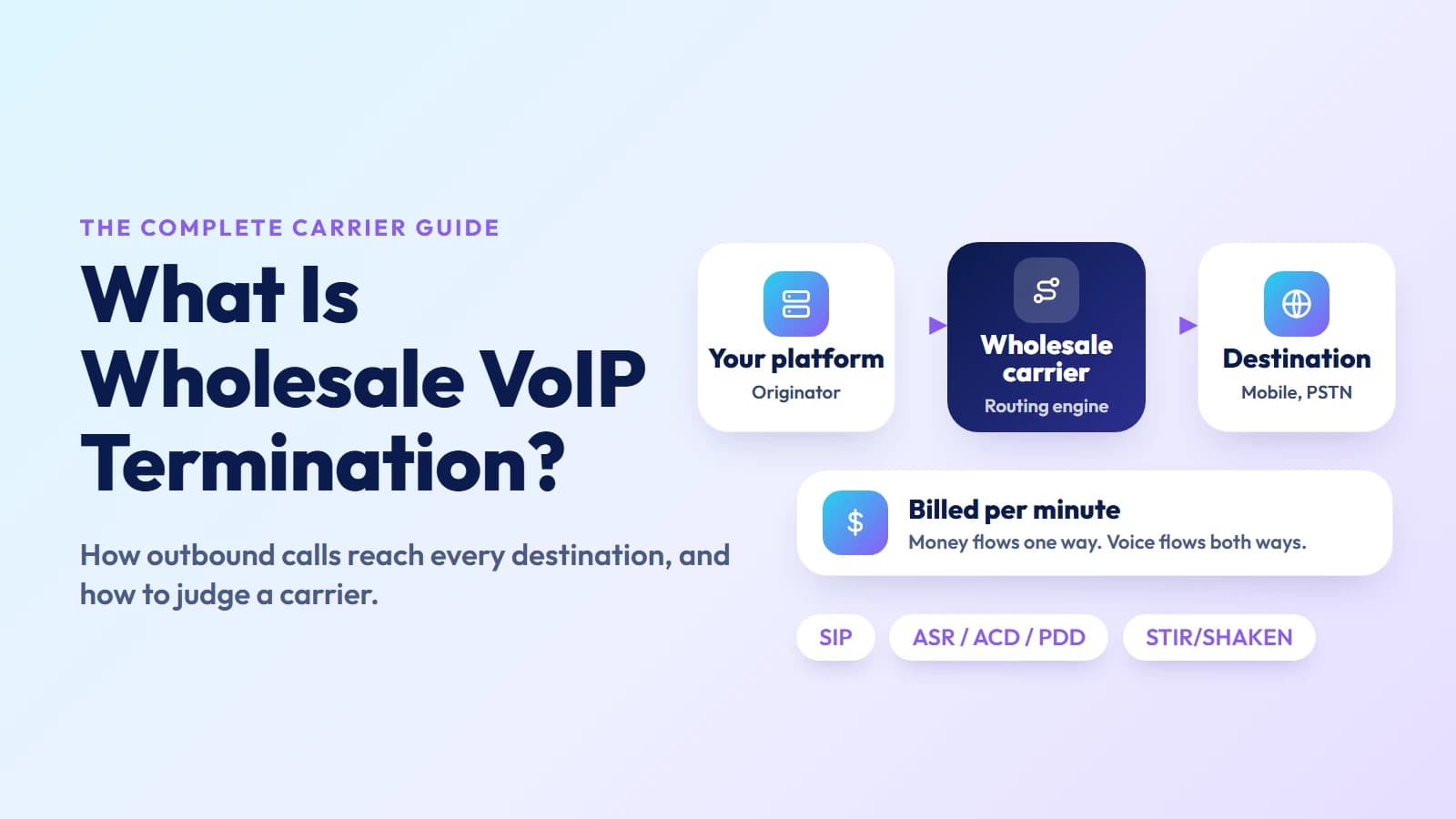
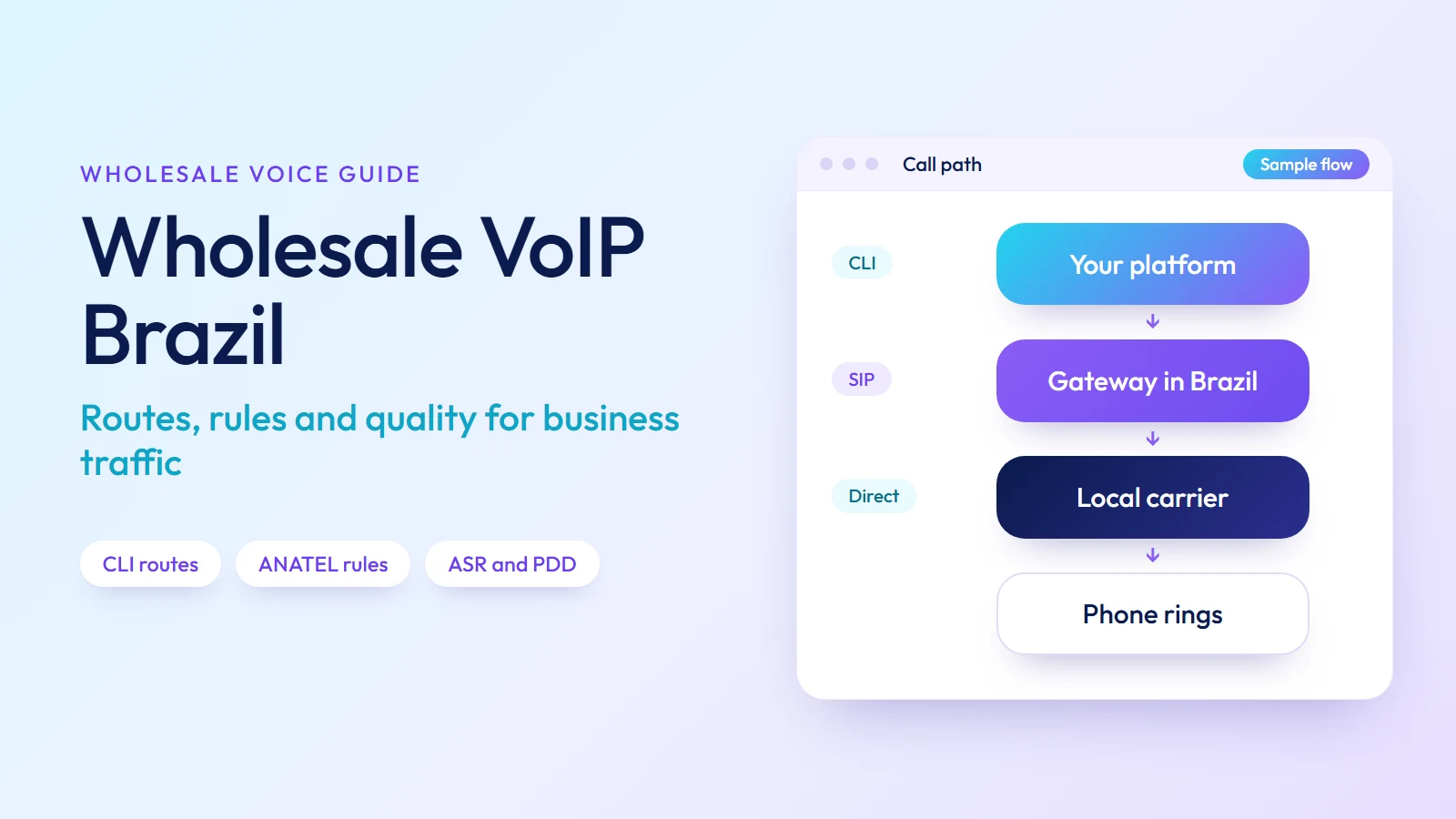
When a VoIP call is placed to a Brazilian number, it travels through a chain of carriers before it rings the endpoint. Here's how that chain typically looks:
- Originating carrier — your customer's VoIP platform places the call
- Wholesale transit provider — routes the call internationally via SIP
- Brazilian gateway carrier — receives the SIP signaling at a PoP inside Brazil (typically São Paulo or Rio)
- Local terminating carrier — delivers the call to the end subscriber (Vivo, Claro, TIM, or a regional fixed carrier)
Each hop in this chain adds latency, and each adds margin. A "direct route" means the wholesale provider has a direct interconnect with the terminating carrier in Brazil — fewer hops, better quality, and typically higher cost. A "partner route" means the provider routes via an intermediate Brazilian carrier, trading some quality margin for flexibility and coverage in harder-to-reach regions.
The terminating carrier in Brazil determines final call quality, CLI presentation, and regulatory compliance. This is why route type — and the carrier behind it — matters far more than price alone.
Ready when you are
Protect your business line.
MCM's local numbers ship with verified caller ID and smart call filtering — customers always know it's really you, and spam never reaches your team.
ANATEL Compliance: What Carriers Must Know
ANATEL (Agência Nacional de Telecomunicações) is Brazil's federal telecom regulator. For wholesale voice providers routing calls to Brazil, the regulatory obligations primarily fall on the local Brazilian carrier receiving the traffic. However, international wholesale providers should understand three areas:
SCM Authorization: Companies providing VoIP services commercially within Brazil require an SCM (Serviço de Comunicação Multimídia) authorization from ANATEL. This applies to any entity with a fixed presence in Brazil offering voice services to Brazilian subscribers.
CLI Requirements: ANATEL regulations require CLI (Calling Line Identification) on commercial voice traffic. Sending traffic without a valid CLI — or with a spoofed or invalid CLI — is grounds for traffic blocking by local carriers. Any wholesale route you use for legitimate commercial traffic should carry valid CLI.
Numbering Plan: Brazil uses the E.164 format with a two-digit area code (DDDs, ranging from 11 in São Paulo to 99 in parts of Maranhão). Calls to mobile numbers include the ninth digit added nationally since 2012. Routes must correctly handle both the 8-digit legacy and 9-digit mobile numbering formats to avoid false answer supervision (FAS) issues.
For most international wholesale buyers connecting to a compliant Brazilian carrier, ANATEL compliance is handled by that carrier. What you need to ensure is that your traffic uses valid originating CLIs and routes through a provider with direct carrier relationships — not via gray routes that bypass ANATEL-registered infrastructure.
Route Types: CLI, Non-CLI, and Direct Routes
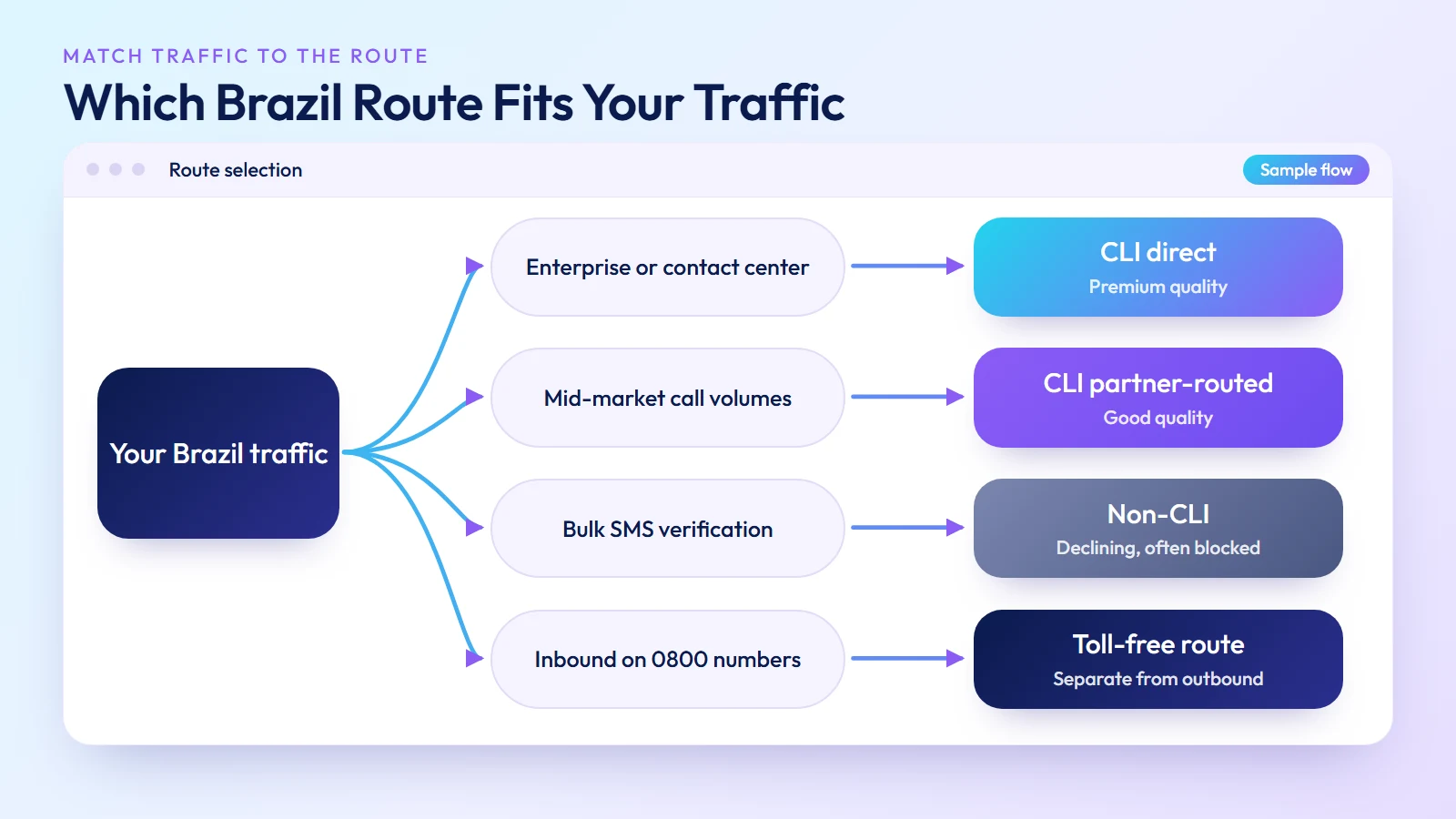
Understanding route types is essential for matching your traffic to the right product.
| Route Type | CLI | Compliance | Typical Use Case | Quality |
|---|---|---|---|---|
| CLI Direct | ✓ | High | Enterprise, contact centers | Premium |
| CLI Partner-routed | ✓ | Medium-High | Mid-market call volumes | Good |
| Non-CLI | ✗ | Low | Bulk SMS verification (declining) | Variable |
| TFN (Toll-Free) | N/A | High | Inbound only | Premium |
CLI Direct routes have a direct interconnect between the wholesale provider and the Brazilian terminating carrier. Call completion is highest, post-dial delay is lowest (typically under 3 seconds), and CLI passes through intact. This is what enterprise contact centers and regulated industries should be using.
CLI Partner-routed routes pass through an intermediate Brazilian carrier before reaching the final terminating network. CLI is preserved but there may be an additional 1–2 second delay. Suitable for general commercial traffic where maximum quality isn't required.
Non-CLI routes do not pass caller ID. These are increasingly blocked by Brazilian carriers as ANATEL tightens CLI enforcement and are not recommended for commercial traffic.
TFN routes are inbound, terminating on 0800 numbers. If you operate an inbound contact center serving Brazilian customers, this is a separate product from outbound termination.
Key Quality Metrics for Brazil Traffic
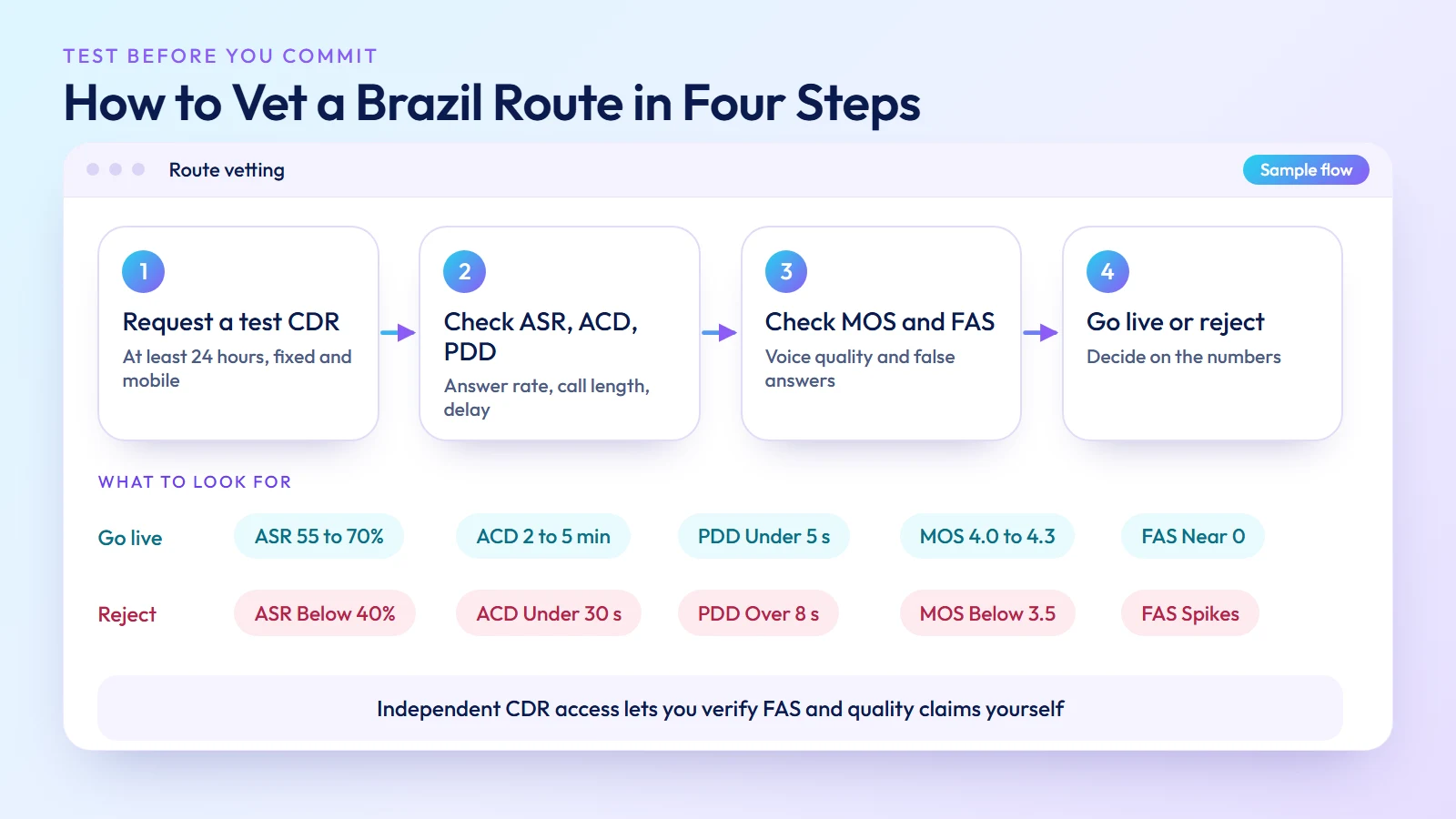
Wholesale VoIP quality is measured in five primary metrics. Any provider you evaluate should be able to share these figures for their Brazil routes:
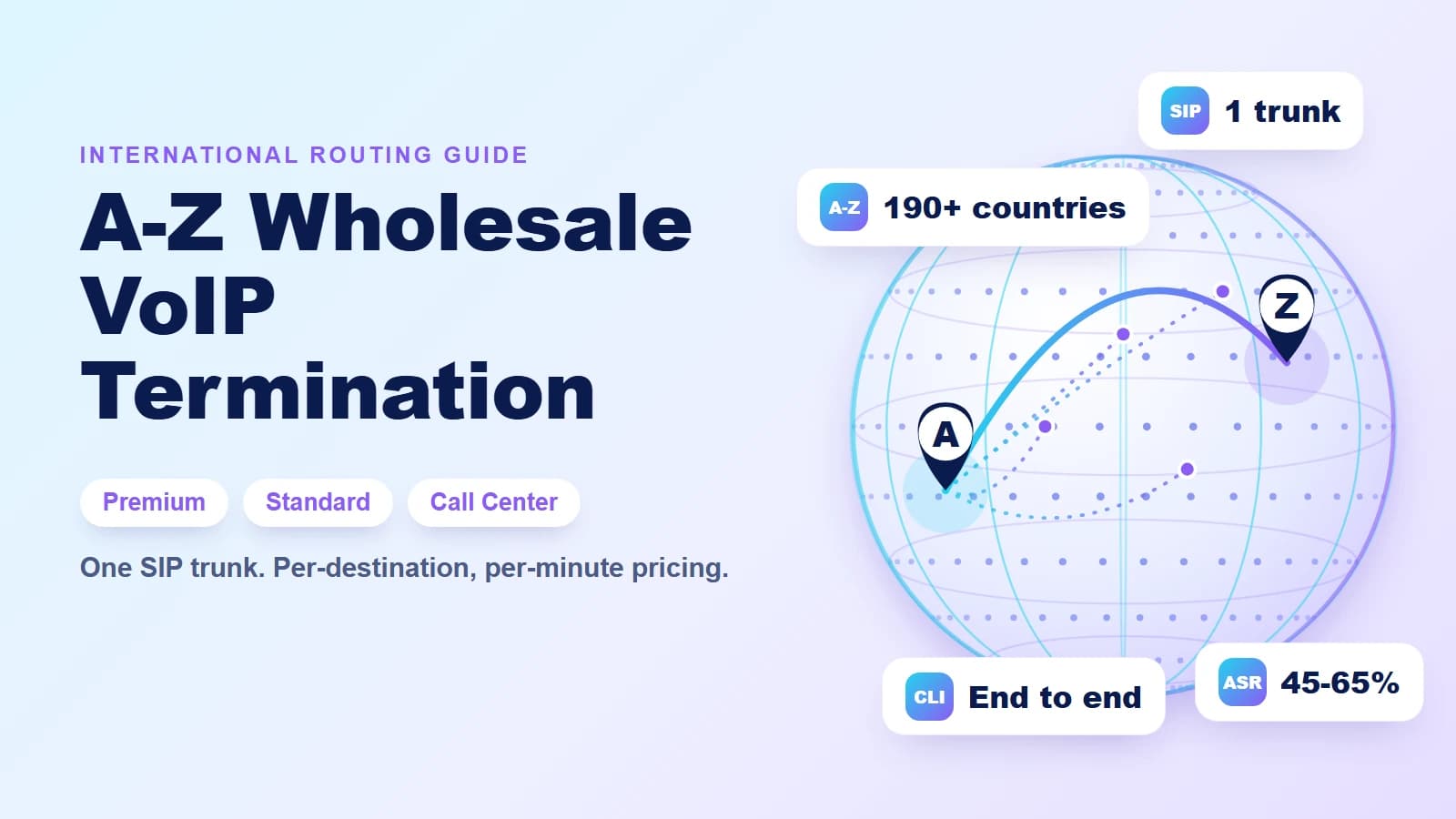
ASR (Answer Seizure Ratio): The percentage of call attempts that result in an answer. A healthy Brazil CLI route should show ASR above 55%. Below 40% indicates significant routing issues or traffic filtering by the terminating carrier.
ACD (Average Call Duration): Average length of completed calls. For contact center traffic, expect ACDs of 2–5 minutes. Very short ACDs (under 30 seconds) indicate poor call quality causing early hangups.
PDD (Post-Dial Delay): Time between dialing and the first ringback tone. Brazil mobile should be under 5 seconds on a direct route. PDD above 8 seconds significantly increases abandonment.
MOS (Mean Opinion Score): Voice quality score from 1 (bad) to 5 (excellent). Acceptable commercial quality is 3.5+. Premium CLI routes to Brazil typically run 4.0–4.3.
FAS (False Answer Supervision): Calls billed as answered that were not actually answered by a human. FAS inflates your costs and indicates a compromised route. A reputable provider will have monitoring in place to detect and suppress FAS events.
Before committing to a new Brazil route, request a test CDR (call detail record) report showing ASR, ACD, and PDD across at least 24 hours and both fixed and mobile destination types.
Wholesale VoIP Pricing in Brazil
Brazil wholesale termination rates vary significantly by destination type and route quality.
| Destination | Rate Range (USD/min) | Notes |
|---|---|---|
| Fixed — São Paulo, Rio, Belo Horizonte | $0.005–$0.010 | Major city fixed lines |
| Fixed — Other cities | $0.007–$0.015 | Regional DDDs |
| Mobile — Vivo/Claro/TIM | $0.012–$0.025 | Major carriers, CLI routes |
| Mobile — Regional carriers | $0.015–$0.030 | Algar, MVNOs |
| Toll-Free inbound (0800) | $0.010–$0.020 | Per-minute to receiving party |
Mobile termination in Brazil is consistently higher than fixed due to the mobile termination rate (MTR) system regulated by ANATEL. The MTR for mobile networks dropped significantly between 2018–2023 but has stabilized at levels that keep mobile wholesale rates roughly 2–3x higher than fixed rates.
Volume discounts typically kick in at 100,000+ minutes per month. At 500k+ minutes per month, directly negotiated rates from major carriers become available and can be 20–35% below listed wholesale rates.
Who Buys Wholesale VoIP in Brazil?
The primary buyers of Brazil wholesale voice termination fall into five categories:
International Contact Centers: Businesses running customer service or sales operations that call Brazilian numbers — from the US, Europe, or elsewhere in Latin America. Brazil's large consumer market makes it a priority destination for global call centers.
CPaaS / Communications Platforms: Companies like Twilio, Vonage, and regional competitors that resell voice services to their own developer customers need underlying wholesale capacity for Brazil.
Telecom Carriers: Regional operators that don't have direct interconnects with Vivo, Claro, or TIM need wholesale termination to complete calls to those networks.
OTT Apps and Messaging Platforms: Apps that offer voice calls or outbound calling features need to terminate voice to Brazilian mobile numbers.
Financial Services and Verification: Banks, fintech companies, and platforms that use voice OTP (one-time passwords) or phone verification need reliable CLI routes to Brazil mobile numbers. Low ASR or non-CLI routes will cause verification failure rates that directly impact conversion.
How to Choose a Wholesale VoIP Provider for Brazil
Six criteria that separate a reliable Brazil wholesale partner from a rate-first vendor (the same checks apply when you compare any international VoIP wholesale provider):
- Direct carrier relationships: Ask specifically which carriers they have direct interconnects with in Brazil. Vivo, Claro, and TIM direct interconnects are a positive signal; only indirect or tier-2 relationships are a flag.
- CLI compliance: Confirm their routes pass ANATEL-compliant CLI. Request proof via test calls to your own Brazilian numbers before going live.
- Real-time quality monitoring: A professional provider monitors ASR, ACD, and PDD in real time and can show you dashboards or alerts. This means they'll catch a degraded route before it becomes a problem for your traffic.
- Volume flexibility: Can they accommodate your peak traffic spikes? Brazil's business hours produce sharp peaks, particularly for São Paulo area codes. Providers with limited capacity may deprioritize your traffic during peaks.
- SLA and support: What's their mean time to resolve (MTTR) for route issues? For commercial contact center traffic, 4-hour resolution is the standard minimum; 1-hour MTTR is available from premium providers.
- Transparent CDR access: You should be able to pull your own call detail records — not just rely on the provider's summary reporting. Independent CDR access lets you verify FAS rates and quality claims.
Why Businesses Use My Country Mobile for Brazil
High-quality routes to every Brazilian carrier network
Get CLI-compliant termination to Vivo, Claro, TIM, and regional Brazilian carriers — with real-time quality monitoring, transparent CDR access, and support that speaks your language. Get Brazil rates →
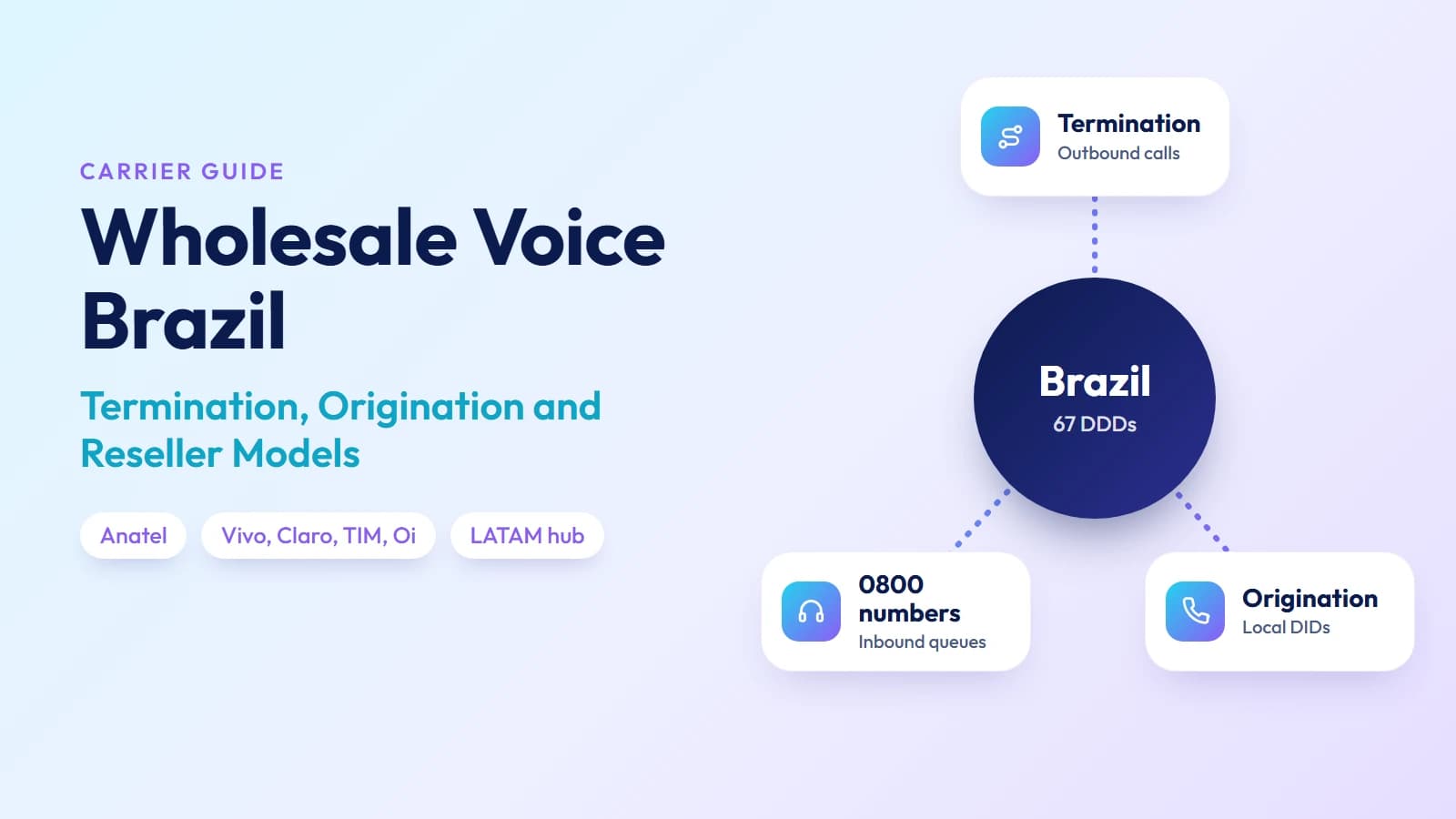
My Country Mobile maintains direct carrier relationships with Brazil's major networks and offers both fixed and mobile termination across all 67 DDDs. Traffic is monitored 24/7 for ASR, ACD, PDD, and FAS, with automatic route switching when quality drops below threshold.
For contact center operators, our Brazil routes come with SLA-backed quality guarantees. For CPaaS platforms and carriers, we offer competitive per-minute pricing at volume tiers starting at 50,000 minutes per month.
See our full international wholesale rates →
Ready when you are
Ready to sound local everywhere you sell?
MCM activates business numbers in minutes, with call routing, analytics, and CRM-ready integrations. Start your trial — no card to browse inventory.
Frequently asked questions
What is wholesale VoIP in Brazil?
Wholesale VoIP in Brazil refers to bulk voice-over-IP termination services sold to carriers, call centers, and communications platforms that need to route large volumes of calls to Brazilian fixed and mobile numbers. It's billed per minute at carrier rates, distinct from retail VoIP services sold to end users.
Do I need ANATEL authorization to route calls to Brazil?
If you're an international carrier routing calls to Brazil via a locally licensed carrier, ANATEL authorization requirements apply to the Brazilian-licensed entity, not to you directly. However, your traffic must use valid CLI and route through ANATEL-registered infrastructure to avoid being blocked by terminating carriers.
What are typical wholesale VoIP rates for Brazil?
Brazil mobile termination runs $0.012–$0.025 per minute for major carriers (Vivo, Claro, TIM) on CLI routes. Fixed line termination to major cities runs $0.005–$0.010 per minute. Rates vary by route quality, destination DDD, and volume tier.
What's the difference between CLI and non-CLI routes for Brazil?
CLI (Calling Line Identification) routes pass caller ID through to the end subscriber and are required for ANATEL-compliant commercial traffic. Non-CLI routes do not pass caller ID and are increasingly blocked by Brazilian carriers. For contact center, enterprise, or financial services traffic, only CLI routes are appropriate.
Which carriers dominate Brazil's mobile market?
Vivo (Telefónica Brasil) leads with approximately 98 million subscribers (~39% market share), followed by Claro (~83M, 33%) and TIM (~62M, 25%). For wholesale termination, having direct interconnects with these three carriers covers over 97% of Brazilian mobile traffic.
What ASR should I expect for Brazil mobile termination?
A healthy CLI direct route to Brazil mobile should deliver ASR of 55–70%. Partner-routed CLI routes typically run 45–60%. If a provider shows Brazil mobile ASR consistently below 40%, that route is either degraded or using non-compliant infrastructure.