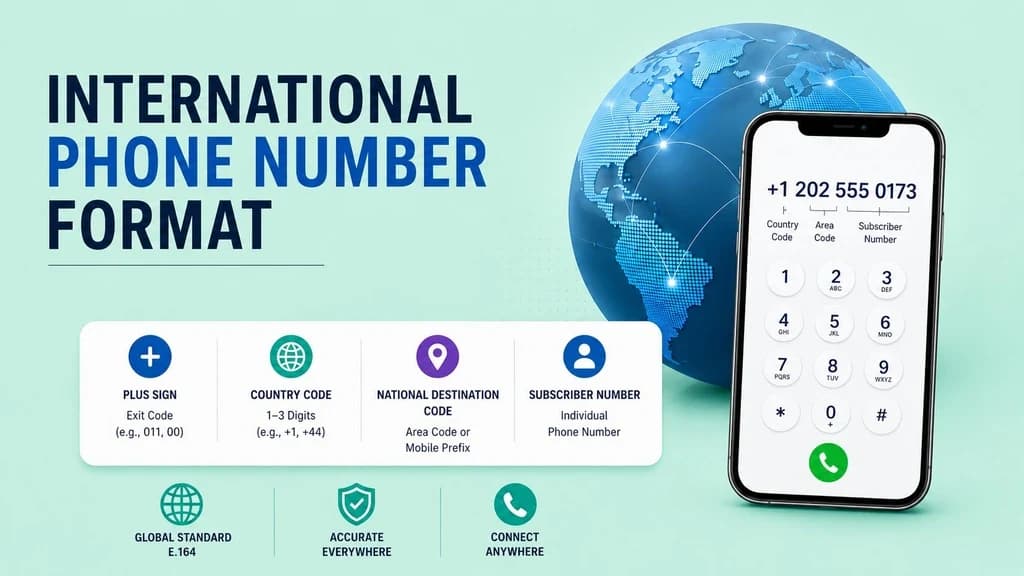
Hızlı cevap: Uluslararası telefon numarası formatı E.164 standardı İTÜ'den. Her sayı dört parçaya ayrılır: +, A 1 ila 3 haneli ülke kodu, A ulusal varış noktası kodu (alan kodu veya mobil önek) ve abone numarası — sınırlı Toplam 15 hane. Herhangi bir yerel numarayı dönüştürmek için: eklemek
+ve ülke kodunu, varsa bagajı bırakın 0, gerisini olduğu gibi bırakın. Bir ABD numarası(202) 555-0173olur+1 202 555 0173. Birleşik Krallık numarası020 7946 0958olur+44 20 7946 0958. Her numarayı her yerde E.164 formunda saklayın; CRM'leriniz, SMS'leriniz ve API'leriniz artık kırılmayacaktır.
Uluslararası telefon numarası formatı: sade bir İngilizce kılavuz
Evde mükemmel çalışan bir telefon numarası yurt dışından arandığında tamamen başarısız olabilir. Ülke kodunu bırakın, başına sıfır koyun veya aralığı tahmin edin; çağrı bağlanmaz.
Bu kılavuz, tüm bunları düzelten tek standardı açıklamaktadır: E.164. Formatın nasıl oluşturulduğunu, ülke kodlarının ve artı işaretinin ardındaki kuralları, yerel bir numaranın nasıl dönüştürüleceğini ve uluslararası aramaları sessizce bozan hataları öğreneceksiniz.
E.164 standardı nedir?
E.164, telefon numaraları için genel kural kitabıdır. Bu, ITU'nun resmi bir tavsiyesidir; resmi olarak "uluslararası kamu telekomünikasyon numaralandırma planıdır."
Neden küresel bir standart var?
Her ülke on yıllar boyunca kendi arama alışkanlıklarını oluşturdu. Paylaşılan bir format olmasaydı, Brezilya'daki bir numara Japonya'daki bir ağ tarafından okunamazdı.
E.164, bir yapı tanımlayarak Dünya üzerindeki her ağın aynı şekilde ayrıştırılabileceği sorununu çözmektedir. Çevirmen olmadan yapılan bir telefon görüşmesinin sınırları aşmasını sağlayan şey budur.
15 basamak kuralı
Bir E.164 numarası yalnızca rakamlardan oluşur; katı biçimde harf veya boşluk yoktur ve toplam sayı hiçbir zaman 15 rakamı geçmez.
Bu 15 haneli tavan 1997'den beri dünya çapında uygulanıyordu. Ondan önce sınır 12'ydi.
Uluslararası bir numaranın dört bölümü
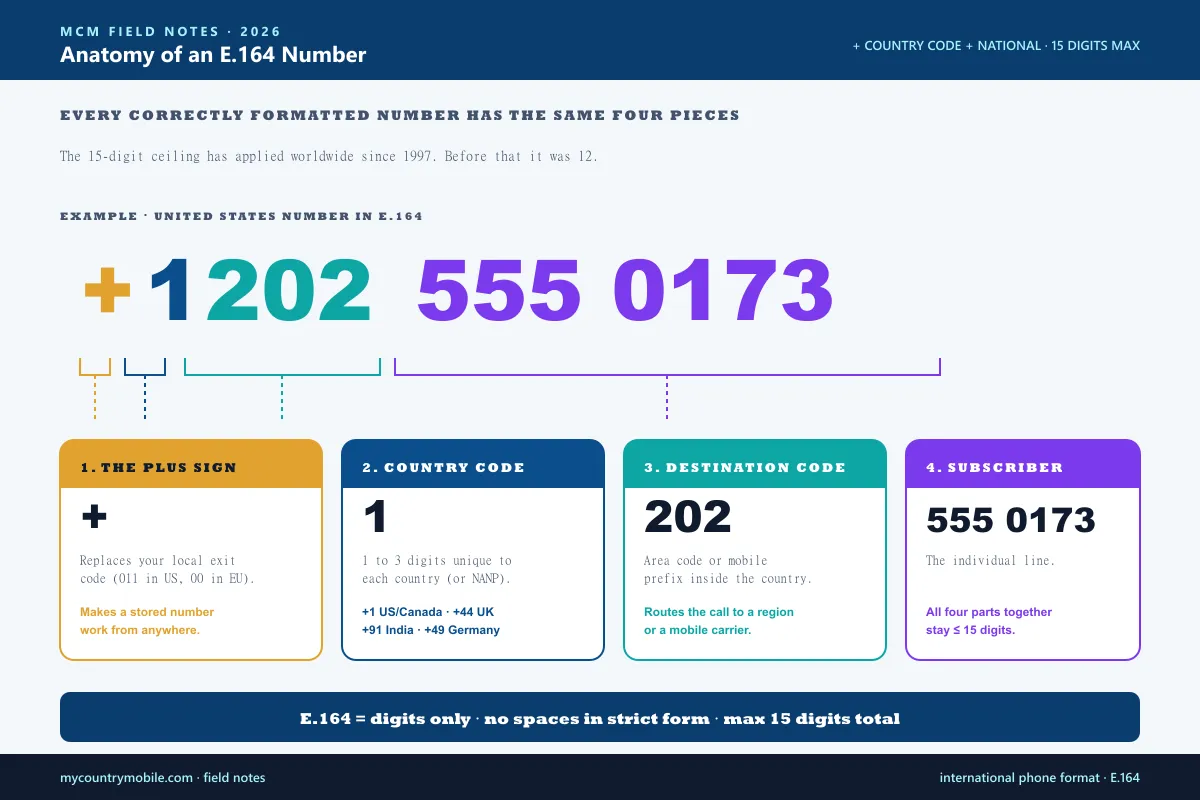
Doğru biçimlendirilmiş her sayı aynı parçalara ayrılır. Bunları bir kez görebildiğinizde, format rastgele görünmeyi bırakır.
Bölüm 1: Artı işareti
Önde gelen + dekorasyon değildir. Herhangi bir telefona veya sisteme şunu söyler: "buraya bir çıkış kodu gelecek." Normalde ülkenizi terk etmek için çevireceğiniz rakamların yerine geçer (ABD'de 011, Avrupa'nın büyük bölümünde 00).
Bir numara olarak kaydedildi +1 202 555 0173 Londra, Lagos veya Lima'dan doğru şekilde arama yapın. Aynı numara olmadan + yurt dışında başarısız olabilir.
Bölüm 2: Ülke kodu
Bu, her ülkeye özgü 1 ila 3 haneli bir koddur. ABD ve Kanada kullanıyor +1Birleşik Krallık kullanıyor +44Hindistan kullanıyor +91.
Bölüm 3: Ulusal varış noktası kodu
Genellikle denir alan kodu veya mobil önek, bu, ülke içindeki bir bölgeyi veya ağı tanımlar. Ülke kodundan sonraki rakam bloğudur.
Bölüm 4: Abone numarası
Bu bireysel hattın kendisidir. Ülke kodu, hedef kodu ve abone numarası birlikte 15 haneli sınırın içinde kalır.
Bir iletişim formu, CRM veya SMS listesi mi oluşturuyorsunuz? Her sayının başlangıçtan itibaren E.164 formunda saklanması, daha sonra yapılacak temizlik işlemlerinden tasarruf etmenizi sağlar. MCM, 190'dan fazla ülkede sayıları zaten doğru biçimde sağlıyor.
Hazır olduğunuzda hazır
İş hattınızı koruyun.
MCM'nin yerel numaraları, doğrulanmış arayan kimliği ve akıllı çağrı filtreleme özelliğiyle birlikte gelir; müşteriler her zaman bu kişinin gerçekten siz olduğunuzu bilir ve spam ekibinize asla ulaşmaz.
Yerel bir numara uluslararası formata nasıl dönüştürülür?
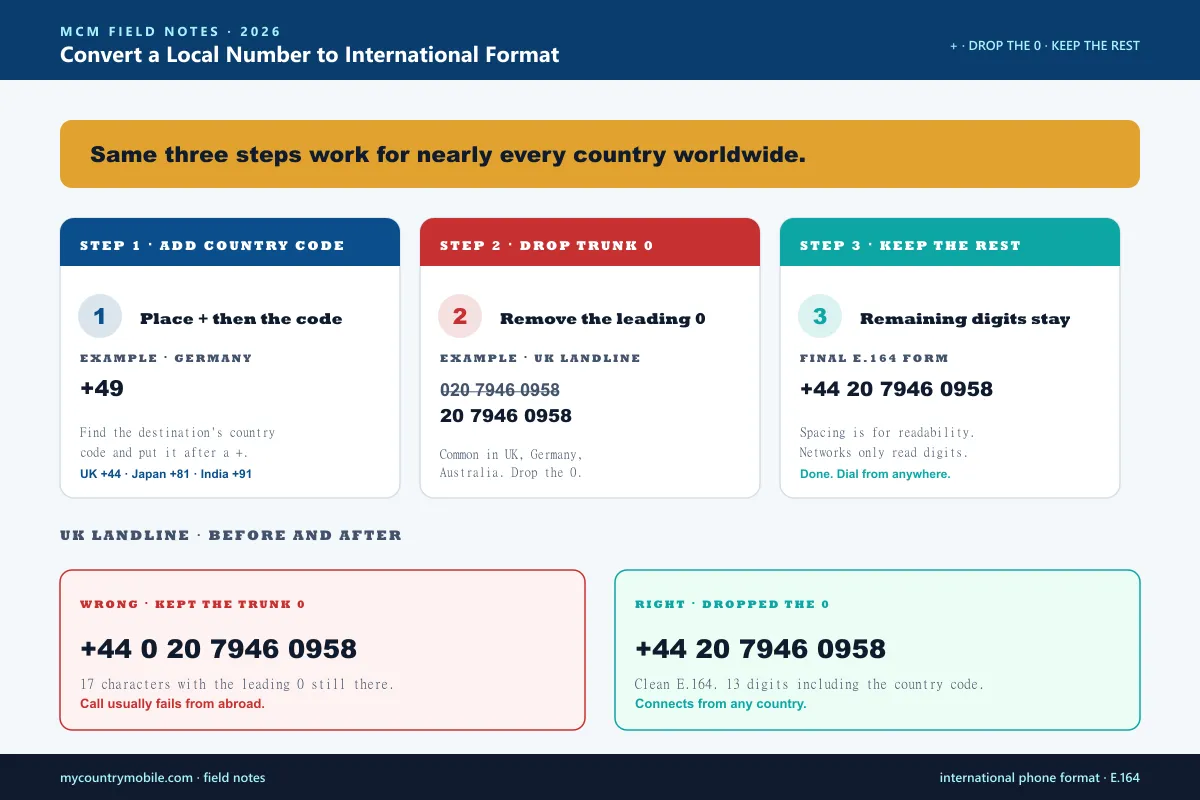
Dönüşüm hemen hemen her ülke için aynı üç adımı takip ediyor.
1. Adım: Ülke kodunu ekleyin
Hedefin ülke kodunu bulun ve bir süre sonra yerleştirin. + sembol. Almanya için yani +49, Japonya için +81.
Adım 2: Bagajı sıfıra bırakın
Pek çok ülke, yurt içi aramalar için baştaki 0'ı kullanır; bu, Birleşik Krallık, Almanya ve Avustralya'da yaygındır. Bu bagaj sıfır kaldırıldı uluslararası formatta.
Yani yazılı bir Birleşik Krallık numarası 020 7946 0958 olur +44 20 7946 0958. 0 kaybolur.
3. Adım: Gerisini sağlam tutun
Ülke kodu eklendikten ve ana hat sıfırı kaldırıldıktan sonra kalan rakamlar aynen oldukları gibi kalır. Boşluklar yalnızca okunabilirlik içindir; ağlar rakamları okur.
Bunu hızlı bir referans olarak mı istiyorsunuz? Aşağıdaki ülke kodu tablosunu kaydedin veya MCM'nin size zaten E.164 için hazır olan numaraları vermesine izin verin, böylece dönüştürülecek hiçbir şey kalmaz.
Ülke kodu hızlı referansı
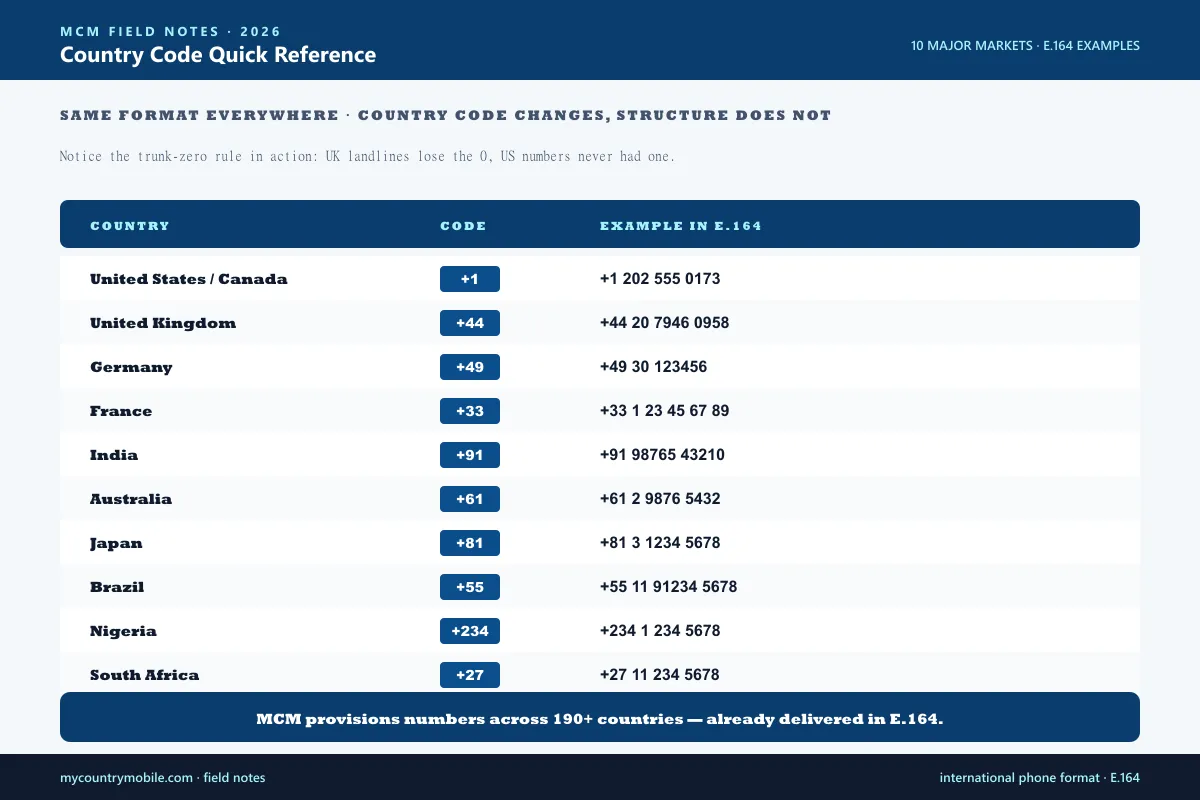
Formatın büyük pazarlarda nasıl göründüğü aşağıda açıklanmıştır. Gövde sıfır kuralının uygulandığına dikkat edin.
| Ülke | Ülke kodu | E.164 formatında örnek |
|---|---|---|
| Amerika Birleşik Devletleri / Kanada | +1 | +1 202 555 0173 |
| Birleşik Krallık | +44 | +44 20 7946 0958 |
| Almanya | +49 | +49 30 123456 |
| Fransa | +33 | +33 1 23 45 67 89 |
| Hindistan | +91 | +91 98765 43210 |
| Avustralya | +61 | +61 2 9876 5432 |
| Japonya | +81 | +81 3 1234 5678 |
| Brezilya | +55 | +55 11 91234 5678 |
| Nijerya | +234 | +234 1 234 5678 |
| Güney Afrika | +27 | +27 11 234 5678 |
Kaçınılması gereken yaygın biçimlendirme hataları
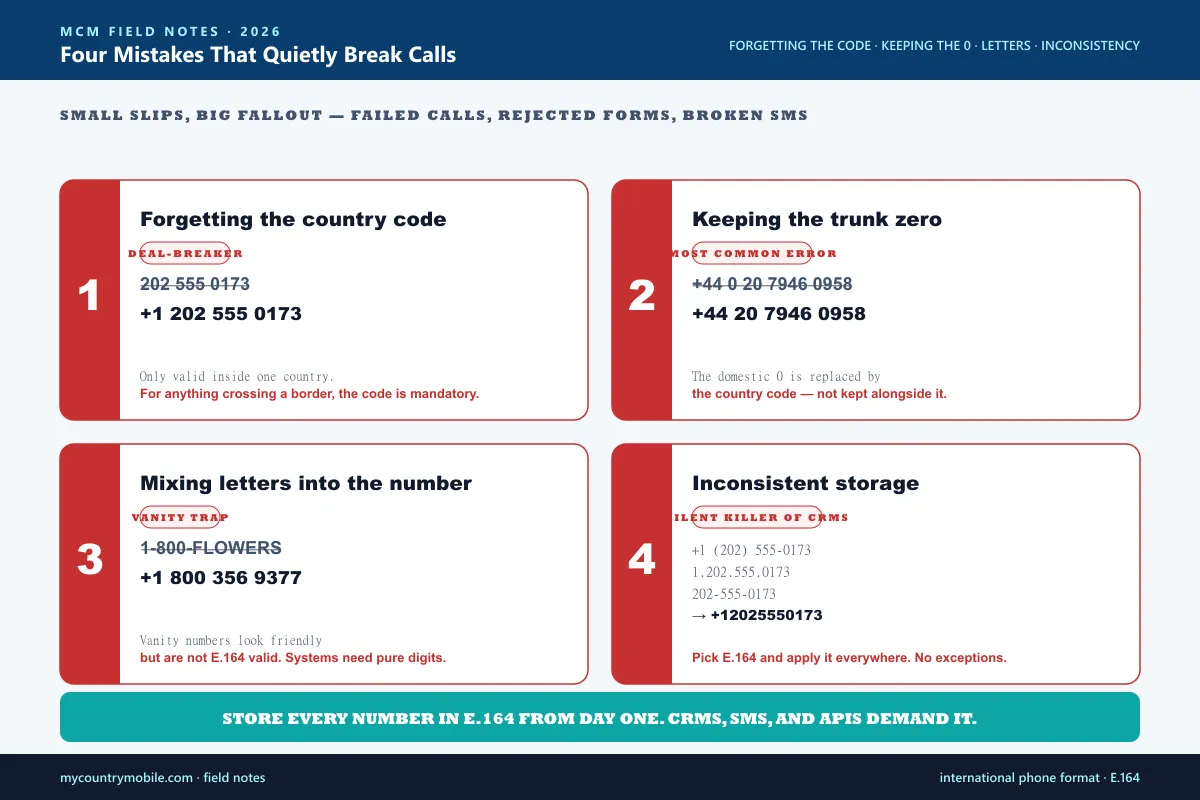
Bu küçük kaymalar çoğu uluslararası aramanın başarısız olmasına ve form gönderimlerinin reddedilmesine neden olur.
Ülke kodunu unutmak
Ülke kodu olmayan bir numara yalnızca bir ülke içinde geçerlidir. Sınırı geçen herhangi bir şey için kod zorunludur.
Bagajı sıfır tutmak
Yerli lideri 0'ı yerinde bırakmak en sık yapılan hatadır. Uluslararası formatta bu 0, yanında tutulmayan ülke koduyla değiştirilir.
Harfleri sayıya karıştırmak
Gibi gösteriş numaraları 1-800-FLOWERS dost canlısı görünüyor ancak E.164 geçerli değil. Sistemlerin saf rakamlı versiyona ihtiyacı var.
Tutarsız depolama
Bazı numaraları bir tuşla kaydetme +, bazıları boşluksuz, bazıları ise başıboş boşluklarla doğrulamayı bozar. E.164'ü seçin ve her yere uygulayın.
Bu, modern işletmeler için neden önemlidir?
Formatı doğru şekilde ayarlamak yalnızca bir telefon görüşmesiyle bağlantı kurmaktan ibaret değildir.
SMS'e, CRM'lere ve API'lere güç sağlar
Mesajlaşma platformları, müşteri veritabanları ve arama API'lerinin neredeyse tamamı E.164 girişi bekler. Dağınık bir numara listesi, başarısız metinler ve bozuk otomasyonlar anlamına gelir.
Küresel varlığı destekler
Birçok ülkede müşterilere hizmet veren bir işletmenin, her yerden güvenilir şekilde yönlendirme yapan numaralara ihtiyacı vardır. Tutarlı biçimlendirme bunun sessiz temelidir.
MCM, 190'dan fazla ülkede yerel, ücretsiz ve DID numaralarını sağlar; her biri standart E.164 formatında sunulur ve sistemlerinize bağlanmaya hazırdır.
Son söz
Uluslararası telefon numarası formatı ilk bakışta göründüğünden daha az karmaşıktır. Üç bölüm, bir artı işareti ve bir alışkanlık (gövdeyi sıfıra bırakmak) hemen hemen her durumu kapsar.
Her numarayı bugün E.164 formunda saklamaya başlayın. CRM'niz, SMS kampanyalarınız ve destek ekibiniz bu sayede daha sorunsuz çalışacaktır.
Başlangıçtan itibaren doğru biçimlendirilmiş numaralara ihtiyacınız olduğunda, MCM bunları 190'dan fazla ülkede hazır bulundurur.
Hazır olduğunuzda hazır
Satış yaptığınız her yerde yerel görünmeye hazır mısınız?
MCM, çağrı yönlendirme, analiz ve CRM'ye hazır entegrasyonlarla işletme numaralarını dakikalar içinde etkinleştirir. Ücretsiz denemenizi başlatın; envantere göz atmak için kart yok.
Sık sorulan sorular
Uluslararası telefon numarası formatı nedir?
E.164 standardı tarafından tanımlanan telefon numaralarını yazmanın standartlaştırılmış bir yoludur, böylece herhangi bir ülkeden doğru şekilde aranabilirler. Bir kullanır + işareti, ülke kodu ve ulusal numara.
E.164 standardı nedir?
E.164, telefon ağları için küresel numaralandırma planını tanımlayan bir ITU önerisidir. Numaraları 15 haneyle sınırlandırıyor ve bunları ülke kodu ve ulusal numaraya bölüyor.
Uluslararası numaralar neden artı işaretiyle başlıyor?
The + ülkeye özgü çıkış kodunun yerine geçer (011 veya 00 gibi). Saklanan bir numaranın, yerel çıkış önekini bilmeden herhangi bir yerden doğru şekilde arama yapmasına olanak tanır.
Uluslararası formatta baştaki sıfırı kaldırabilir miyim?
Genellikle evet. Birçok ülke yurt içi aramalar için trunk 0'ı kullanır ve uluslararası format için ülke kodunu eklediğinizde bu 0 atılır.
Uluslararası bir telefon numarasının maksimum uzunluğu nedir?
E.164 kapsamında bir telefon numarası, ülke kodu dahil toplam 15 haneden uzun olamaz.
ABD numarasını uluslararası formata nasıl dönüştürebilirim?
Eklemek +1 10 haneli sayının önünde. Örneğin, (202) 555-0173 olur +1 202 555 0173.
İşletmeler numaraları neden E.164 formatında saklamalıdır?
Çoğu CRM, SMS platformu ve çağrı API'si E.164 girişi gerektirir. Tutarlı biçimlendirme, başarısız mesajları, bozuk otomasyonları ve arama hatalarını önler.
MCM'den E.164'e hazır numaraları alın
Küresel bir varlık oluşturmak, 50 sistem arasında formatların tartışılması anlamına gelmemelidir.
My Country Mobile, 190'dan fazla ülkede yerel, ücretsiz ve DID numaralarını sağlar; her hat standart E.164 formunda sunulur ve doğrudan CRM'nize, iletişim merkezinize veya SMS platformunuza gönderilmeye hazırdır.
Çağrı yönlendirme, sesli postadan e-postaya, SMS ve yapay zeka transkripsiyonunun tümü dahildir ve 17.500'den fazla işletme, uluslararası telefon varlığı konusunda MCM'ye zaten güveniyor.