THE SHORT ANSWER
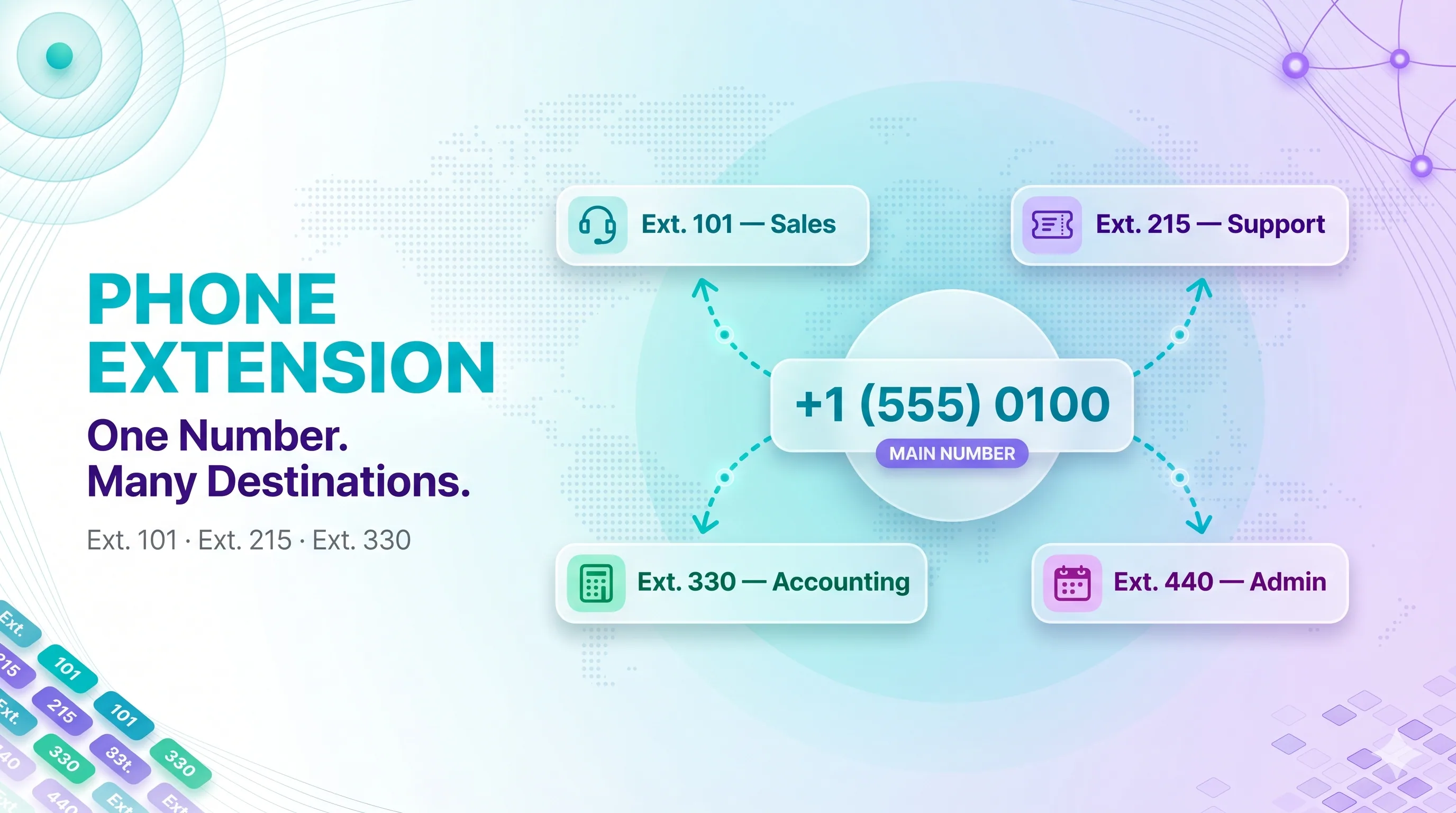
Here's the definition in one breath. A phone extension is a short internal number — usually 3 to 5 digits — that points to a specific person, desk, team, or department inside a single business phone system.
The business has one main phone number. Extensions sit behind it, splitting that one number into many internal destinations.
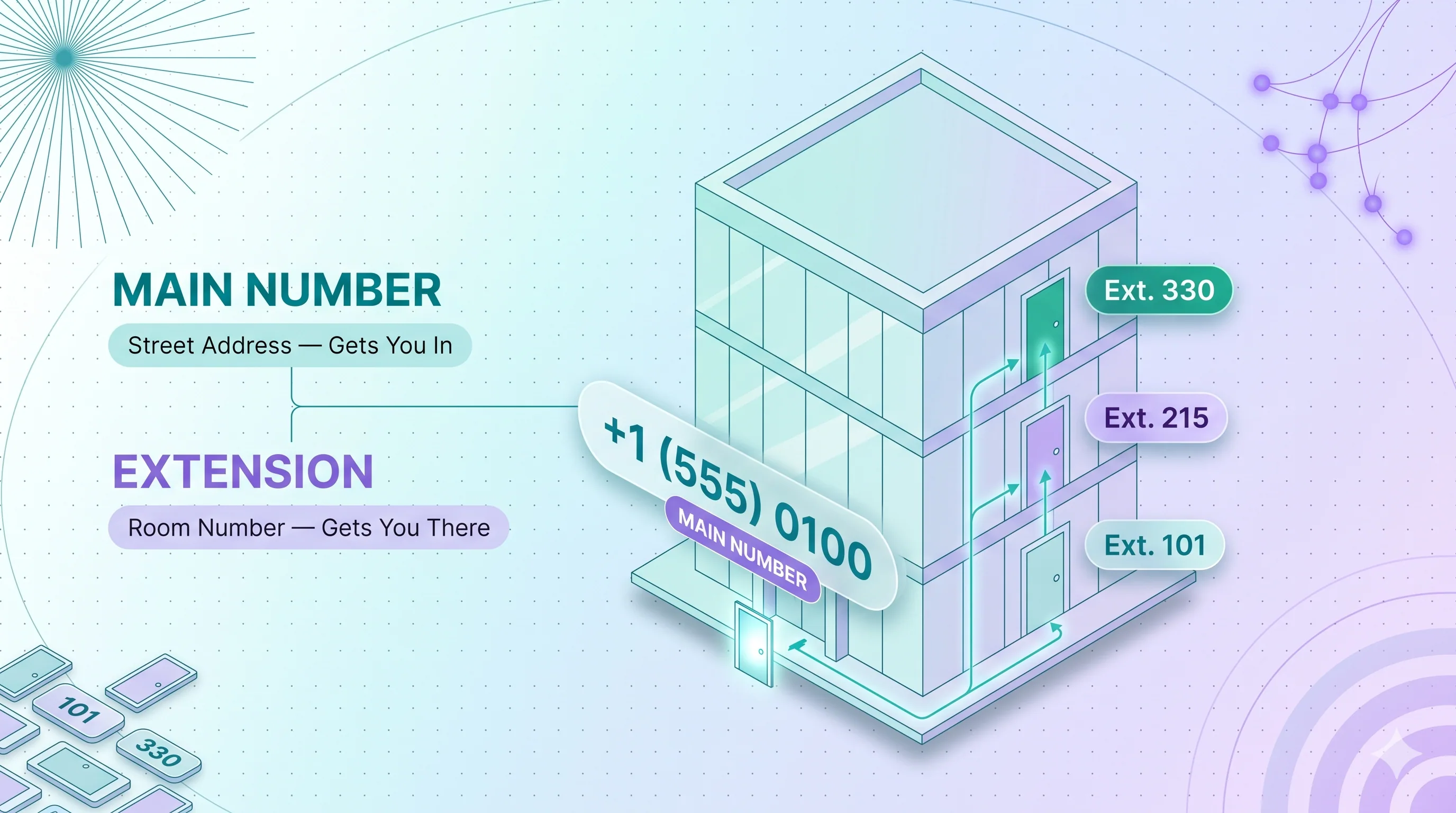
A Quick Analogy
Think of an office building. The street address gets you to the building — that's the main phone number.
The room numbers inside get you to the right office — those are the extensions. One address, many rooms.
HOW A PHONE EXTENSION WORKS
So what is a phone extension doing technically? It's an internal routing label that the phone system understands.
When a call comes in, the system reads the extension and connects the caller to whatever device or person that number is mapped to.
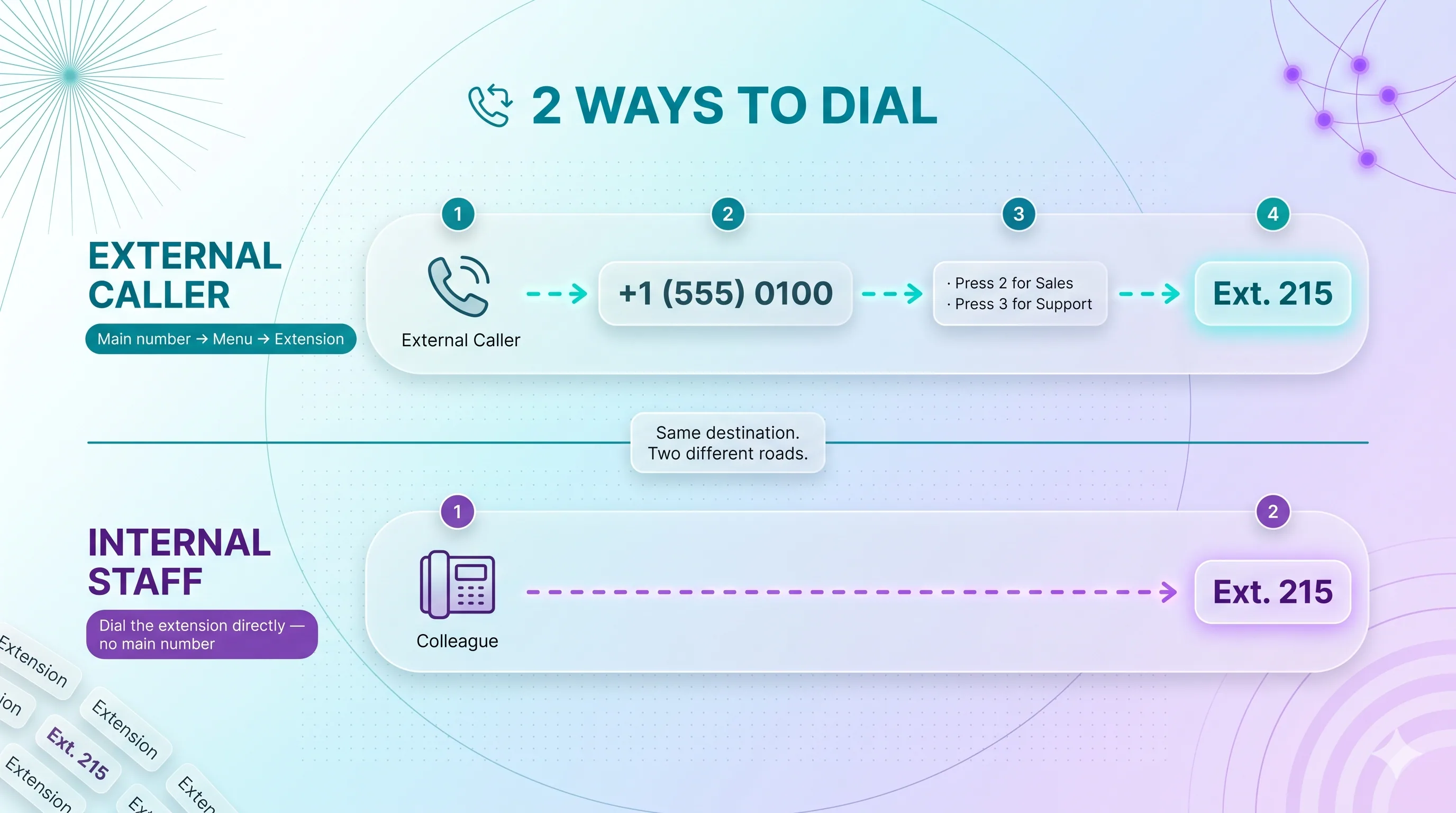
The Two Ways Extensions Get Dialed
There are two everyday scenarios, and they feel different to the caller:
- External callers dial the main business number, then enter an extension — often after an automated menu ("press 2 for sales").
- Internal staff just dial the extension directly. No main number, no menu — colleague to colleague.
A Real Dialing Example
Say a company's main line is +1-555-0100 and Maria in accounting is extension 215.
A customer dials +1-555-0100, hits the menu, and enters 215 to reach Maria. Maria's coworker, already inside the system, just dials 215 straight from their desk phone.
WHY BUSINESSES USE EXTENSIONS
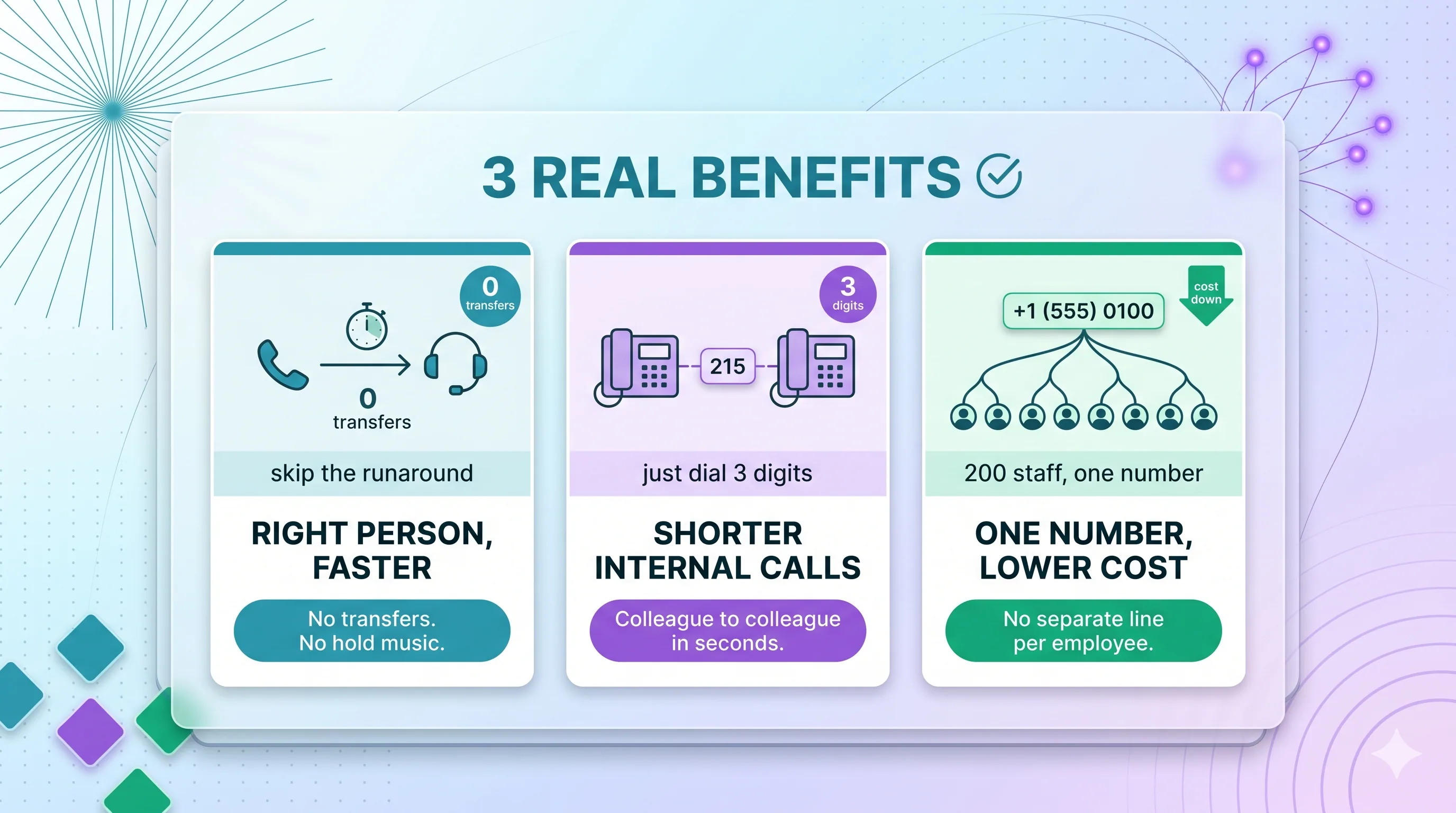
Extensions aren't decoration — they solve real operational problems. Here's what they actually buy a company.
Callers Reach the Right Person Faster
Instead of one number ringing one phone, extensions route callers straight to the team they need. Less transferring, shorter waits.
This is why extensions pair so naturally with an auto attendant menu. The menu collects the choice; the extension delivers the call.
Staff Communicate Without the Long Number
Internal calls become two or three digits. Quicker for staff, and internal calls don't compete with customer calls for the main line.
One Number Looks Bigger and Stays Cheaper
A 200-person company can publish a single professional number. No need to buy 200 separate phone lines — extensions divide one system many ways.
If you're juggling separate lines for each staff member, you're almost certainly overpaying. MCM's phone menu and routing sets up extensions in minutes — free to explore, no card required.
Ready when you are
Protect your business line.
MCM's local numbers ship with verified caller ID and smart call filtering — customers always know it's really you, and spam never reaches your team.
PBX VS VOIP: WHERE EXTENSIONS LIVE
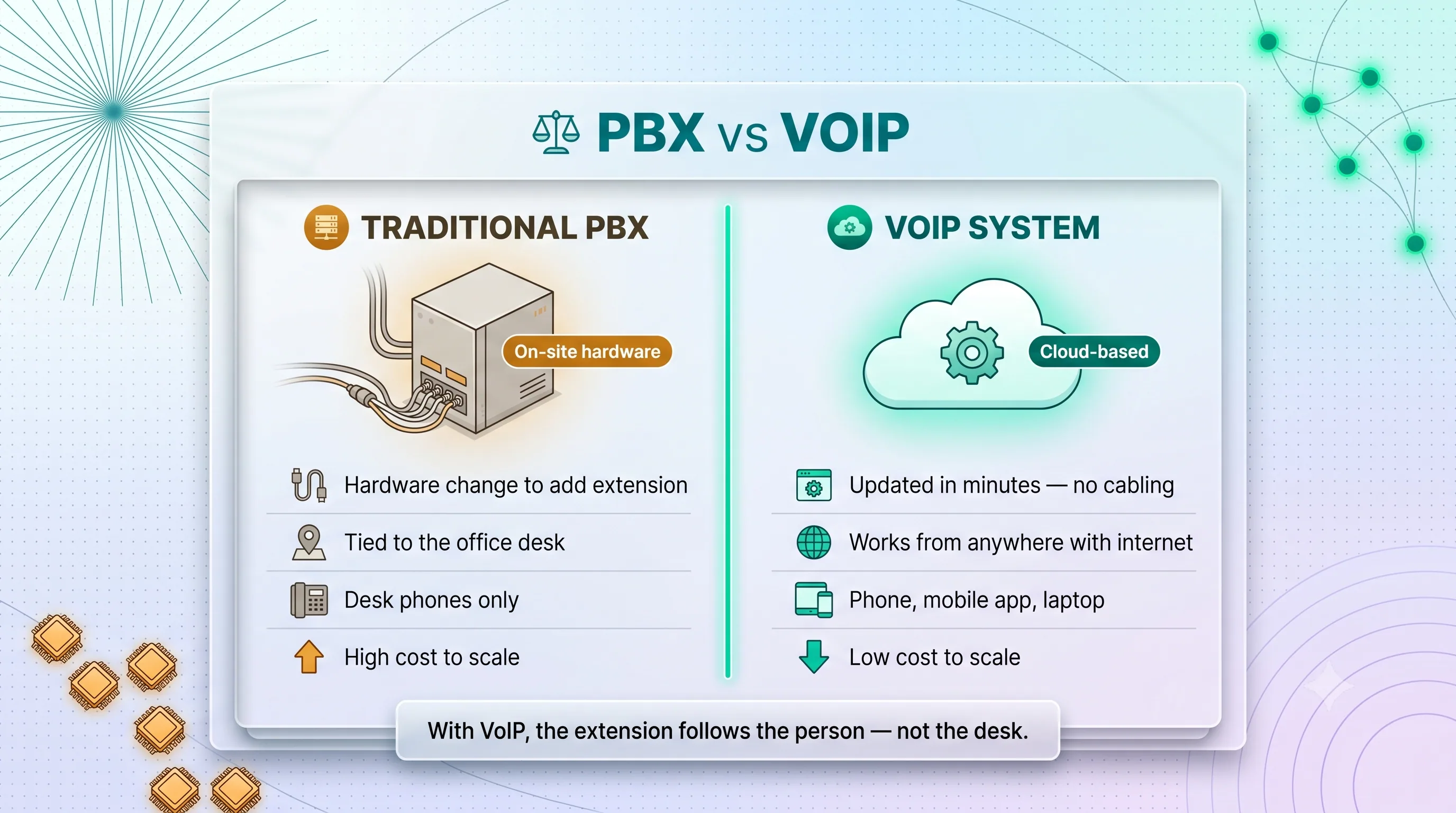
Extensions exist in both old and new phone systems — but the technology underneath is very different. This matters when you're choosing a system.
The concept is identical; the flexibility is not.
Traditional PBX Extensions
A PBX (Private Branch Exchange) is on-site hardware that physically wires extensions to desk phones. It works, but it's rigid.
Adding an extension can mean new cabling, a technician visit, and capacity limits set by the box on the wall.
VoIP Extensions
A VoIP system routes calls over the internet, so an extension is just a software setting — not a wire.
| Factor | Traditional PBX | VoIP system |
|---|---|---|
| Adding an extension | Hardware / cabling change | Updated in software in minutes |
| Works for remote staff | Tied to the office | Anywhere with internet |
| Device options | Desk phone | Desk phone, mobile app, laptop |
| Typical cost to scale | High | Low |
Why VoIP Won This Round
With VoIP, an extension follows the person, not the desk. A salesperson on extension 230 can take that call on a cell phone in another country.
For remote and hybrid teams, that flexibility is the whole reason most businesses have moved off legacy PBX hardware.
Want extensions your team can answer from anywhere — desk, mobile, or browser? MCM's calling platform does exactly that. Start a free trial — about 5 minutes to set up.
Ready when you are
Ready to sound local everywhere you sell?
MCM activates business numbers in minutes, with call routing, analytics, and CRM-ready integrations. Start your free trial — no card to browse inventory.
COMMON QUESTIONS BEYOND THE BASICS
A few things trip people up once they get the core idea.
Do Extensions Cost Extra?
On VoIP systems, extensions are typically a built-in feature, not a per-line charge. That's a major saving versus buying separate physical lines.
Can an Extension Have Its Own Voicemail?
Yes. Each extension can carry its own voicemail box, greeting, and call-forwarding rules — it behaves like a mini phone line.
How Many Extensions Can a Business Have?
On a cloud system, effectively as many as you need. A five-person startup and a 5,000-seat enterprise both run on the same extension model.
FAQs
What is a phone extension in simple terms?
It's a short internal number, usually 3 to 5 digits, that connects callers to a specific person or department within a business phone system. The business keeps one main number, and extensions divide it into many internal destinations.
How do I dial a phone extension?
Call the company's main number, then enter the extension when prompted — often after an automated menu. Staff inside the same system can dial the extension directly without the main number.
What's the difference between a phone number and an extension?
A phone number is publicly dialable from anywhere. An extension only works inside that company's phone system — it routes a call once it has already reached the main number.
Do I need special hardware for phone extensions?
Not with a VoIP system. Extensions are configured in software and work on desk phones, mobile apps, or a computer. Traditional PBX systems may require physical wiring.
Can extensions work for remote employees?
Yes, with VoIP. The extension follows the employee, so a remote worker can answer their extension on a mobile or laptop anywhere with an internet connection.
Is a phone extension the same as a direct dial number (DID)?
No. A DID is a full, externally dialable number assigned to one person. An extension is internal-only and sits behind the main business number. Many systems use both together.
Can two people share one extension?
Yes. An extension can ring multiple devices at once or in sequence — useful for a small team or a shared role like a front desk.
THE TAKEAWAY
A phone extension is a simple idea doing heavy lifting: it turns one business number into a clean, organized network of internal destinations. Callers reach the right person, staff talk in three digits, and the company avoids paying for dozens of separate lines.
The real upgrade today is where those extensions live. On a cloud system they follow your people instead of being chained to a desk.
Curious how extensions would map to your team? Try MCM free — build your extension setup in minutes, no contracts, no credit card.