How to Find Out Who Owns a Phone Number — Legally and Safely
An unknown number keeps calling. No voicemail, no context — just a string of digits you don't recognize. The natural urge is to find out who's behind it.
That's a reasonable thing to want. But how you go about it matters, both legally and ethically.
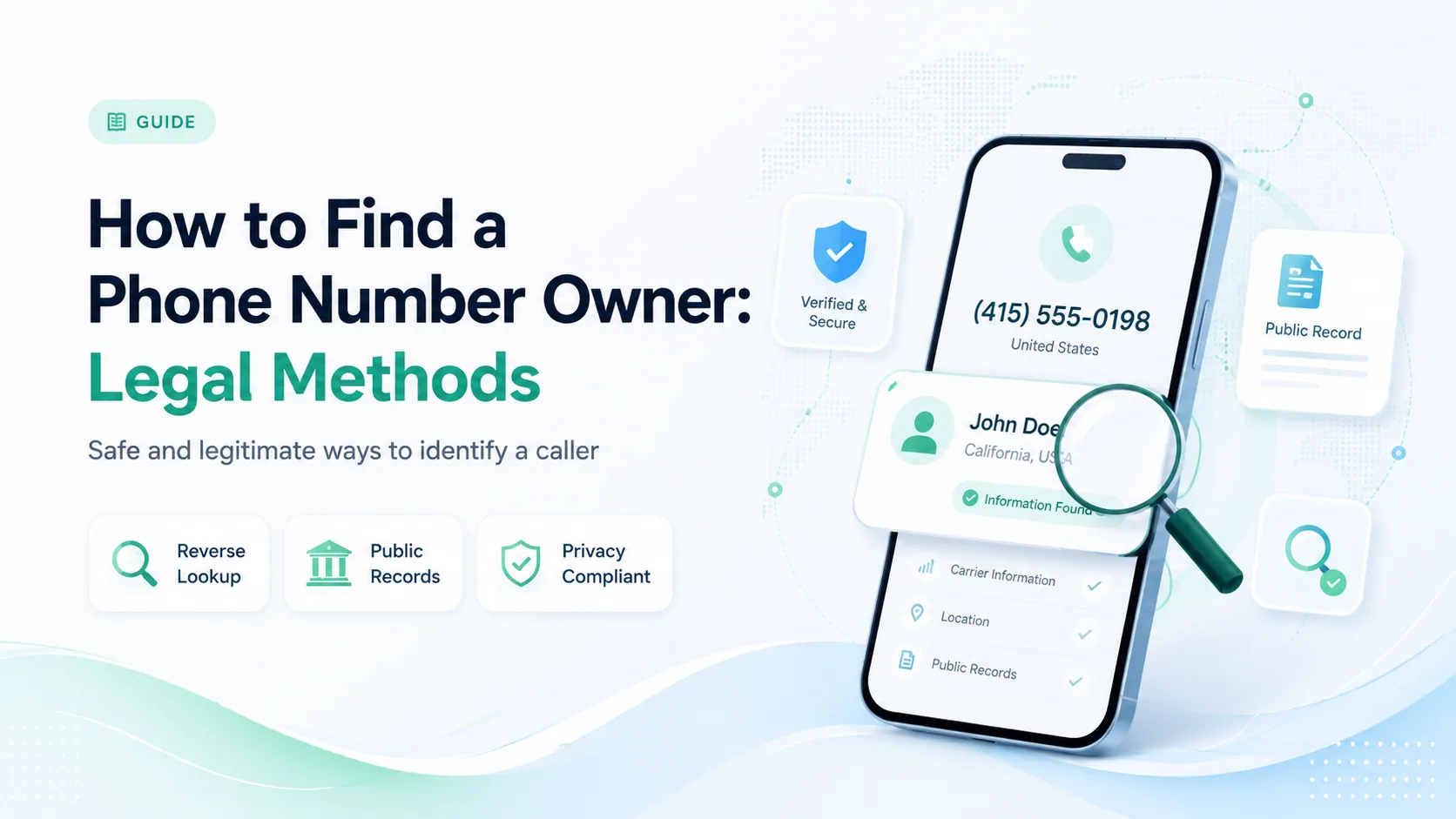
This guide covers the legitimate ways to identify a caller: reverse lookup services, caller ID apps, search engines, and — for genuine harassment — your carrier. We'll also be clear about where the line is. Identifying a nuisance caller is fine. Surveilling someone is not.
6-minute read.
FIRST, THE GROUND RULES ON PRIVACY AND THE LAW
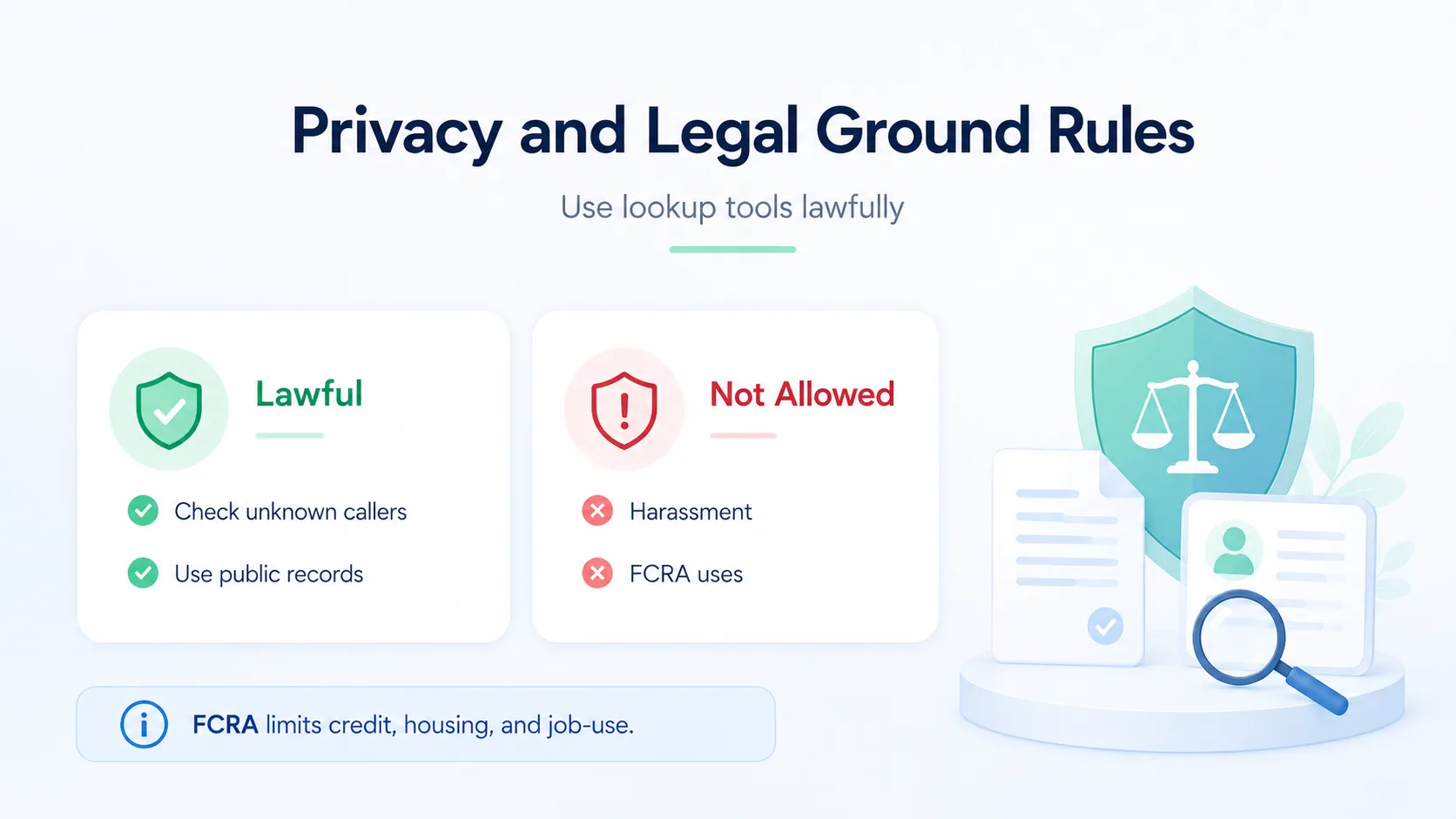
Before any method, understand the boundary. Using these tools to satisfy curiosity, screen a missed call, or report harassment is fine.
Using them to track, intimidate, or surveil a person is not — and in many places it's a crime.
What's Lawful
Reverse phone lookups draw on public records and publicly listed data. Checking who called you, or vetting an unknown number before you call back, is a legitimate personal use.
The services themselves are legal in the US for these everyday purposes.
What Crosses the Line
You may not use lookup results for harassment, stalking, or to make decisions about someone's credit, housing, or employment — that last category is regulated by the FCRA.
If a number is harassing you, the right move isn't to investigate them yourself. It's to involve your carrier and, where needed, law enforcement.
METHOD 1: REVERSE PHONE LOOKUP SERVICES
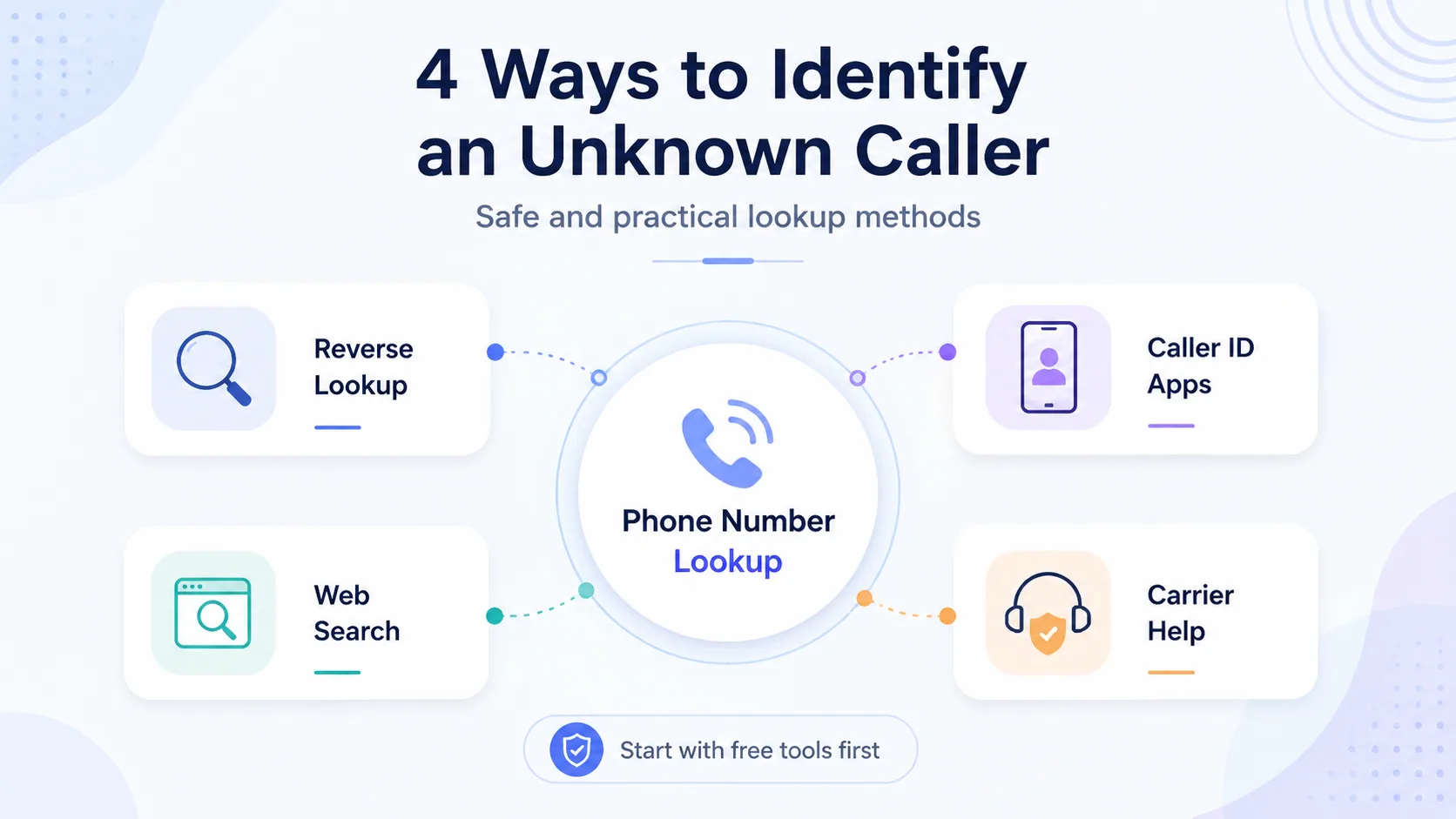
A reverse phone lookup flips the directory: you enter a number and it returns publicly available information tied to it.
These are the most direct tools for identifying an unknown caller.
How They Work
The service cross-references the number against public records, business listings, and other open data sources.
Results may include a name, general location, line type (mobile or landline), and the carrier.
Reputable Options
Free tools like NumLookup can return a name, carrier, and location for many US numbers with no account required.
Paid services such as BeenVerified, Spokeo, and TruthFinder compile deeper public-records reports. Expect a subscription, and read the terms before signing up.
Want a quick gut-check on a suspicious number? Many free reverse lookups give you a name and carrier in under a minute — start there before paying for anything.
Ready when you are
Protect your business line.
MCM's local numbers ship with verified caller ID and smart call filtering — customers always know it's really you, and spam never reaches your team.
METHOD 2: CALLER ID AND SPAM-BLOCKING APPS
Caller ID apps identify numbers in real time, as the phone rings — so you decide whether to answer before picking up.
For repeat nuisance calls, this is often the most practical tool.
What They Do
Apps like Truecaller maintain a community-built database of numbers and spam reports.
When an unknown number calls, the app shows a likely name or flags it as spam, scam, or telemarketer.
Choosing One
The core caller ID and spam-blocking features are typically free. Paid tiers add extras and usually cost around $9.99 a month.
Pick an app with strong reviews and a clear privacy policy — you're trusting it with your call data.
METHOD 3: SEARCH ENGINES AND SOCIAL PLATFORMS
Sometimes the simplest approach works: type the number into Google. Many people and businesses have their numbers indexed publicly.
It costs nothing and takes seconds.
Searching the Web
Enter the full number in quotation marks — e.g., "555-123-4567" — to find exact matches.
Business numbers often surface immediately on a company website, directory listing, or local profile.
Checking Social Media and Listings
If someone has linked a number to a public social profile or a marketplace ad, a search may surface that too.
Stick to what's publicly posted. Don't attempt to access private accounts or restricted information.
METHOD 4: CONTACTING THE CARRIER (FOR HARASSMENT)
If the calls are threatening, harassing, or won't stop, skip the DIY tools. This is a carrier and, potentially, a law-enforcement matter.
Carriers will not hand out a customer's personal details to you — and that's by design. But they can act.
What Your Carrier Can Do
Report the harassment to your provider. They can investigate, apply call-blocking, and cooperate with a formal trace.
For threats or stalking, file a police report. Law enforcement can compel the carrier to release subscriber information through proper legal process.
Why This Is the Right Path
Identifying a harasser yourself can escalate a dangerous situation and may break privacy law.
Routing it through the carrier and police keeps you safe and ensures the response is lawful.
QUICK COMPARISON OF THE METHODS
Each method suits a different need. Use this table to pick the right one fast.
| Method | Best For | Cost | Speed |
|---|---|---|---|
| Reverse lookup service | Identifying an unknown caller | Free–paid | Seconds–minutes |
| Caller ID app | Screening calls before answering | Free–~$10/mo | Real time |
| Search engine | Business numbers, public listings | Free | Seconds |
| Carrier + police | Harassment, threats, stalking | Free | Days |
How to Choose
For a one-off curious call, try a free reverse lookup or a quick search.
For ongoing unwanted calls, install a caller ID app. For anything threatening, go straight to your carrier.
A NOTE ON LIMITATIONS AND ACCURACY
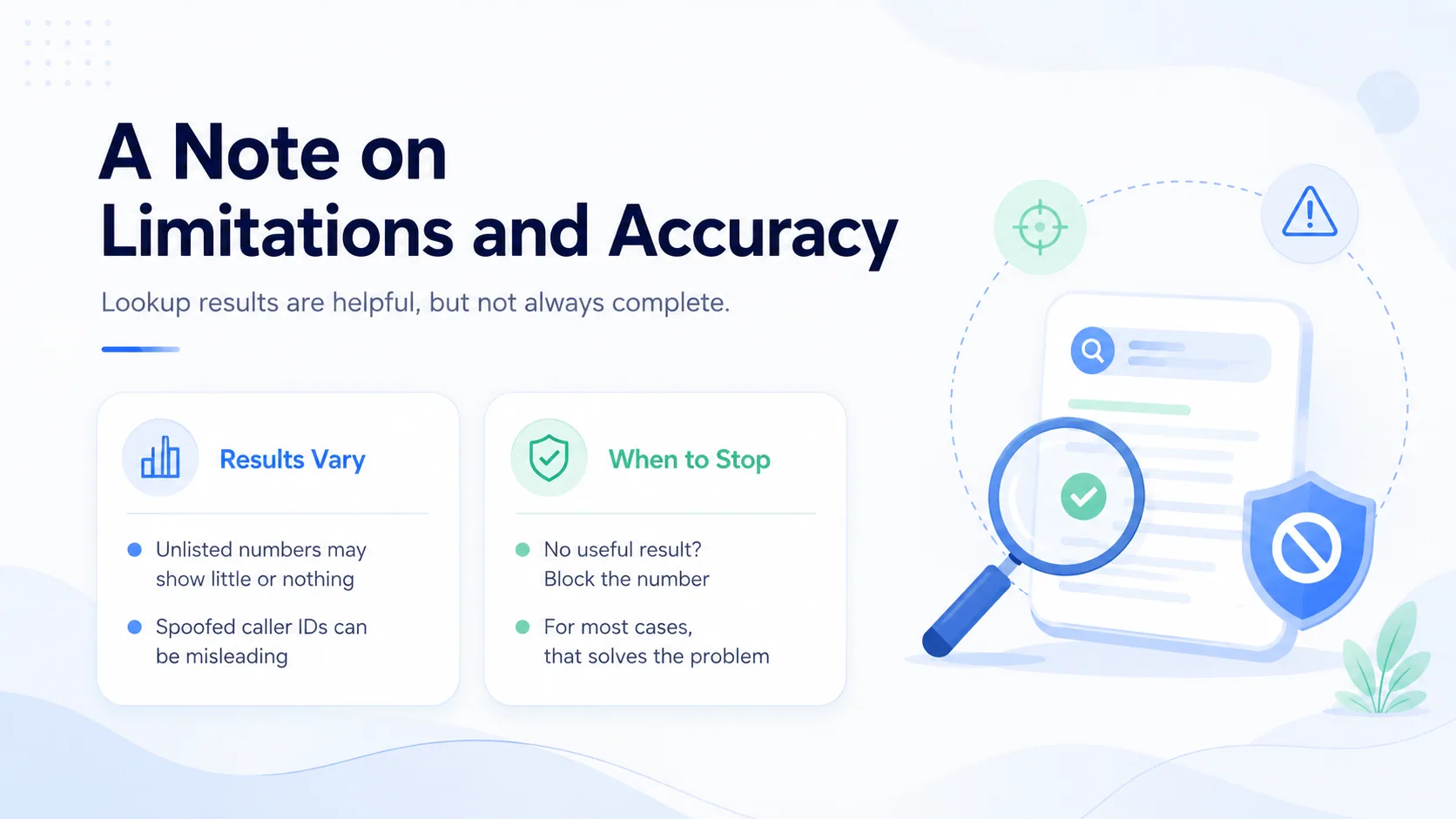
No method is perfect, and it's worth knowing why before you rely on a result.
Set your expectations accordingly.
Results Vary
Reverse lookups depend on public data, so an unlisted personal number may return little or nothing.
Spoofed numbers — faked caller IDs — can show a name that isn't the real caller at all.
When the Trail Goes Cold
If a number returns no useful information, that's often a sign to stop investigating and simply block it.
A blocked number that can't reach you is, for most situations, problem solved.
WHAT TO DO NEXT
Identifying an unknown caller is usually quick — a free reverse lookup or a search engine handles most cases in seconds.
The real takeaway is the boundary. Use these tools to screen calls and report harassment, never to surveil a person. For genuine threats, your carrier and the police are the correct, safe channels.
Building a business and want full control over which calls reach you? MCM's virtual numbers include caller ID and call-screening tools — explore them at mycountrymobile.com, no setup fee.
Ready when you are
Ready to sound local everywhere you sell?
MCM activates business numbers in minutes, with call routing, analytics, and CRM-ready integrations. Start your free trial — no card to browse inventory.
FAQs
Is it legal to find out who owns a phone number?
For personal purposes — identifying a caller or screening an unknown number — reverse phone lookups are legal in the US. Using results for harassment, stalking, or credit, housing, or employment decisions is not allowed.
Are free reverse phone lookups accurate?
They can be, for listed numbers and businesses, often returning a name, carrier, and location. Accuracy drops for unlisted personal mobiles and spoofed numbers. Treat free results as a starting point.
What's the best way to identify an unknown caller?
For a single curious call, a free reverse lookup or a quick search engine query usually works. For repeated unwanted calls, a caller ID app that identifies numbers in real time is more practical.
What should I do about a harassing phone number?
Do not try to investigate the caller yourself. Report it to your carrier, who can block and trace the number, and file a police report for any threats. Law enforcement can lawfully obtain the caller's identity.
Can I find someone's name from their cell phone number?
Sometimes. Reverse lookup services may return a name if the number is tied to public records or listings. Many personal mobile numbers are unlisted, so a name isn't guaranteed.
Why does a lookup show a different name than expected?
The number may be spoofed — scammers fake caller ID to appear trustworthy — or the data may be outdated. If a result seems off, don't act on it; verify through another method or simply block the number.
Can a carrier tell me who owns a number?
No. Carriers won't release a customer's personal details to another individual. They can, however, investigate harassment, block numbers, and provide subscriber information to law enforcement through proper legal process.