
San Bernardino, Ontario, Rancho Cucamonga, and Fontana share the 840 area code, an overlay covering the same Inland Empire footprint as 909 across southwestern San Bernardino County and far eastern Los Angeles County. California regulators approved it on June 13, 2019, and new lines began receiving 840 numbers on February 23, 2021, after explosive logistics and e-commerce growth pushed 909 toward exhaustion.
This guide covers 840's counties and cities, the overlay history that added it to 909's territory, what's driving one of Southern California's fastest-growing number demands, why a local number still matters here, and how to stay safe from spoofed calls.
Counties and cities at a glance
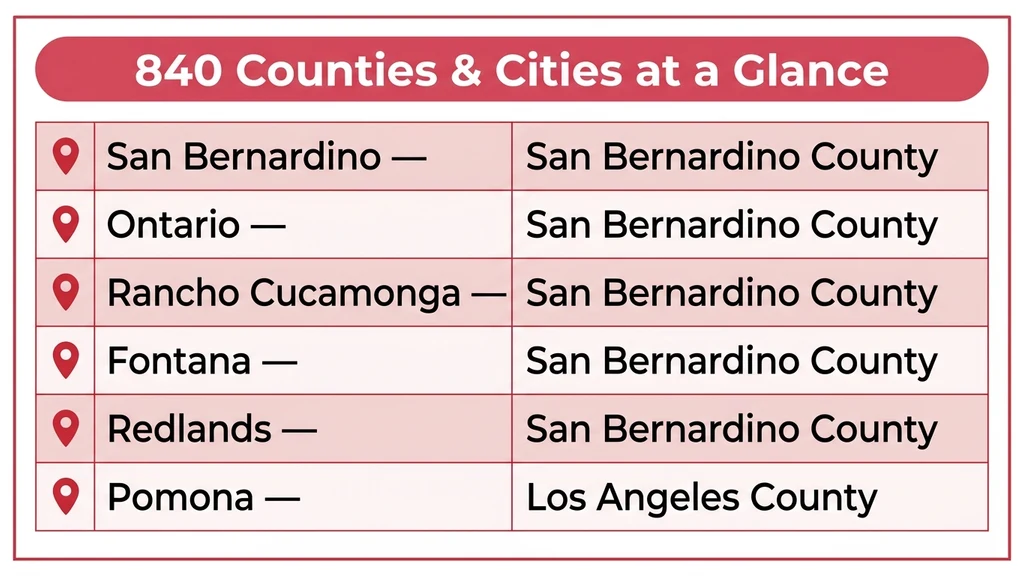
| City | County | Region |
|---|---|---|
| San Bernardino | San Bernardino | Inland Empire core |
| Ontario | San Bernardino | West Inland Empire |
| Rancho Cucamonga | San Bernardino | West Inland Empire |
| Fontana | San Bernardino | Central Inland Empire |
| Redlands | San Bernardino | East Inland Empire |
| Pomona | Los Angeles | Far eastern LA County |
From 909 to a second code
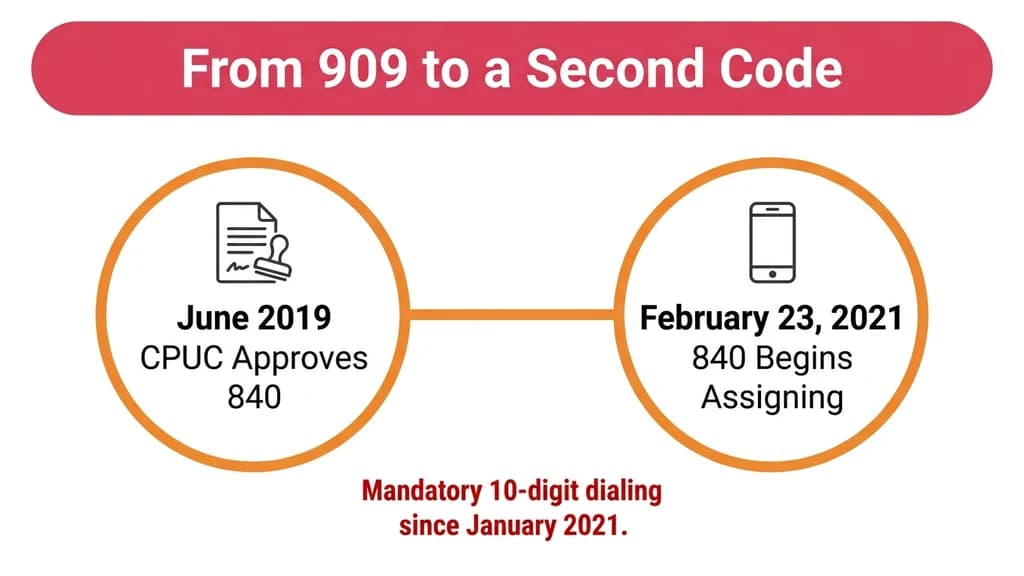
June 13, 2019 — The California Public Utilities Commission approved 840 as an all-services overlay for the existing 909 region.
February 23, 2021 — 840 began appearing on new lines, following a permissive dialing period that made ten-digit dialing mandatory across the region from January 23, 2021. Existing 909 numbers stayed exactly as they were.
What's driving one of Southern California's fastest number demands
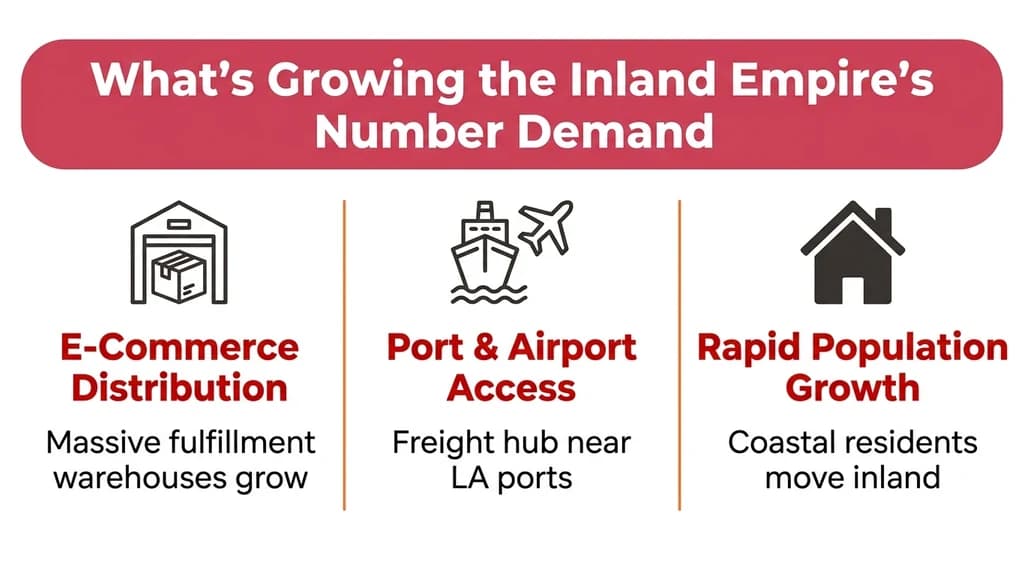
The Inland Empire's economy has been reshaped by logistics and fulfillment:
E-commerce distribution centers Massive fulfillment warehouses across Ontario, Fontana, and San Bernardino handle a growing share of Southern California's online-order volume.
Port and airport proximity Easy access to the ports of Los Angeles and Long Beach, plus Ontario International Airport, makes the region a natural freight hub.
Rapid population growth Housing costs pushed steady migration inland from coastal LA and Orange counties, adding residential lines every year.
Many of these Inland Empire businesses are moving their phone systems onto UCaaS (Unified Communications as a Service) — one cloud platform for calling, video, and messaging that scales as a company opens new warehouses or offices across the region, the same pattern behind newer overlays like 838 in New York's Capital District. Contact us to set up an 840 or 909 number for your Inland Empire business.
Ready when you are
Protect your business line.
MCM's local numbers ship with verified caller ID and smart call filtering — customers always know it's really you, and spam never reaches your team.
Why a local 840 number still builds trust
For businesses serving San Bernardino, Ontario, or Rancho Cucamonga, a local 840 or 909 number signals "based here" in a way an out-of-area code doesn't — especially for home-service contractors, logistics brokers, and retailers whose customers expect a recognizable local caller ID before they pick up or call back.
Staying safe from spoofed 840 calls
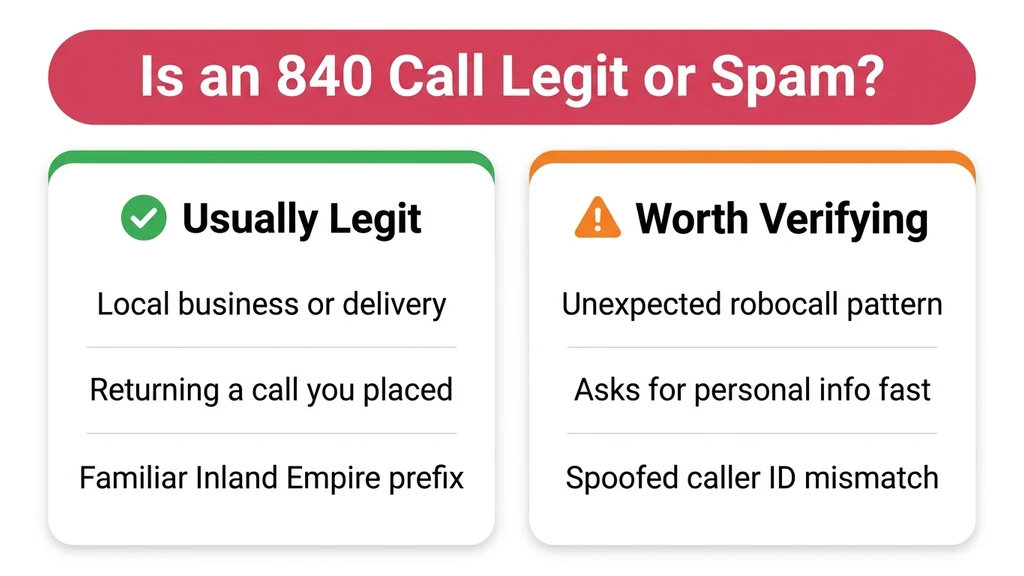
As a newer, fast-growing overlay, 840 numbers are sometimes spoofed by scammers hoping an unfamiliar code will get answered anyway. The FCC's STIR/SHAKEN call authentication framework requires carriers to verify caller ID before a call connects, but no system catches everything.
Legitimate 840 calls typically come from local businesses, delivery coordination, or returned calls you placed yourself — treat unexpected calls asking for payment or personal information the same way you would from any other area code, and verify before sharing anything sensitive.
Time zone & how to dial an 840 number
The Inland Empire runs on Pacific Time (PT) — PST (UTC −8) in winter, PDT (UTC −7) during Daylight Saving Time. Ten-digit dialing has been mandatory since January 23, 2021: dial 1, then the area code, then the seven-digit number, for every local call.
Key takeaways
- 840 is an overlay on the existing 909 region, covering the Inland Empire — San Bernardino, Ontario, and Rancho Cucamonga.
- It was approved in 2019 and began assigning new numbers on February 23, 2021.
- The shortage came from explosive e-commerce, logistics, and population growth, not a geographic split.
- Anchors include distribution centers, port and airport proximity, and rapid residential growth.
- Time zone: Pacific (PT), with mandatory 10-digit dialing since January 2021.
Ready when you are
Ready to sound local everywhere you sell?
MCM activates business numbers in minutes, with call routing, analytics, and CRM-ready integrations. Start your free trial — no card to browse inventory.
Frequently asked questions
What is the 840 area code?
It's an overlay covering Southern California's Inland Empire, including San Bernardino, Ontario, and Rancho Cucamonga, sharing the same footprint as 909.
Where is the 840 area code located?
Southwestern San Bernardino County and far eastern Los Angeles County, in California's Inland Empire.
Is 840 a Texas area code?
No. It has never been assigned to Texas — this is strictly a Southern California code.
What state is the 840 area code in?
California — specifically the Inland Empire, sharing territory with area code 909.
What time zone is the 840 area code?
Pacific Time Zone (PT) — PST (UTC −8) in winter and PDT (UTC −7) during Daylight Saving Time.
Why does the Inland Empire have two area codes, 909 and 840?
840 was added in 2021 as an overlay after regulators determined 909 would run short on numbers due to rapid logistics and population growth.
How do I get an 840 area code number?
Sign up with a VoIP provider such as My Country Mobile, search for available numbers in either code, choose an Inland Empire prefix, select a plan, and activate.


