Why a business needs a number separate from a personal phone
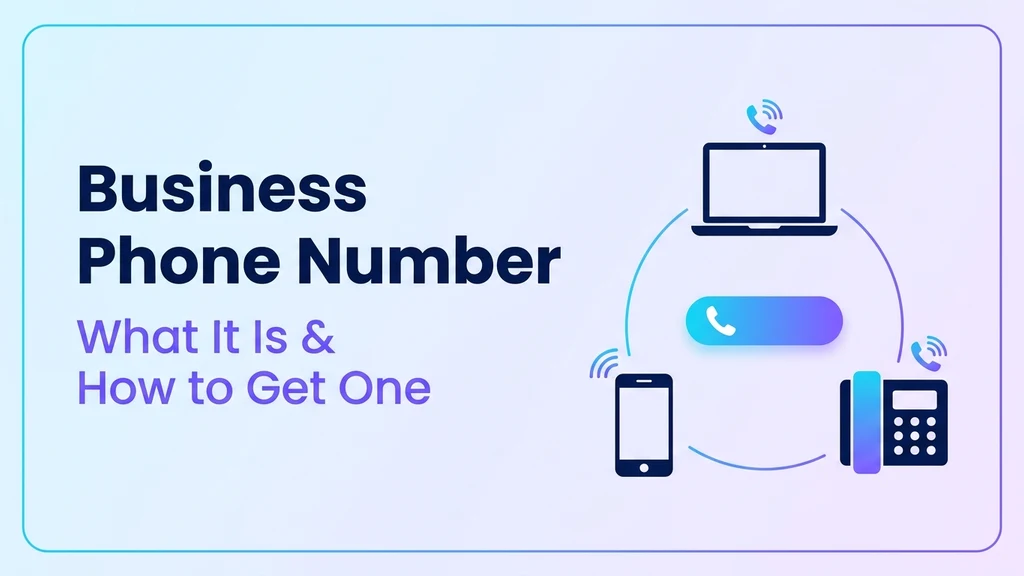
Using a personal cell number for business calls works for exactly as long as it takes to hire a second person, take a vacation, or want a professional voicemail greeting — then it stops working. A dedicated business phone number solves all three at once, and it doesn't require a second physical phone or a new SIM card to get one.
This guide covers the main types of business phone numbers, the features that actually matter once a number is more than a single person answering calls, and how setup actually works.
The main types of business phone numbers
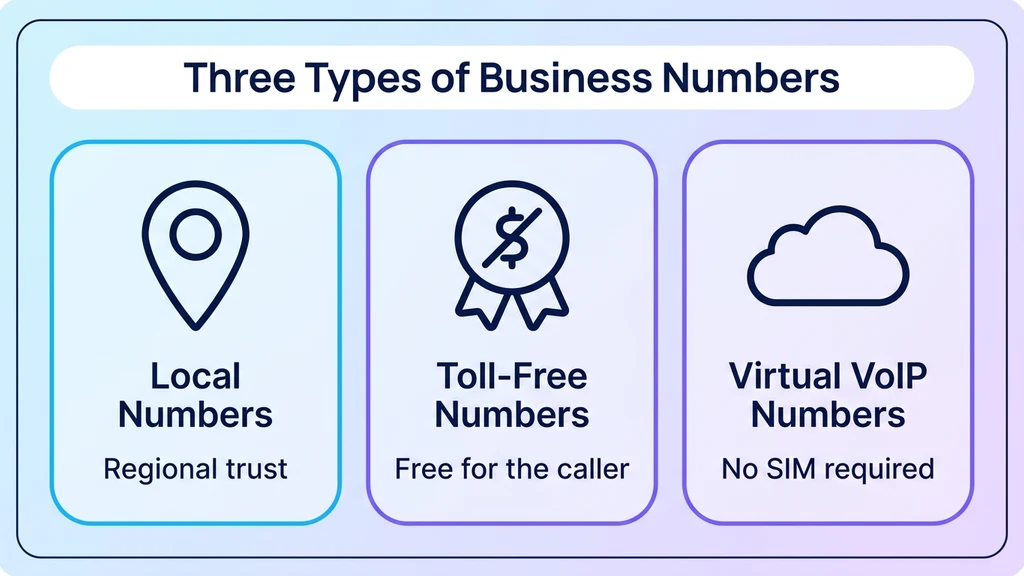
Local numbers. A number carrying a specific area code, which reads as a genuine local presence in that city or region. This is the right default for a business serving customers in a specific geographic market.
Toll-free numbers. Numbers like 800, 888, or 877 that the business pays for instead of the caller. These read as more established or national in scope, and they're free for the customer to call regardless of where they're calling from. The FCC's rules on toll-free numbers cover how these numbers are assigned and regulated.
Virtual VoIP numbers. A number that isn't tied to a physical SIM or landline at all — it lives in the cloud and forwards calls to whatever device is already in use. Local and toll-free numbers can both be delivered this way, which is why most new business phone numbers today are virtual by default rather than tied to a physical line.
Features that matter once it's more than one person answering
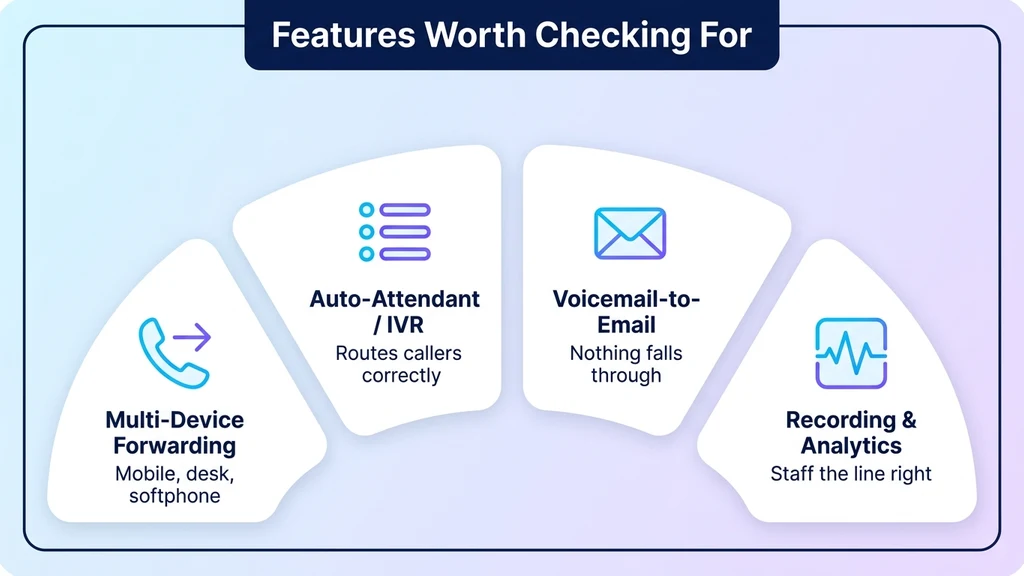
A phone number by itself is just a way to ring a device. The features wrapped around it are what turn it into an actual business phone system:
- Call forwarding across devices. A call to the business number should be able to ring a mobile app, a desk phone, and a softphone at once, so answering isn't tied to being at one specific desk.
- An auto-attendant or IVR menu. Routing callers through a simple "press 1 for sales, 2 for support" menu before they reach a person cuts down on misdirected calls as a team grows past a single point of contact.
- Voicemail-to-email or transcription. Missed calls shouldn't require checking a separate voicemail box — a transcript or audio file landing in email or a team inbox keeps nothing from falling through.
- Call recording and analytics. Recording calls for quality review and seeing call volume patterns over time makes it possible to staff a line correctly instead of guessing.
Many businesses run all of this through a UCaaS (Unified Communications as a Service) platform — a single cloud system for calling, messaging, and video — so the business number is one line inside a system built for a whole team, not a standalone app, the same evaluation criteria covered in our guide to choosing a virtual phone number provider. Contact us to set up a business phone number with these features built in from day one.
Ready when you are
Protect your business line.
MCM's local numbers ship with verified caller ID and smart call filtering — customers always know it's really you, and spam never reaches your team.
How setup actually works
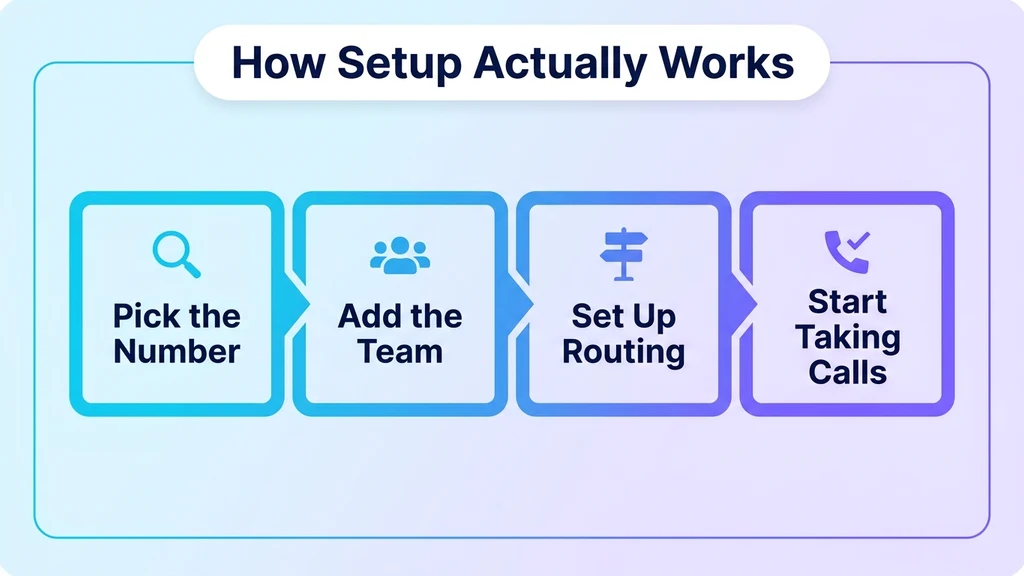
Getting a modern business phone number running is a short process regardless of which type is chosen:
- Pick the number. Choose a local area code, a toll-free number, or both, depending on whether the priority is local trust or a national presence.
- Add the team. Assign users and configure which devices each line rings on.
- Set up routing. Configure the auto-attendant menu, business hours, and after-hours voicemail behavior.
- Start taking calls. Most providers activate a number the same day, so a business can be answering professionally within minutes of signing up.
What it typically costs
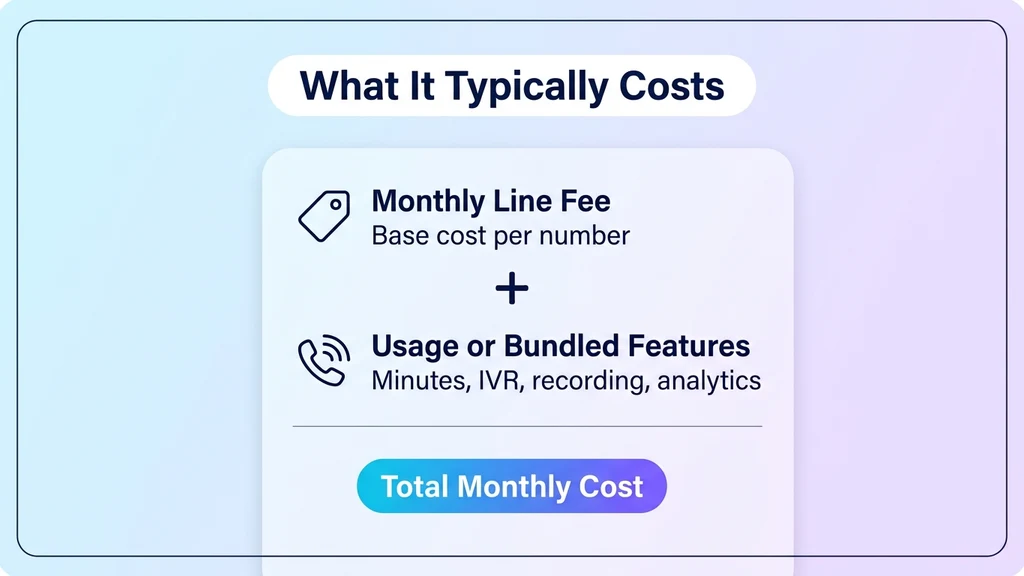
Pricing for a business phone number is usually a monthly line fee plus either unlimited or per-minute usage, with features like call recording, IVR, and analytics sometimes bundled into a plan tier and sometimes billed separately. The real comparison point isn't the advertised starting price — it's the total monthly cost once the team size and call volume a business actually expects are factored in.
Conclusion
A business phone number is the first real step away from running a company off a personal cell number, and it's a lot faster to set up than most people expect — no new hardware, no waiting on a phone company installation. Choosing local vs. toll-free comes down to whether the goal is regional trust or national reach, and the features layered on top (forwarding, IVR, voicemail transcription) matter more day to day than the number type itself. My Country Mobile can activate a business phone number the same day, built on a system that scales as the team does.
Key takeaways
- Local numbers build regional trust; toll-free numbers signal national scale and cost the business, not the caller, to receive.
- Most modern business numbers are virtual VoIP numbers, not tied to a physical SIM or landline.
- Call forwarding, IVR, voicemail transcription, and analytics are the features that turn a number into an actual phone system.
- Setup is typically same-day — pick the number, add the team, configure routing, start taking calls.
- Compare providers on total monthly cost at actual call volume, not the advertised starting price.
Ready when you are
Ready to sound local everywhere you sell?
MCM activates business numbers in minutes, with call routing, analytics, and CRM-ready integrations. Start your free trial — no card to browse inventory.
FAQs
What is a business phone number?
A phone number used specifically for business calls, separate from a personal line — it can be a local number, a toll-free number, or a virtual VoIP number, and today it's usually all three delivered through the same cloud platform.
Should I get a local or toll-free business number?
A local number builds trust with customers in a specific region. A toll-free number signals a more national or established presence and is free for the caller to dial. Many businesses eventually use both.
Do I need special hardware for a business phone number?
No. A virtual VoIP business number works through an app on a mobile phone or laptop, a desk phone, or a softphone — no physical installation or new SIM required.
What features should I look for beyond just the number?
Call forwarding across devices, an auto-attendant or IVR menu, voicemail-to-email or transcription, and call analytics are the features that matter most once a business has more than one person answering.
How quickly can I get a business phone number set up?
Most providers activate a number the same day, with routing and team setup completed shortly after.
What does a business phone number typically cost?
Pricing usually combines a monthly line fee with either unlimited or per-minute usage charges. Compare providers based on total monthly cost at the call volume actually expected, not the base advertised price.