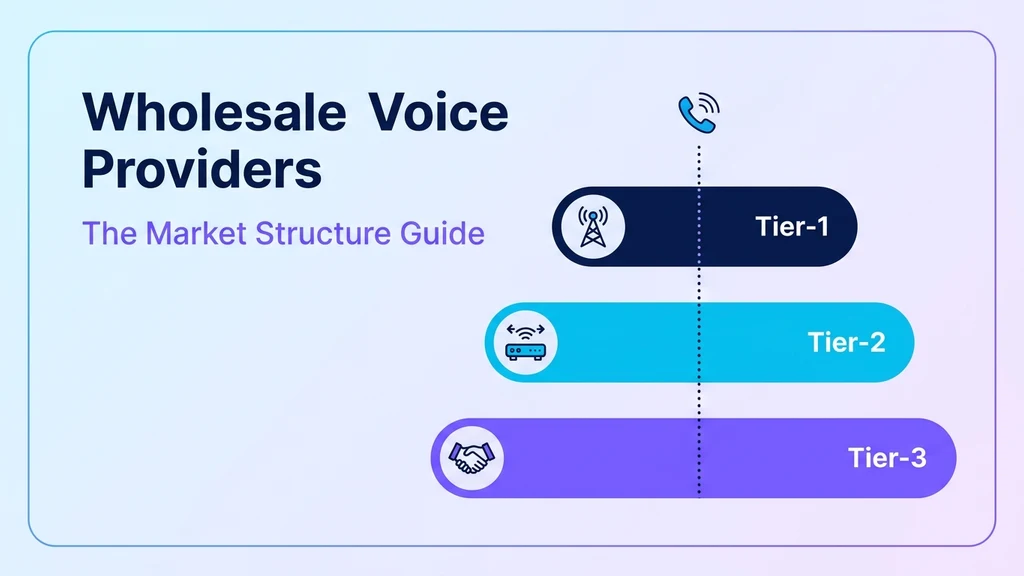
Most guides to wholesale voice providers focus on how to pick one for a specific business. This one covers something different: how the market itself is structured — the tier hierarchy carriers actually operate within, how interconnect agreements and settlement work between them, and the multi-hop path a single call travels before it ever reaches the person being called. Understanding that structure explains why the same destination can be priced completely differently by two providers quoting from the same rate month.
For a framework on evaluating a specific provider for your traffic, see our guides on choosing a wholesale VoIP provider and choosing a wholesale voice termination provider — this one is about the market shape those evaluations happen inside of.
The Tier-1, Tier-2, Tier-3 hierarchy
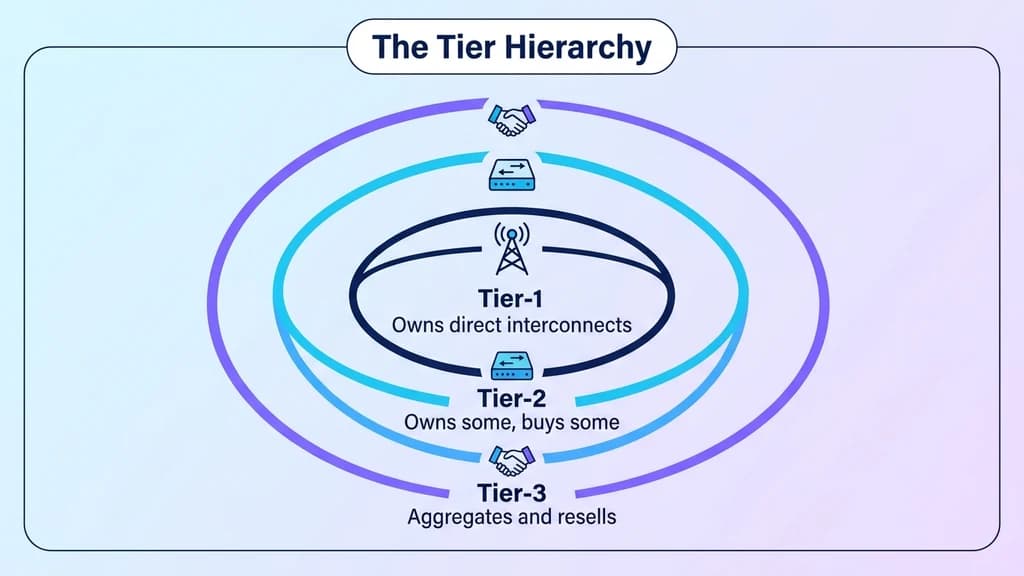
Tier-1 carriers own physical network infrastructure with direct interconnects to destination networks — the mobile and fixed-line operators that actually own the phone numbers being called. Direct interconnect means fewer hops, generally better call quality, and pricing power since there's no intermediary taking a margin on that specific route.
Tier-2 carriers operate their own infrastructure on some routes but rely on Tier-1 partners for others, blending owned network reach with purchased transit capacity where building direct interconnects isn't economical for their volume.
Tier-3 providers and resellers own little to no physical infrastructure, aggregating capacity purchased from Tier-1 and Tier-2 carriers and reselling it, often with added tooling, billing, or support layered on top. This is where much of the retail-facing VoIP and UCaaS market actually buys its underlying voice capacity.
None of these tiers is inherently "better" — a Tier-3 reseller with excellent route management can outperform a Tier-1 carrier's poorly maintained route on a specific destination. The tier describes ownership structure, not guaranteed quality.
How interconnect and settlement actually work
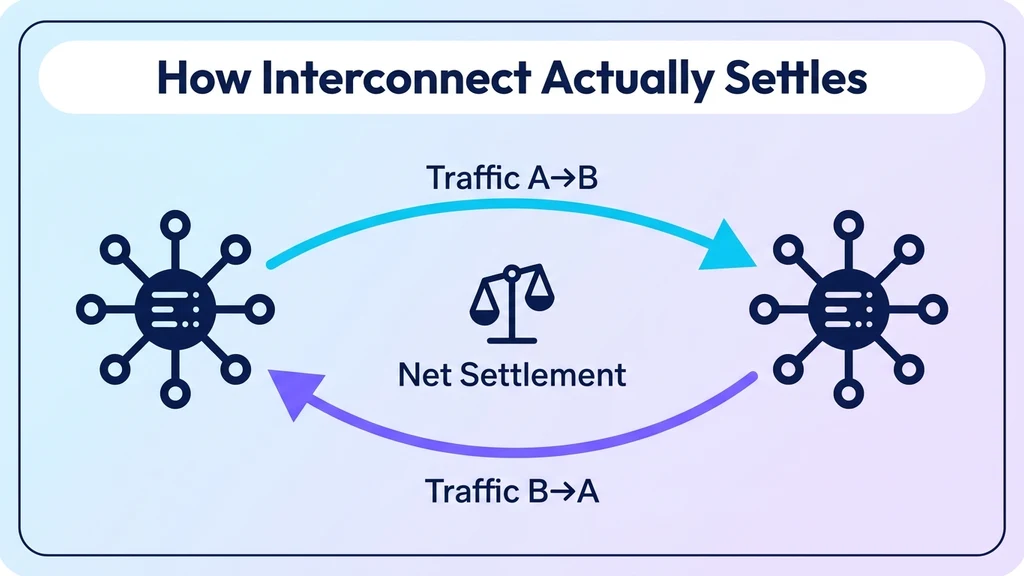
Two carriers agreeing to exchange traffic sign an interconnect agreement specifying the technical handoff (SIP trunk parameters, capacity) and the settlement terms — who pays whom, per minute, for traffic flowing in each direction. On many routes this is genuinely bilateral: Carrier A terminates some of Carrier B's traffic, and Carrier B terminates some of Carrier A's, netting out in whichever direction the balance runs.
This is why a wholesale rate deck reflects more than just "cost plus margin" — it reflects the specific interconnect relationships a carrier has built on that destination, which is also why rates on the same destination can vary meaningfully between providers with genuinely different network reach, not just different pricing strategies.
The multi-hop path a single call actually takes
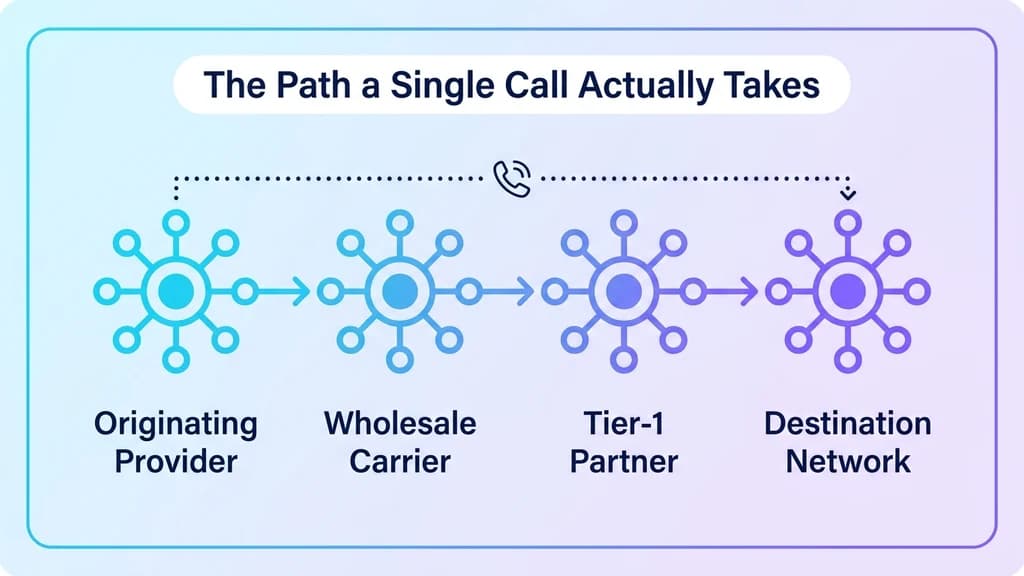
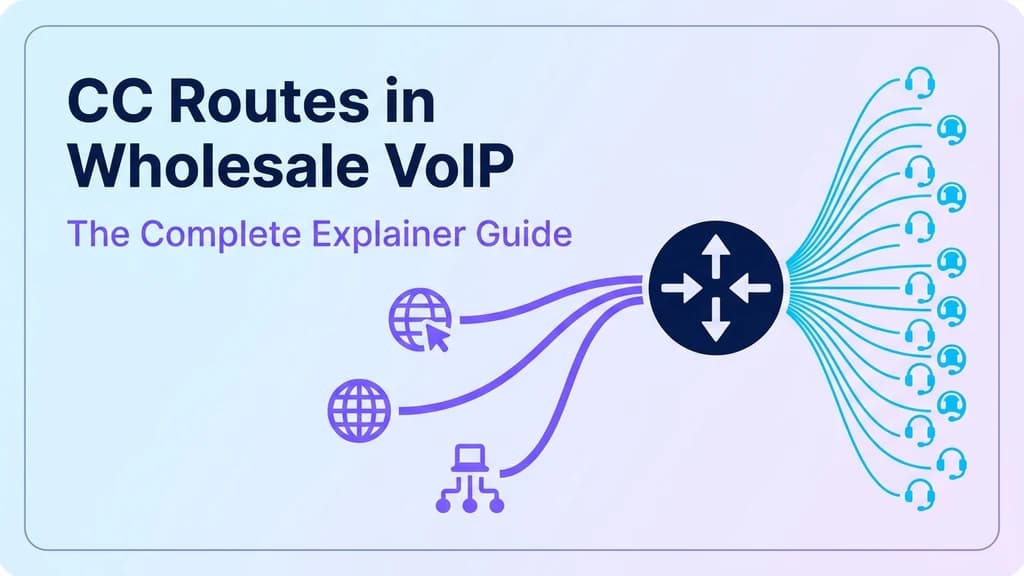
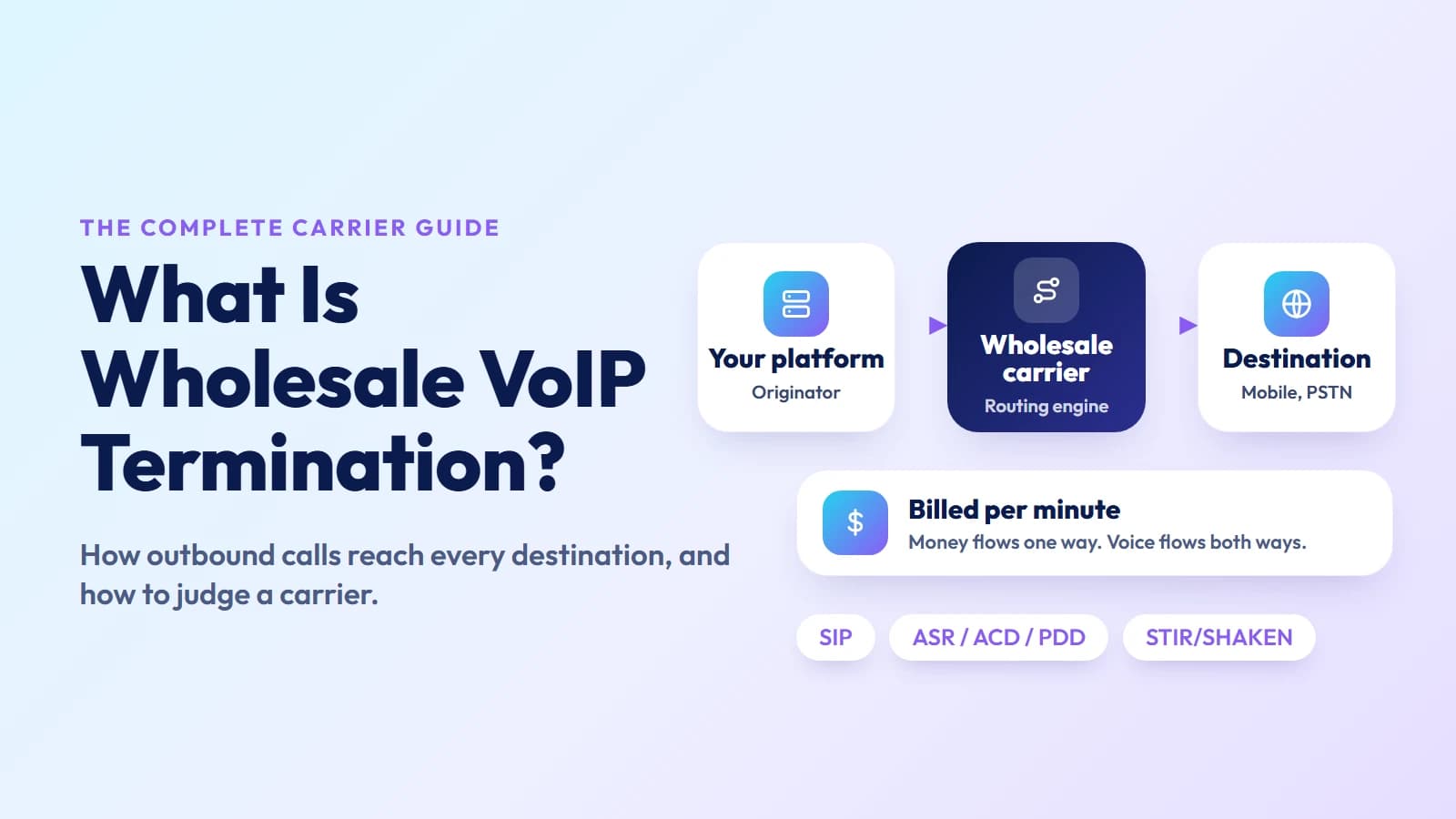
A retail customer's call rarely travels through just one wholesale provider. A typical path: the retail UCaaS or VoIP provider hands the call to their wholesale carrier, which — if it lacks a direct interconnect on that specific destination — hands it to a Tier-1 partner, which delivers it to the destination network's own infrastructure. Each hop adds a small amount of latency and a settlement relationship, and each carrier in the chain takes a margin.
This is the structural reason ASR and PDD can look different on the same nominal "destination" depending on which wholesale provider is used — the number of hops between the originator and the destination network isn't fixed, it depends on which carrier's interconnect map is actually being used for that specific call.
Ready when you are
Protect your business line.
MCM's local numbers ship with verified caller ID and smart call filtering — customers always know it's really you, and spam never reaches your team.
Geographic specialization vs. global reach
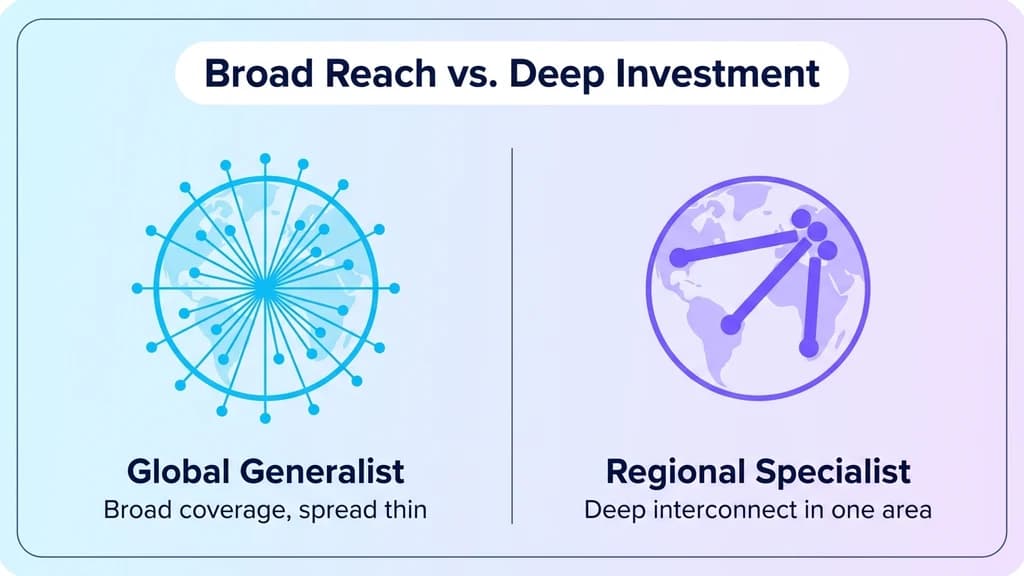
Wholesale voice providers roughly split into global generalists — broad A-Z coverage across most countries, built for originators with geographically diverse traffic — and regional or destination specialists, who focus deep interconnect investment on a specific country or region and often out-price generalists there specifically because of that concentrated infrastructure investment.
The FCC's international voice traffic reporting requirements apply to carriers operating in this space regardless of tier, and give a sense of how fragmented the market actually is by traffic volume and destination.
Businesses evaluating providers often assume a global generalist is automatically the safer choice, but a specialist with deep interconnect depth on the specific destinations that matter most for that business's traffic frequently outperforms a generalist spreading the same investment across every country equally.
My Country Mobile operates as a Tier-1 carrier with direct interconnects across 190+ countries, which is exactly the kind of network depth this structure rewards, the same depth covered from the buyer's-evaluation side in our guide to choosing a wholesale VoIP provider. Contact us to see which interconnect depth actually backs a route before committing volume to it.
Conclusion
The wholesale voice market isn't a flat list of interchangeable vendors — it's a layered structure of Tier-1 network owners, Tier-2 hybrid operators, and Tier-3 resellers, connected by bilateral interconnect and settlement agreements that shape pricing more than any single carrier's margin strategy does. A call placed today likely passes through more than one of these carriers before reaching its destination, which is the real reason quality and pricing vary between providers quoting the same route. Understanding this structure is what separates evaluating a provider on the rate sheet alone from evaluating what's actually behind it.
Key takeaways
- Tier describes network ownership, not guaranteed quality — a well-run Tier-3 reseller can outperform a poorly maintained Tier-1 route.
- Interconnect agreements are often bilateral, with settlement netting out based on traffic direction, not simple one-way billing.
- Most calls pass through multiple wholesale carriers, not just one, before reaching the destination network.
- Rate differences between providers on the same destination often reflect genuinely different interconnect depth, not just pricing strategy.
- Specialists can outperform generalists on specific destinations where they've concentrated interconnect investment.
Ready when you are
Ready to sound local everywhere you sell?
MCM activates business numbers in minutes, with call routing, analytics, and CRM-ready integrations. Start your trial — no card to browse inventory.
FAQ
What's the difference between a Tier-1, Tier-2, and Tier-3 wholesale voice provider?
Tier-1 carriers own physical network infrastructure with direct interconnects to destination networks. Tier-2 carriers blend owned infrastructure with purchased transit. Tier-3 providers and resellers primarily aggregate and resell capacity from Tier-1 and Tier-2 carriers.
Does a Tier-1 carrier always have better call quality than a Tier-3 reseller?
Not necessarily. Tier describes ownership structure, not quality management. A well-managed Tier-3 reseller's route can outperform a Tier-1 carrier's poorly maintained route on a specific destination.
Why do wholesale voice rates vary so much between providers on the same destination?
Rates reflect each carrier's specific interconnect relationships and network depth on that destination, not just a markup strategy — a carrier with a direct interconnect prices differently than one relaying through additional hops.
How many carriers does a typical wholesale call pass through?
Often more than one. A call can pass from the originating provider's wholesale carrier through one or more Tier-1 partners before reaching the destination network's own infrastructure, depending on interconnect depth on that specific route.
Is a global generalist wholesale provider always the safer choice over a regional specialist?
Not automatically. A specialist with deep interconnect investment in a specific region can outperform a generalist spreading similar investment across many countries, particularly for a business whose traffic concentrates in that specialist's core region.
What determines whether two carriers have a bilateral interconnect agreement?
Mutual traffic volume and destination overlap typically drive it — carriers exchange traffic in both directions and settle the balance, which only makes sense when both parties have meaningful volume to offer each other.