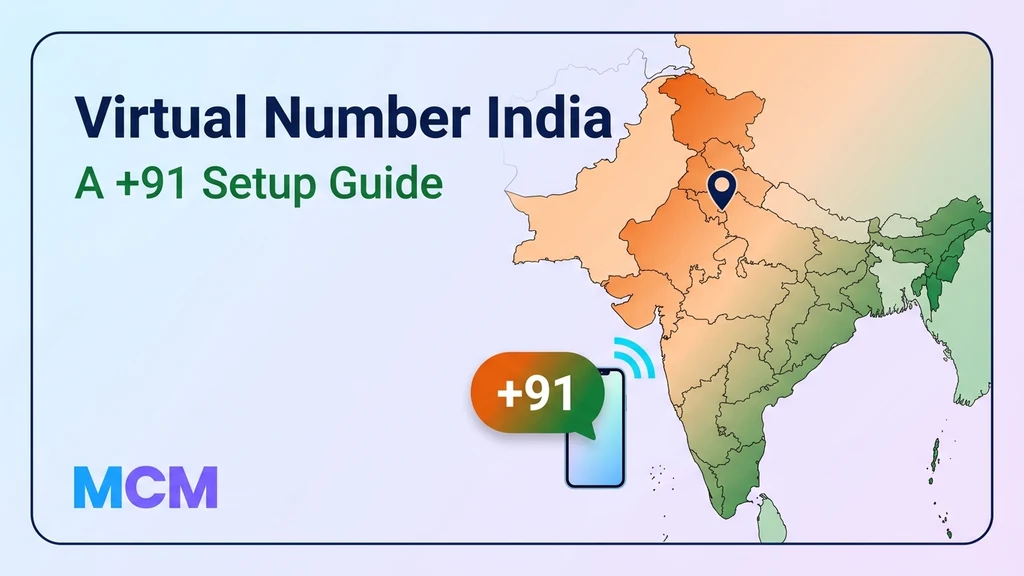
Getting a local number in India without an office there
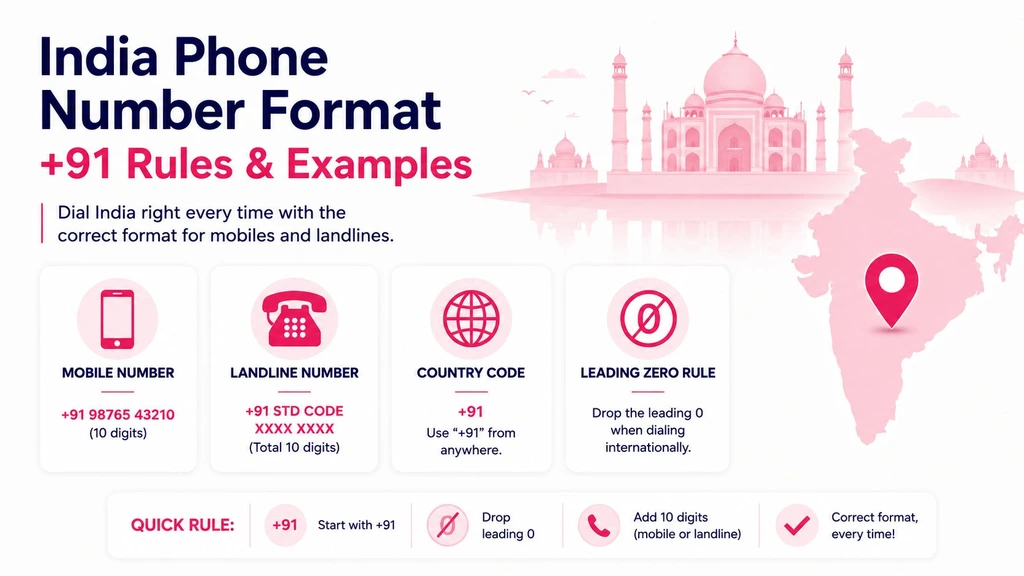
A business doesn't need a registered office in Mumbai or Bengaluru to answer the phone like it does. A virtual number in India carries the country's +91 prefix and rings on whatever device is already in use — a laptop softphone, a mobile app, or a desk phone — no matter where the business itself is actually based.
This guide covers what an India virtual number actually is, how it's set up, the regulatory step most guides skip, and what it typically costs.
What an India virtual number actually is
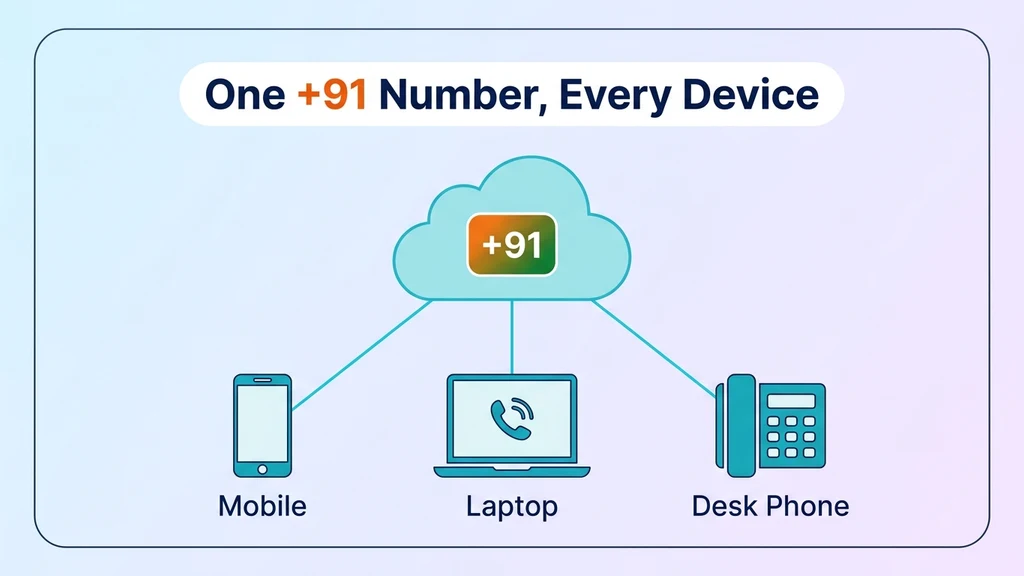
An India virtual number is a real, dialable +91 phone number that isn't tied to a physical SIM card or landline in the country. Calls placed to it route over the internet to whichever devices the business has configured — so a customer in Delhi dials a number that looks and feels local, while the call actually rings a phone anywhere in the world.
That distinction matters for two reasons. First, cost: routing over the internet instead of the traditional Indian phone network avoids the per-minute international rates a foreign business would otherwise pay to receive local calls. Second, trust: Indian customers answer and call back a local +91 number far more readily than an unfamiliar international one, particularly given how much unsolicited calling from unfamiliar numbers gets ignored by default.
The regulatory step most guides skip: DLT registration
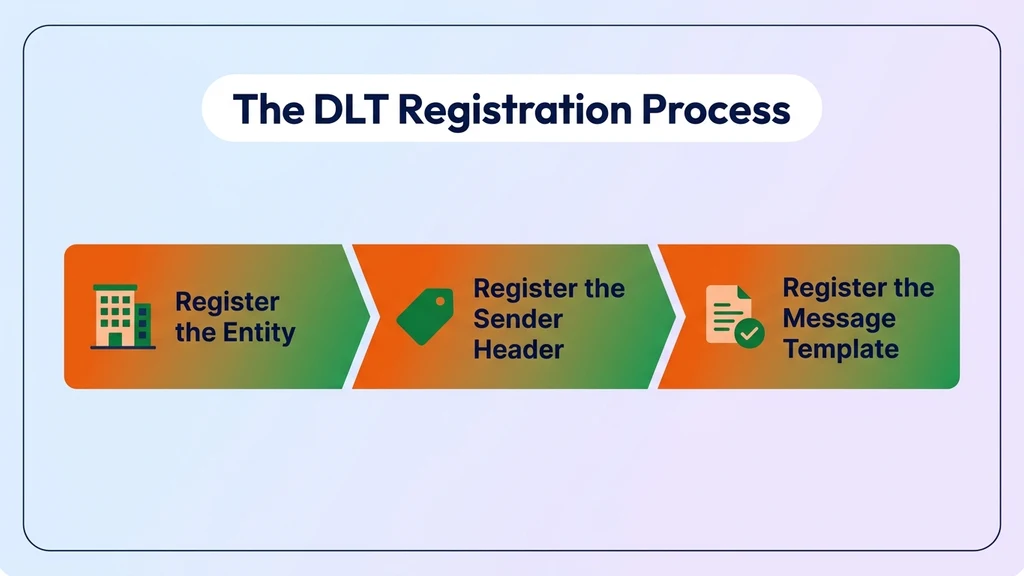
Any business sending SMS to Indian numbers — not just calls — has to register with India's Distributed Ledger Technology (DLT) platform before messages will deliver reliably. This is a regulatory requirement from India's telecom authority (TRAI), not an optional carrier feature, and it applies regardless of which provider issues the number.
The process has three parts: registering the business entity itself on the DLT platform, registering the specific sender ID or header the messages will come from, and registering the exact message templates that will be sent. TRAI's regulatory framework on commercial communications is the authoritative source on these requirements. Skipping this step is the single most common reason a foreign business's SMS to Indian customers silently fails to deliver, even when the calling side of the number works perfectly.
Ready when you are
Protect your business line.
MCM's local numbers ship with verified caller ID and smart call filtering — customers always know it's really you, and spam never reaches your team.
How the setup actually works
Getting an India virtual number running involves one more step than most countries because of DLT, but the core process is still short:
- Pick the number. Choose an India virtual number, typically selectable by city code within the country.
- Complete DLT registration if SMS is needed. This is the step that has no equivalent in most other markets, and it's worth starting early since registration can take longer than the number activation itself.
- Add the team. Assign however many users need access, and configure which devices each number rings on.
- Start taking calls. Voice typically activates the same day; SMS activates once DLT registration clears.
Features worth checking for
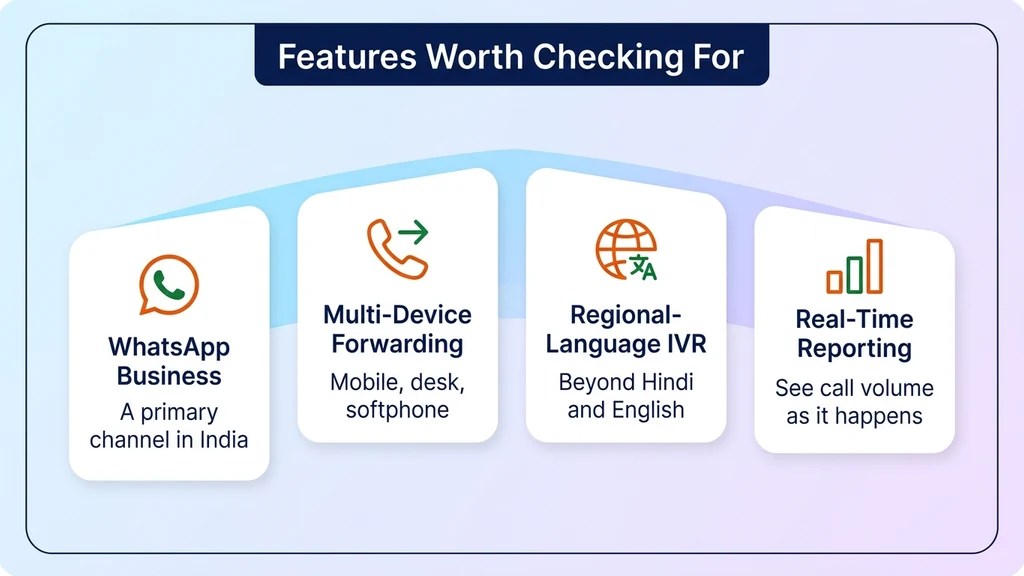
A generic international number technically reaches India, but it doesn't read as local — and Indian customers notice the difference before they even answer. The features that matter most in practice:
- WhatsApp Business integration. WhatsApp is the default messaging channel for a large share of Indian consumers, and a number that can also run WhatsApp Business alongside SMS and voice covers far more of how Indian customers actually expect to communicate.
- Call forwarding across devices. A call to the India number should be able to ring a mobile app, a desk phone, and a softphone simultaneously, so nobody has to be tied to one device.
- IVR in regional languages. India has significant linguistic diversity by region, and an IVR menu that offers a regional-language option alongside Hindi and English measurably improves the experience for a meaningful share of callers.
- Real-time call reporting. Seeing call volume and patterns as they happen makes it possible to staff a support line correctly instead of guessing.
Many businesses run all of this through a UCaaS (Unified Communications as a Service) platform — a single cloud system for calling, messaging, and video — so the India number is just one more line inside a phone system the team already uses, the same kind of setup covered in our Thailand phone number guide for that market. Contact us to set up an India virtual number, including DLT registration, wired into a system like that from day one.
What it typically costs
Pricing for an India virtual number is usually structured as a monthly line fee plus usage charges for inbound and outbound minutes, with DLT registration sometimes bundled into setup and sometimes billed as a separate one-time step. The right way to compare providers isn't the sticker price alone — it's the total monthly cost at the actual call and SMS volume a business expects, since usage charges and messaging fees can outweigh the base fee quickly for a busy support line.
Conclusion
A virtual number in India gives a business the ability to look, sound, and respond like it's already there — without a registered office, a local SIM, or a delay in setup. For companies selling into India's fast-growing e-commerce, IT services, or fintech sectors, that local presence is often the difference between a customer who calls back and one who doesn't. The one detail that trips up businesses new to the market is DLT registration for SMS — getting that right from day one avoids a silent messaging failure weeks into launch. My Country Mobile can activate an India virtual number the same day and handle DLT registration as part of setup.
Key takeaways
- An India virtual number carries a real +91 prefix and rings on any device, with no physical SIM or local office required.
- DLT registration is mandatory for SMS to Indian numbers — this is a TRAI regulatory requirement, not an optional feature, and it should start early since it can take longer than voice activation.
- WhatsApp Business integration matters more in India than in most markets, given how widely it's used as a primary channel.
- Regional-language IVR options measurably improve the experience given India's linguistic diversity.
- Voice typically activates the same day; SMS activates once DLT registration clears.
Ready when you are
Ready to sound local everywhere you sell?
MCM activates business numbers in minutes, with call routing, analytics, and CRM-ready integrations. Start your free trial — no card to browse inventory.
FAQ
What is a virtual number in India?
A real, dialable +91 number that routes calls over the internet to any device, letting a business answer as a local Indian line without a physical office or SIM card in the country.
What is DLT registration and why does it matter?
DLT (Distributed Ledger Technology) registration is a mandatory TRAI requirement for any business sending SMS to Indian numbers. It covers registering the business entity, the sender ID, and the message templates — skipping it is the most common cause of SMS silently failing to deliver.
How long does it take to get an India virtual number working?
Voice typically activates the same day. SMS won't work reliably until DLT registration clears, which can take longer, so it's worth starting that process early if messaging is part of the plan.
Do I need WhatsApp Business alongside a regular virtual number?
It's not required, but it's worth strongly considering — WhatsApp is a primary communication channel for a large share of Indian consumers, more so than in many other markets.
What does an India virtual number typically cost?
Pricing usually combines a monthly line fee with per-minute usage charges, plus a possible one-time DLT registration cost if SMS is needed. Compare providers based on total monthly cost at actual expected volume rather than the base price alone.
Can an India virtual number be used without living in India?
Yes. Virtual number providers issue and activate India numbers remotely, and calls forward to any device the business already uses — DLT registration for SMS can also be completed remotely.