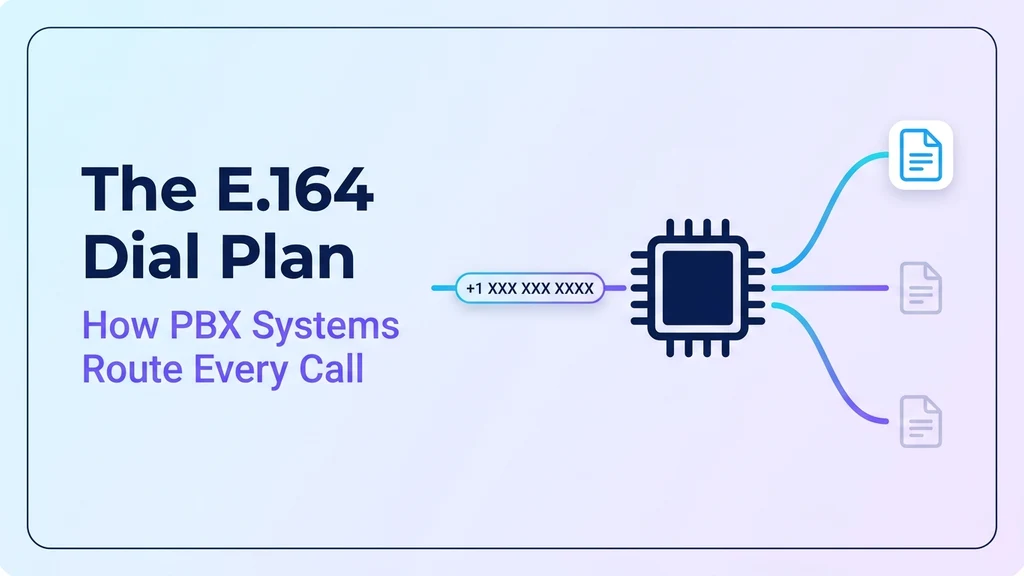
A dial plan is the rule set a PBX or SIP trunk uses to decide what to do with every digit string a user dials — strip a prefix, match it to a route, and hand it off correctly. E.164 is what makes that rule set portable: normalize every number to the same +[country code][number] shape first, and the matching rules underneath become dramatically simpler and far less brittle.
This guide covers how E.164 normalization actually functions inside a dial plan, the pattern-matching logic that routes a normalized number to the right trunk, and the mistakes that quietly break call routing in PBX systems that skip this step. For the plain-language explanation of the E.164 format itself, see our international phone number format guide — this one assumes that background and goes straight into how it's used operationally. ITU-T Recommendation E.164 is the formal specification underlying every normalization rule covered below, for anyone who wants the source document.
Why a dial plan needs normalization before it can route anything
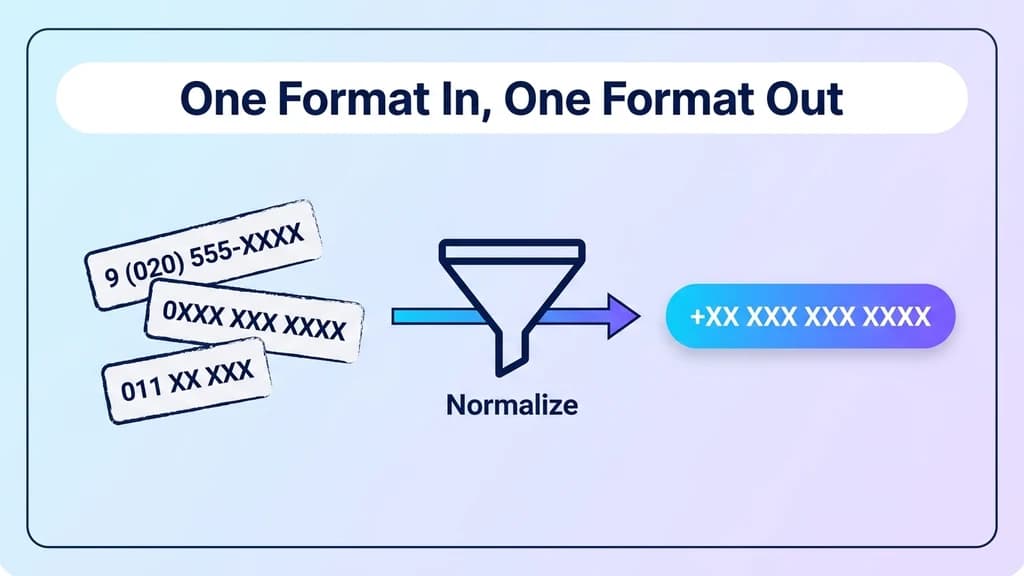
Users dial numbers inconsistently — with a leading 0, a trunk-access digit like 9, parentheses, spaces, or a partial extension. A dial plan that tries to match routing rules against that raw, unpredictable input ends up with a sprawling, fragile set of patterns trying to cover every dialing habit.
Normalizing to E.164 first collapses all of that variation into one predictable shape before any routing decision happens: strip the trunk-access prefix, strip a leading trunk 0 if the number includes one, add the country code, and prepend +. Every downstream rule then matches against that single normalized form instead of guessing at formatting.
Why this matters operationally
A dial plan that skips normalization has to maintain separate matching rules for every input variation a user might dial. A dial plan built on E.164 normalization needs exactly one rule per destination, because the input is always shaped the same way by the time routing logic sees it.
How pattern matching actually routes the call
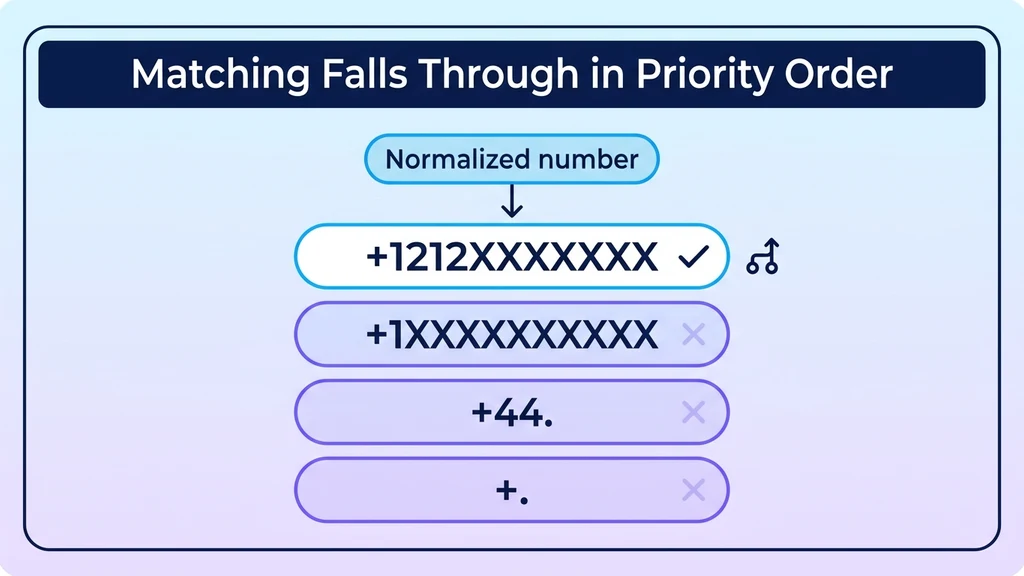
Once a number is normalized, the dial plan matches it against an ordered list of patterns — typically most-specific first — to decide which outbound trunk or route handles the call. A simplified example, using standard PBX pattern syntax where X matches any digit and . matches one or more:
+1212XXXXXXX  →  Route: NYC-Local-Trunk
+1XXXXXXXXXX  →  Route: US-Domestic-Trunk
+44.          →  Route: UK-International-Trunk
+.            →  Route: General-International-Trunk
The engine evaluates rules in priority order and stops at the first match — which is why specific patterns (a single area code) have to sit above general ones (the whole country code), or the general rule will catch calls that should have routed more specifically. This same priority-order logic is what a wholesale carrier's least-cost routing engine runs at a much larger scale, matching normalized destination numbers against hundreds of route options rather than a handful of trunks, as covered in our wholesale SIP termination guide.
A dial plan without a defined priority order isn't really a dial plan — it's a race condition waiting for the wrong rule to match first.
Common dial plan mistakes that break routing
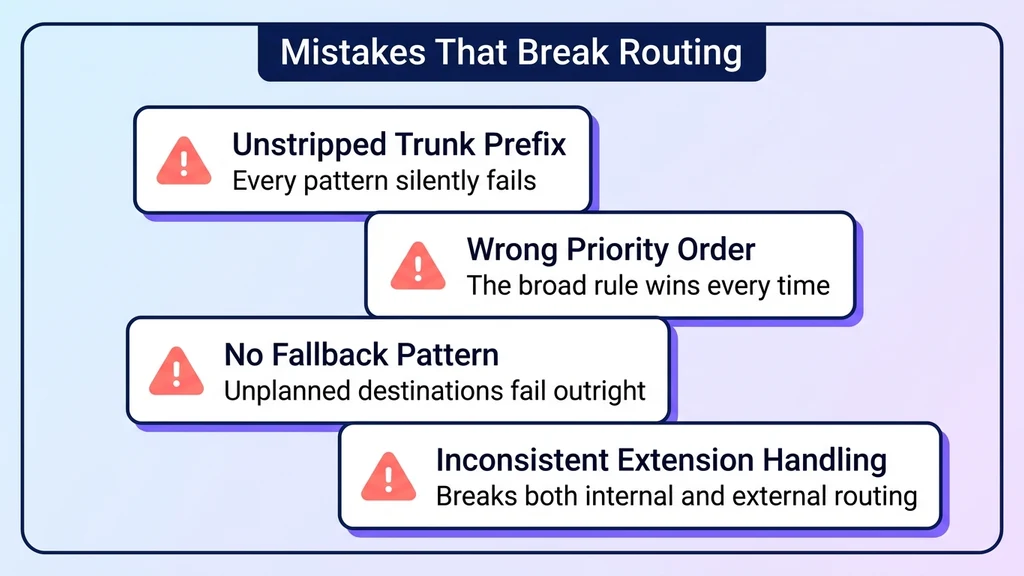
Skipping the trunk-prefix strip. If a system dials 9 for an outside line and the normalization step doesn't strip it before matching, every pattern silently fails and calls default to a fallback route — or drop entirely.
Wrong pattern priority. Placing a broad pattern (+1.) above a specific one (+1212XXXXXXX) means the broad rule wins every time, sending calls to the wrong trunk without any error being thrown.
No fallback pattern. A dial plan without a catch-all +. rule at the bottom fails outright on any destination nobody explicitly planned for, instead of routing it through a general international trunk.
Inconsistent internal extension handling. Short internal extensions don't fit the E.164 shape at all, and a dial plan that tries to force them through the same normalization step as external numbers usually breaks both.
Ready when you are
Protect your business line.
MCM's local numbers ship with verified caller ID and smart call filtering — customers always know it's really you, and spam never reaches your team.
A minimal working dial plan structure
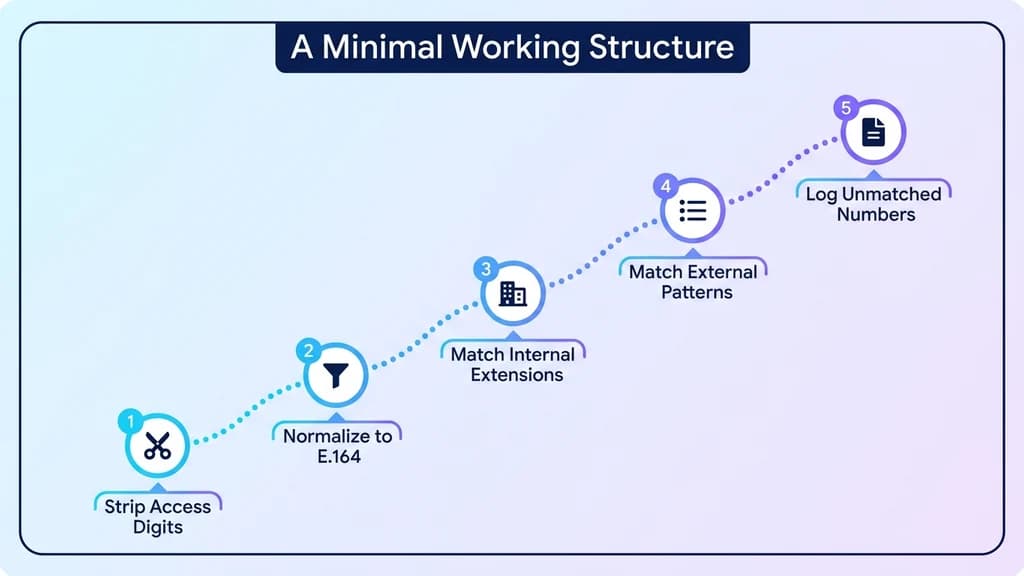
A dial plan that actually holds up in production follows the same basic shape regardless of PBX platform:
- Strip access digits — remove the trunk-access prefix (commonly
9) before anything else runs. - Normalize to E.164 — add
+, the country code, and strip any local trunk 0. - Match internal extensions separately — short internal numbers get their own pattern set, evaluated before external normalization applies.
- Match external patterns in priority order — most specific destination first, general international fallback last.
- Log the unmatched case — anything that reaches the end without a match should log an error rather than fail silently, which is the fastest way to catch a missing pattern before it becomes a support ticket.
Conclusion
E.164 normalization is what turns a dial plan from a pile of format-specific guesses into a small, maintainable set of routing rules. Getting the normalization step right — and getting pattern priority order right underneath it — is what separates a dial plan that quietly breaks on edge cases from one that routes every call correctly the first time. My Country Mobile builds this same normalization-first approach into its wholesale routing infrastructure, at a scale of hundreds of destinations rather than a handful of PBX trunks. Contact us to talk through dial plan or routing configuration for a PBX or SIP trunk deployment.
Key takeaways
- A dial plan needs E.164 normalization before matching, or routing rules have to cover every raw dialing variation individually.
- Pattern priority order matters — specific rules must sit above general ones, or the general rule wins every time.
- A missing fallback pattern causes any unplanned destination to fail outright instead of routing generally.
- Internal extensions need separate handling — they don't fit the E.164 shape and shouldn't be forced through the same normalization step.
- Logging unmatched numbers is the fastest way to catch a missing dial plan pattern before it becomes a support issue.
Ready when you are
Ready to sound local everywhere you sell?
MCM activates business numbers in minutes, with call routing, analytics, and CRM-ready integrations. Start your trial — no card to browse inventory.
FAQ
What is a dial plan?
The rule set a PBX or SIP trunk uses to decide how to handle a dialed number — stripping prefixes, matching patterns, and selecting an outbound route.
Why does E.164 matter for a dial plan specifically?
It normalizes every number to one predictable shape before routing rules run, which means a dial plan needs far fewer, far simpler patterns than one built to match raw, inconsistently formatted dialed digits.
What happens if pattern priority is set up wrong in a dial plan?
A broad pattern placed above a specific one will match first and silently route calls to the wrong trunk, since most dial plan engines stop at the first matching rule.
Do internal extensions need E.164 normalization too?
No. Internal extensions are typically short and don't fit the E.164 shape — they should be matched with a separate rule set evaluated before external number normalization applies.
What's the difference between a dial plan and a wholesale carrier's routing engine?
They work on the same underlying logic — matching a normalized number against ordered patterns — but a carrier's least-cost routing engine does it at much larger scale, across hundreds of destinations and routes instead of a handful of PBX trunks.